

 8 mins read
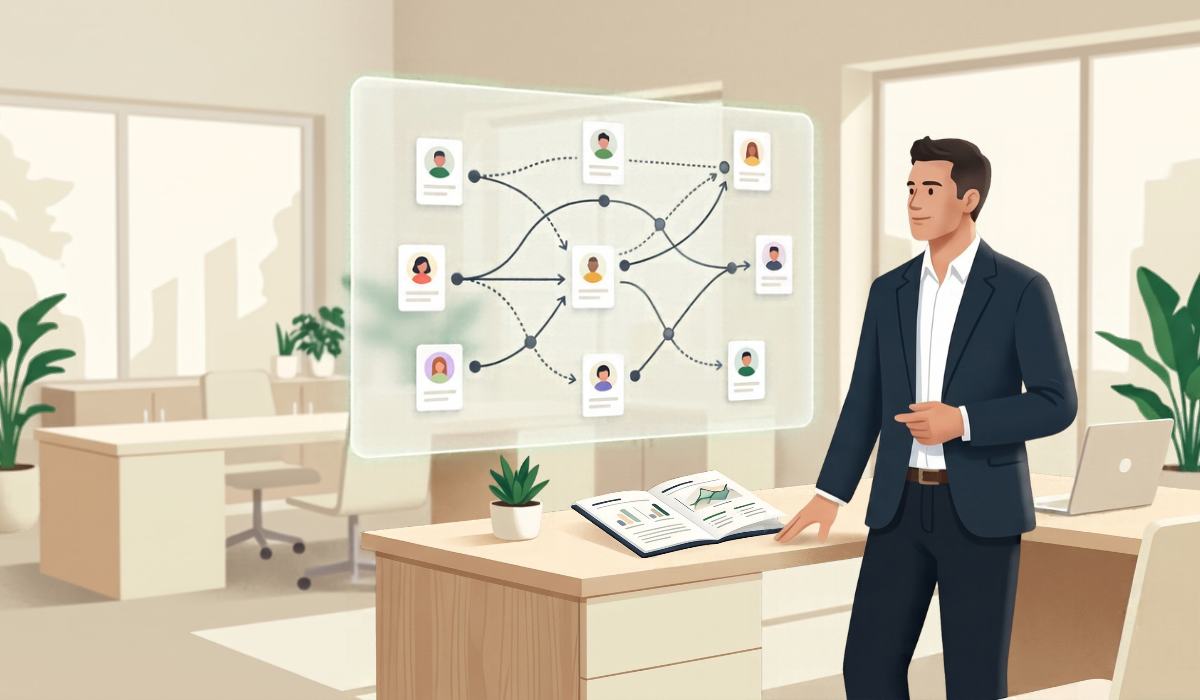
Internal mobility must evolve beyond traditional advancement models to enhance workforce agility and drive organizational growth.
Organizations have long used career paths to give employees clarity on advancement and professional growth. Defined job families, competency frameworks, and promotion criteria provide consistency and help employees understand progression requirements. These structures remain essential. However, as organizations adapt to technological change, shifting business priorities, and evolving workforce capabilities, a key question arises: Are traditional career frameworks sufficient to support necessary talent movement across organizations?
An organization may have clear career paths, leadership programs, and advanced talent processes, yet still struggle to move capabilities across functional boundaries. Developing talent and creating the conditions for it to contribute are related, but not interchangeable. Internal mobility can be more than a career advancement or retention tool. When approached strategically, it strengthens adaptability by enabling capabilities to move where they add the most value.
When Career Progression Becomes Too Linear
Traditional career frameworks typically emphasize progression within established functions or job families. Employees deepen expertise, demonstrate readiness, and advance into roles with greater responsibility. This structure is necessary, especially where technical expertise, regulatory requirements, or specialized knowledge require clearly defined progression. However, career growth does not always follow a linear trajectory.
An operations professional may develop capabilities relevant to workforce planning. A marketing employee may have transferable skills suited to customer experience or organizational change. A project manager may show leadership potential through cross-functional initiatives before qualifying for a formal management role.
When career frameworks primarily recognize advancement within existing functions, organizations risk overlooking capabilities that could create value elsewhere. Job architecture can reinforce these boundaries. Roles are organized by responsibilities, reporting relationships, and functional requirements. While this supports consistency in compensation and workforce management, it may not fully capture capabilities employees gain through experience. Deloitte's 2026 Global Human Capital Trends points the same way, describing a shift from static plans to dynamic orchestration of capacity beyond fixed jobs.
The goal is not to eliminate career paths, but to complement them with approaches that recognize transferable skills, cross-functional experience, and evolving organizational priorities. For HR leaders, this means assessing whether career frameworks show only advancement paths or also highlight where employees’ capabilities can contribute.
The Difference Between Developing Talent and Mobilizing It
Organizations invest in learning, leadership development, succession planning, and talent identification to strengthen capabilities and prepare employees for future responsibilities. However, development does not always lead to opportunity. An employee may complete a leadership program but have limited chances to demonstrate those capabilities outside their current role. A high performer may be recognized for broader potential but remain in a function with few advancement opportunities.
Managerial discretion and limited visibility into opportunities across departments can also influence internal mobility. These challenges do not necessarily reflect a lack of commitment to talent development. Rather, they may stem from legitimate operational priorities, workforce constraints, or organizational structures designed to maintain stability and business continuity.
Consider an organization investing in digital transformation. Its future capability needs may extend beyond technology into operations, customer experience, finance, and People leadership. Employees with relevant analytical, project management, or change capabilities may already be present across the business. Without mechanisms to identify transferable skills, leaders responsible for emerging workforce needs may miss those individuals.
As a result, the organization may pursue external recruitment while overlooking internal capabilities it could develop or redeploy. The World Economic Forum's Future of Jobs Report 2025 estimates that, for every 100 workers, 59 will need training by 2030, and 19 of them could be upskilled and redeployed elsewhere within their organization. Half of employers (50%) also plan to move staff from declining to growing roles.
The Organizational Barriers to Talent Movement
People often discuss internal mobility in terms of employee ambition and access to opportunities. Yet willingness to move represents only one part of the equation. Organizational systems also determine whether movement is possible. Managers are accountable for delivering results through their teams. Retaining experienced employees supports continuity and performance. Releasing a high performer, even for another opportunity, can create immediate operational challenges.
From a manager’s perspective, protecting team capability may be reasonable. From an organizational perspective, consistently prioritizing functional stability can restrict movement toward emerging strategic needs. This tension does not necessarily reflect poor leadership. It reveals how managerial responsibilities can conflict with broader organizational priorities.
Hiring processes may create additional barriers. Internal candidates may face eligibility requirements or selection criteria that favor traditional progression over transferable capabilities. Employees may also lack visibility into opportunities outside their functions, especially when roles are communicated mainly through established networks.
Addressing these barriers requires more than encouraging employees to explore opportunities. Organizations must examine how managerial accountability, hiring practices, workforce planning, and talent visibility together influence mobility.
The question is not just whether organizations support internal mobility in principle, but whether their practices make it possible.
Redefining What Career Advancement Looks Like
Career advancement has traditionally been associated with promotions, expanded managerial responsibility, or movement into higher-level positions. These remain meaningful forms of progression, but they represent only part of professional growth.
Lateral moves expose employees to different functions. Cross-functional assignments strengthen organizational understanding and strategic judgment. Project-based opportunities help employees apply emerging capabilities without permanently changing roles. These experiences may also prepare future leaders by broadening their perspectives beyond a single function. However, organizations must intentionally recognize such opportunities.
If employees see lateral movement as a sideways step rather than meaningful development, they hesitate to pursue it. If managers are evaluated mainly on immediate team performance, they may have little incentive to support movement.
Career frameworks can show how different roles and experiences build capability, and succession processes should recognize that professional growth does not always involve promotion. Not every lateral move represents advancement. Opportunities should provide meaningful learning, expanded contribution, or relevant experience, not just transfer employees between roles.
The objective is to define career progression more broadly, valuing both depth of expertise and breadth of experience.
Making Internal Mobility a Workforce Strategy
Internal mobility is strategically valuable when linked to business priorities, rather than managed mainly as an employee development initiative. For People leaders, this means integrating talent movement into workforce planning, organizational design, and leadership accountability.
Four practices can strengthen this connection.
1. Connect workforce planning with internal talent visibility
Workforce planning should assess future capability gaps alongside the skills and experience already present in the organization. Skills inventories, talent reviews, and cross-functional assessments can identify employees with transferable capabilities or potential to develop them through targeted experiences. Employee interests and readiness must also be considered. Having a capability does not automatically mean someone is willing or available to move.
2. Expand career frameworks beyond predefined progression
Career architecture helps employees understand adjacent roles, transferable competencies, and cross-functional opportunities. Instead of focusing only on the next position within a job family, organizations can illustrate multiple pathways for employees to build relevant capabilities. This maintains the clarity of established frameworks while allowing greater flexibility.
3. Align managerial accountability with enterprise-wide talent development
Managers influence whether employees access opportunities beyond their immediate teams. Organizations can recognize leaders who develop talent for broader business needs, support internal movement, and strengthen succession planning. However, accountability must be supported by operational measures. Workforce coverage, transition planning, and realistic replacement timelines are essential to prevent mobility from becoming an undue burden on teams.
4. Measure mobility as an organizational capability
Promotion and transfer rates provide useful information, but do not capture the full strategic value of mobility. Organizations can also track cross-functional movement, developmental assignments, internal hiring outcomes, time to fill critical roles, and whether internal talent addresses emerging capability needs. These measures should be considered along with employee experience, business performance, and workforce stability. Movement alone does not indicate success. The goal is to determine whether mobility improves the organization’s ability to deploy capabilities effectively.
From Career Management to Organizational Agility
The future of internal mobility is not about increasing employee movement or encouraging movement for its own sake. It is about creating an organization where talent can develop, contribute, and evolve without unnecessary constraints from traditional career boundaries.
Career frameworks will remain essential for clarity, consistency, and equitable advancement. However, their strategic value increasingly depends on how well they connect individual growth with changing organizational needs. Many organizations are not there yet: in Deloitte's research on creating an adaptable workforce, only 27% of respondents said their organizations manage change effectively, even though 85% called adaptive capability critical. For People leaders, the opportunity goes beyond managing career progression. It involves shaping how capabilities are identified, developed, and deployed across the business.
An effective talent strategy is measured not by whether employees can see their next career step, but by whether the organization recognizes workforce capabilities and creates meaningful opportunities for them to contribute where they are needed most.