

 7 mins read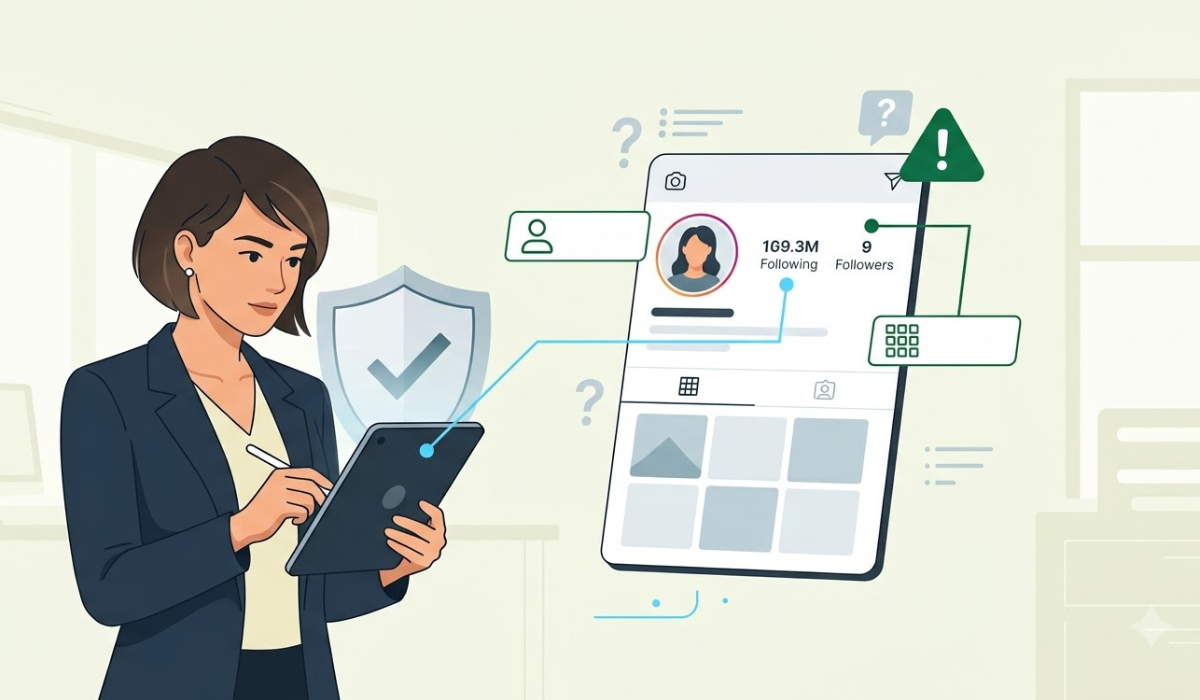
Fake Instagram accounts are widespread and increasingly convincing. For HR professionals, recruiters, and other business professionals, the risks go beyond personal scams. Fake profiles can be used to impersonate candidates, recruiters, hiring managers, or other professionals, making it important to recognize the warning signs before engaging.
The most reliable red flags include an incomplete profile, suspicious follower activity, stolen or AI-generated photos, scripted engagement, and unsolicited messages pushing links, job opportunities, or financial offers. No single sign proves that an account is fake, but several warning signs together can indicate that a profile deserves closer scrutiny.
Social media can sometimes provide useful context about a person's professional presence, but it should not be treated as the sole source for verifying someone's identity or credentials. When an unfamiliar account raises concerns, HR professionals and recruiters can cross-check publicly available professional information, review the consistency of the person's online presence, and avoid sharing sensitive information until the identity has been reasonably verified.
Sign 1: The Profile Is Sparse or Incomplete
A convincing Instagram profile takes time to build, and that's exactly what many fake account operators don't invest. Look closely at the basics: Is there a bio? Does the account have a profile photo? How many posts does it have, and how far back do they go?
Fake accounts typically share a few common traits:
- Little to no bio information, or a bio that's vague and generic
- A very small number of posts, often uploaded in a short burst
- A recently created account with little history or activity
- No tagged photos or other context connecting the account to a genuine person
Legitimate accounts, including those belonging to private individuals, can look very different, so a sparse profile does not automatically mean an account is fake. However, a profile with 2,000 followers but only three posts uploaded last Tuesday is worth treating with caution.
For HR professionals and recruiters, this is particularly important when an unfamiliar account presents itself as a candidate, recruiter, hiring manager, or other professional contact. If you have an email address associated with the person, learning how to find an Instagram account by email can provide one additional way to cross-check the identity they present online. However, social media should not be treated as the sole source for verifying someone's professional identity.
Sign 2: A Suspicious Follower-to-Following Ratio
The relationship between followers and following can provide useful behavioral clues on Instagram. Fake accounts can fall into several suspicious patterns.
One pattern is following thousands of accounts while having very few followers. This can be a mass-follow tactic designed to attract follow-backs. Another is an account with an unusually high follower count but very little genuine engagement, for example, thousands of followers but only a handful of likes or meaningful comments per post.
Neither pattern is definitive on its own. Some legitimate accounts have unusual follower-to-following ratios for perfectly valid reasons. However, when a skewed ratio appears alongside other warning signs, it can be a reason to look more closely at the account's activity, history, and overall consistency.
For HR professionals and recruiters, follower count should never be treated as proof of professional credibility. Consider the quality and consistency of the person's profile, professional information, activity, and other legitimate sources before relying on the identity presented online.
Sign 3: Stolen or AI-Generated Profile Photos
Many fake accounts rely on stolen images. Operators may pull photos from other social media profiles, stock photo sites, or increasingly, use AI image generators to create realistic-looking faces that do not belong to a real person.
The good news is that you can often investigate a suspicious profile photo using a reverse image search.
How to run a reverse image search:
- Save or screenshot the profile photo.
- Go to a reverse image search service such as Google Images.
- Upload the image or paste the image URL.
- Review the results for matching photos on other websites or profiles.
If the same face appears under a different name on another platform or shows up on a stock photo website, that's a strong reason to question the account's authenticity. AI-generated profile photos can be harder to identify through reverse search alone, so also look for visual inconsistencies such as unnatural details, distorted accessories, inconsistent lighting, or unusually smooth skin texture.
For HR professionals and recruiters, this can be particularly useful when an unfamiliar account presents itself as a candidate, recruiter, hiring manager, or other professional contact. A profile photo alone should never be treated as proof of identity, but checking whether the image and other publicly available information are consistent can provide additional context.
Sign 4: Unusual or Scripted Engagement
Real people generally leave varied comments that relate to the content they're responding to. Fake or automated accounts may rely on repetitive or generic engagement. Scroll through the comments on a suspicious account's posts and look for patterns such as:
- Generic, one-size-fits-all responses such as "Great post!" or “Love this!”
- Comments that don't relate to the actual content of the post
- Identical or nearly identical comments appearing across multiple posts
- A disproportionate number of comments from accounts that themselves look sparse or suspicious
Also pay attention to accounts that comment on your posts with flattering but oddly generic messages and then quickly move the conversation into DMs. For HR professionals and recruiters, this can be particularly relevant when an unfamiliar account attempts to establish a professional relationship before sharing links, requesting personal information, or presenting an unsolicited job or business opportunity.
Generic engagement alone does not prove that an account is fake, but several unusual patterns together can justify additional verification before continuing the conversation.
Sign 5: Unsolicited Messages, Job Offers, or Suspicious Link
Fake accounts aren't always created to ask directly for money. They can also be used to distribute phishing links, promote fraudulent job opportunities, impersonate professionals, or collect personal and business information.
HR professionals and recruiters should be particularly cautious when an unfamiliar account quickly moves a conversation toward:
- Unsolicited job or recruitment opportunities
- Requests for personal, employee, or company information
- Links to unfamiliar websites or login pages
- Requests for payment or financial information
- Cryptocurrency or investment opportunities
- Urgent requests that discourage normal verification
The setup can be simple. A stranger sends a message that appears professional or friendly. The conversation develops, and then the person introduces a link, job opportunity, financial request, or another reason to share information.
A legitimate professional relationship should not require you to bypass basic security or verification practices. If an unfamiliar account claims to represent a company, recruiter, candidate, or other professional contact, take a moment to verify the information through legitimate sources before continuing.
If a message includes an unfamiliar link, avoid clicking it until you can establish where it leads and why you are being asked to visit it. When an account raises multiple red flags, it's better to pause the conversation than to provide information simply because the profile appears convincing.
Protect Yourself Before You Engage
Fake Instagram accounts have become sophisticated enough to fool almost anyone under the right circumstances. The five signs covered here, an incomplete profile, an unnatural follower-to-following ratio, stolen or AI-generated photos, scripted engagement, and unsolicited messages or suspicious links, can help you identify potential warning signs before engaging with an unfamiliar account.
When an account raises your suspicion, don't dismiss the feeling. Run a reverse image search on the profile photo, check whether the person's details are consistent across legitimate sources, and avoid sharing sensitive information until you are comfortable with the account's authenticity. When an email address is available, an email-based Instagram search can provide another source for cross-checking the identity presented online. For HR professionals and recruiters, this extra step can be especially useful when an unfamiliar account claims to represent a candidate, recruiter, hiring manager, or other professional contact.