7 mins read
Organizations today have more access to learning than ever before. Learning platforms have multiplied, employees can access thousands of courses and resources on demand, and companies are investing heavily in upskilling and reskilling their workforce, accelerated in part by the rise of GenAI.
And yet, something doesn't quite add up. Despite all these investments and all this access to learning, organizations can still struggle to see where their real skills gaps are
TL; DR
- Organizations often focus on skills, hiring, and learning metrics.
- But these don’t always show whether the workforce can deliver the business outcomes the organization needs.
- This article outlines why organizations lose track of workforce capabilities and how to uncover them.
- The article also gives practical insights as to how they can be tracked well by starting with business priorities, mapping the capabilities required, and using workforce data, AI-powered assessments, and hands-on evidence to understand what employees can actually do.
Skills training alone is not enough
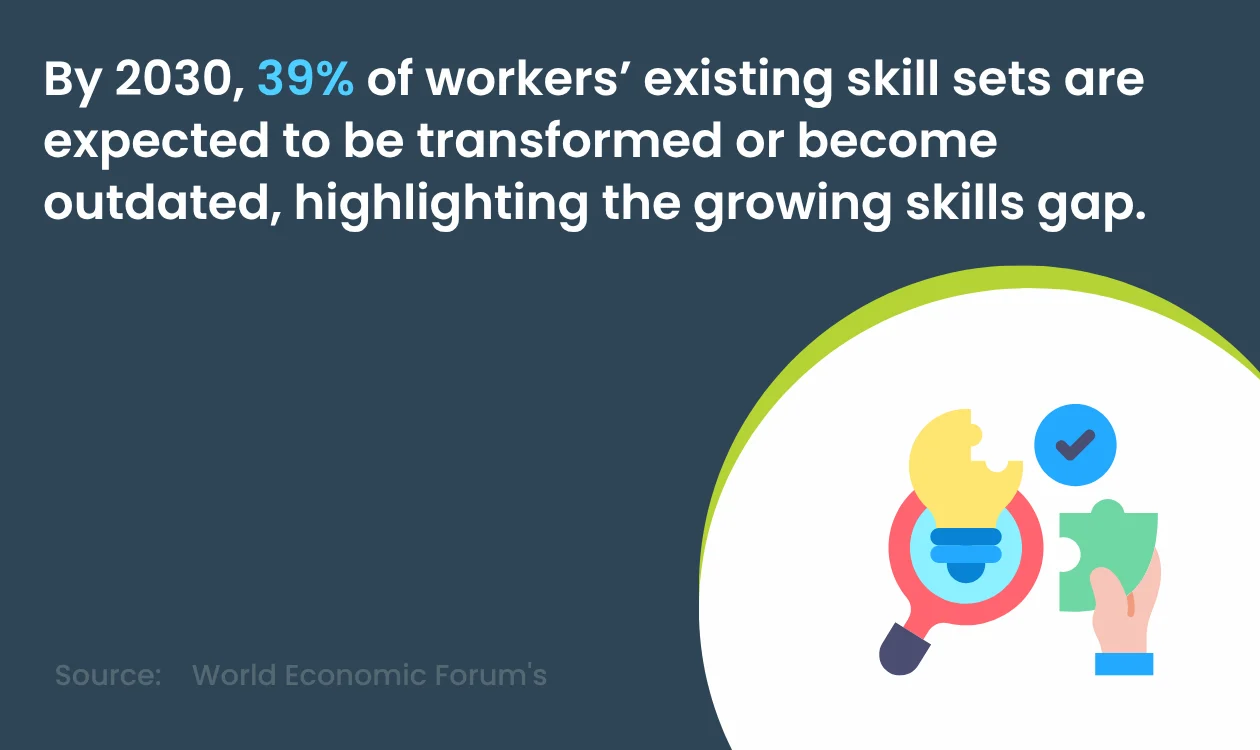
The World Economic Forum's Future of Jobs Report found that skills gaps are among the biggest barriers to business transformation. Organizations clearly understand that skills matter. The harder question is whether they know which skills matter most, where those skills already exist, and whether they add up to the capabilities the business needs.
Talent, skills and capability gaps are not the same thing
• A talent gap asks: Do we have enough people with the required skills?
• A skills gap asks: Do those people have the knowledge or proficiency required for the work?
• A capability gap goes one level further: Can the organization consistently combine and apply those skills, in the right places and at the required scale, to achieve the business outcome?
The distinction can sound subtle, but it changes how organizations make workforce decisions.
Let's understand this with a simple example.
Consider an L&D team supporting a technology organization that has identified Java, Generative AI and cybersecurity as priority skills. When identifying skill gaps, the team may find that only a small percentage of employees have these skills. The immediate conclusion could be that there is a skills gap and that employees need to be trained.
But that still doesn't answer the bigger question: How do these skills translate into real business outcomes?
If the goal is to build AI-powered applications, for example, simply training employees on OpenAI APIs may not be enough. The organization may also need people who understand application architecture, data handling, prompt engineering, security, testing, and how to integrate these technologies into existing workflows.
Similarly, having employees complete a Java learning program does not automatically mean the organization has the capability to build and maintain the applications it needs.
The skills may be present. But the capability to build and deploy real-world applications may still be missing. That is the gap many organizations struggle to see.
Why many organizations struggle to identify capability gaps
If capability gaps are so important, why are they so difficult to identify? The problem is not necessarily a lack of data. Most organizations have more workforce data than ever before. The problem is that the data is often scattered across functions.
HR may know who occupies which role. L&D may know who completed a Java or Generative AI learning program. Talent acquisition may know which skills are difficult to hire for. Managers may know who they rely on for critical work. Business leaders know which outcomes they need to deliver.
But these pieces rarely come together to answer one fundamental question: Do we have the capability to deliver what the business is asking us to deliver?
One of the biggest blind spots is that organizations tend to understand their workforce through roles and job descriptions rather than the work people actually perform. Without understanding how work is actually being done, it becomes difficult to distinguish between a capacity problem, a skills problem, and a capability problem.
Employees may still be working with outdated processes or spending time on manual tasks that could be handled by automation. That requires looking more closely at the work itself.
A skills problem may require development or hiring. A work-design problem may require automation or process redesign. Treating every problem as a talent shortage simply makes the organization more expensive without necessarily making it more capable. The result? Hiring decisions become reactive, increasing payroll costs and financial risk.
What can companies do to fix it
Once organizations recognize that capability gaps can hide behind talent and training metrics, the next question is practical: where do they start?
A useful way to think about this is to work backward from the business outcome. Instead of allowing the current organization and its existing skills to determine what it can deliver, leaders start with the product, service, or business outcome they want to achieve and work backward to identify the capabilities and skills required to make it happen.
1. Start with the business outcome
Organizations can start small by working backward from one business priority, identifying the capabilities it requires, and then testing what exists within the workforce today.
A company planning an AI-led customer service transformation, for example, may need capabilities spanning AI engineering, data governance, customer experience, process redesign and change management. The question is not simply, “Which AI skills do we need?”
It is: “What must the organization be able to do differently for this strategy to succeed?” That question creates a much clearer starting point for workforce planning. It also prevents organizations from confusing a technology trend with business capability.
2. Design L&D programs with the help of AI
Personalized learning pathways lead to better employee output. L&D teams can start with the skill inventory and capability priorities identified earlier, then use that information to determine where development will have the greatest impact.
AI can make this process more continuous. AI tools, including LLMs, can assist L&D teams in analyzing assessment results, employee self-assessments, and learning data against defined skill frameworks. The resulting insights can help employees understand where they have development gaps and give L&D teams a more informed basis for recommending learning pathways. The resulting insights can help employees understand where they have development gaps and give L&D teams a more informed basis for recommending learning pathways.
3. Look for self-reported skills and re-assess
There is also a reason to be careful about treating self-reported skills as the complete picture. IBM's 2026 CEO study found that 86% of CEOs surveyed believe their employees have the skills to collaborate with AI, while only 25% of workers report using AI regularly as part of their jobs.
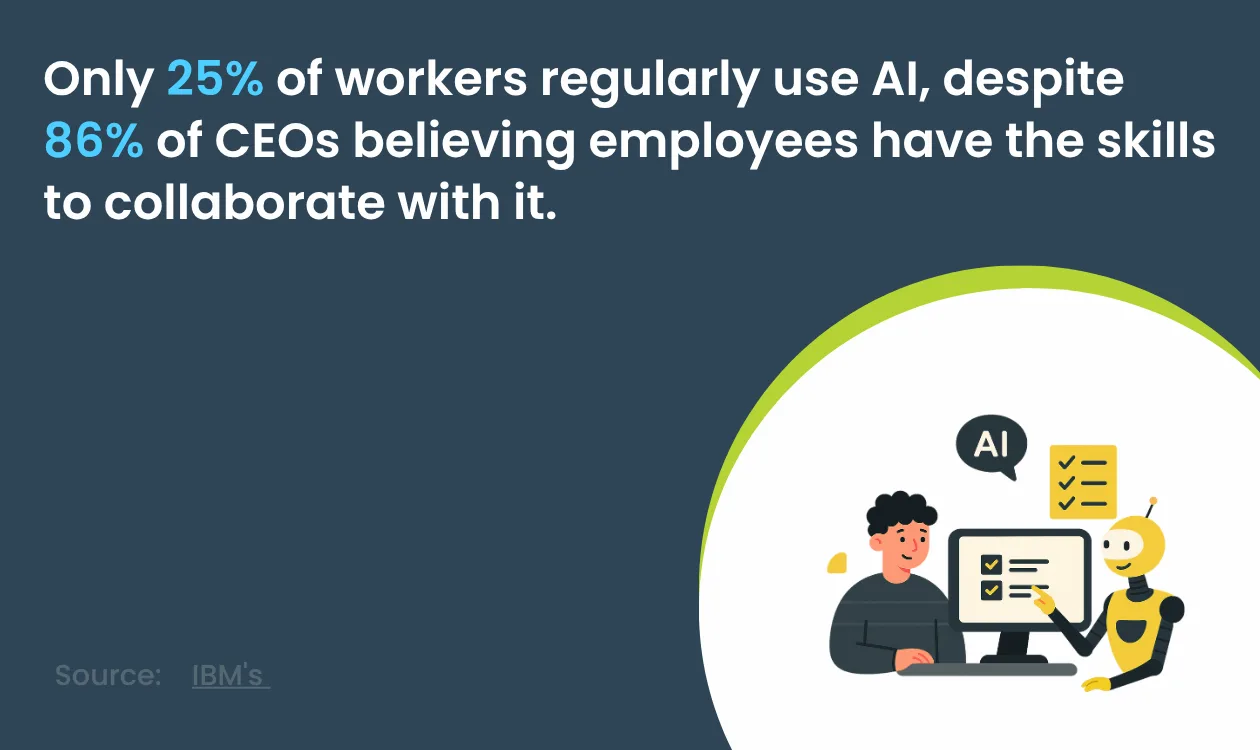
The gap between perceived readiness and actual adoption illustrates a broader challenge. However, that does not make employee self-assessments unreliable. It only means that they are not the only pieces of evidence. A stronger view combines what employees say they can do with what they have demonstrated through assessments, projects, and hands-on training.
Final thoughts
The shift from skills to capability is ultimately about seeing the bigger picture. Knowing what skills employees have is useful, but knowing whether those skills come together to help the business achieve its goals is what really matters.
The organizations that are better prepared will not simply be the ones that hire talented people. They will be the ones that understand what their workforce is capable of doing and turn that understanding into better workforce and business decisions.
Because the real question is not "What skills do we have?" It is “What are we capable of achieving with them?”