
 13 mins read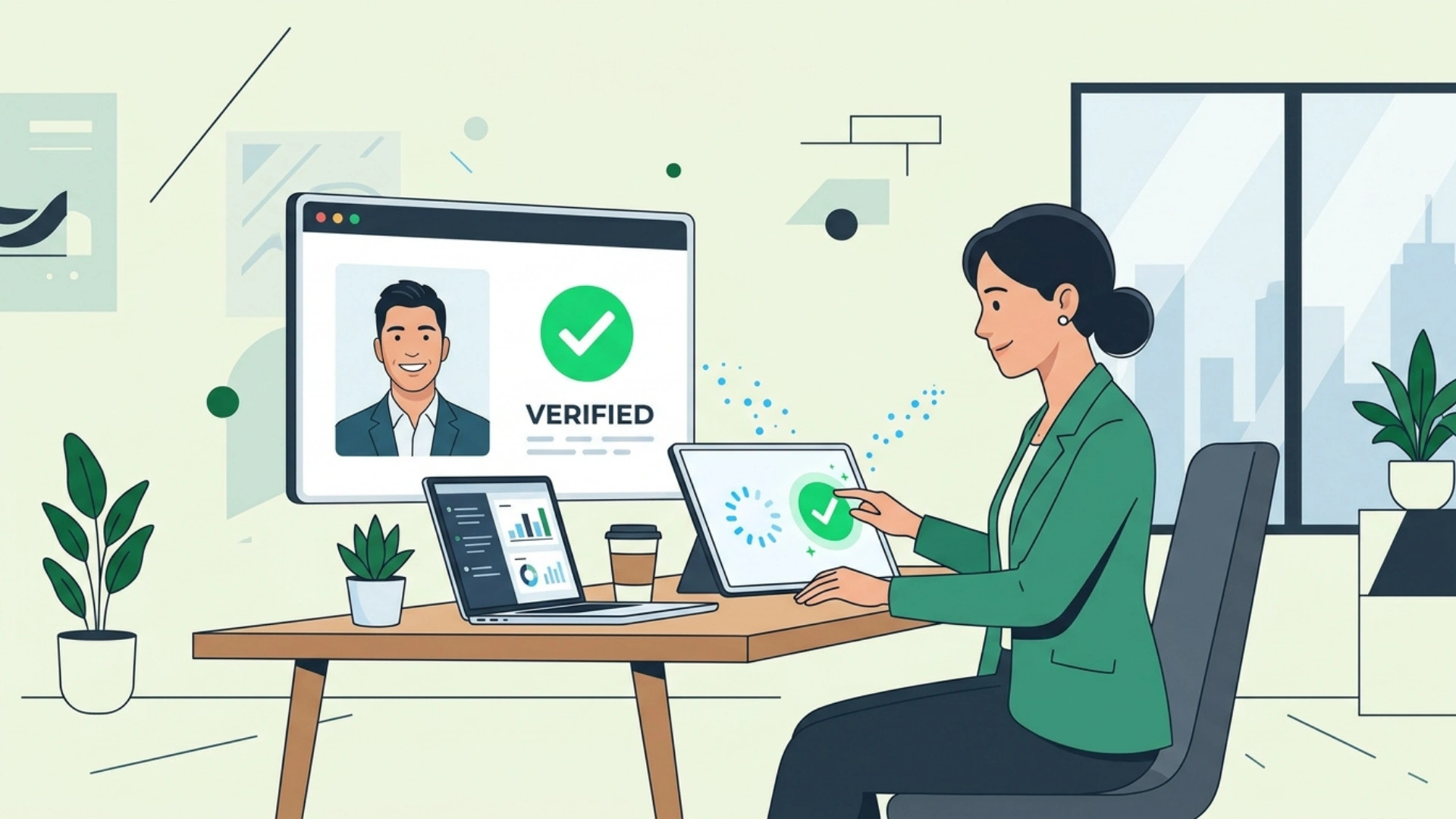
HR professionals spend their careers building trust for other people. They verify candidates, validate credentials, build employer brands, and make people decisions that affect entire organisations. And yet when it comes to their own professional identity online, most HR practitioners leave it entirely to chance.
A verified HR identity is the answer to that gap. It is not a single product, a social media strategy, or a certification. It is the deliberate construction of a professional presence that confirms who you are, communicates what you do with precision, and builds the kind of trust that opens doors before a single conversation happens.
This guide covers everything HR professionals and recruiters need to know about building, maintaining, and benefiting from a verified HR identity in 2026.
TL;DR
- A verified HR identity is a confirmed, structured, and credible online professional presence built specifically for HR practitioners and recruiters
- It goes beyond a LinkedIn profile by adding employment verification, HR-specific depth, and a shareable presence that works across digital and physical touchpoints
- HR professionals with a verified identity are more discoverable, more trusted, and more likely to benefit from career opportunities they never actively pursued
- Building one requires clarity about your specialisation, verification of your current employment, consistent presentation across all touchpoints, and a shareable identity card that travels with you
- This guide covers visibility, discoverability, LinkedIn limitations, personal branding, verification, HR Verified cards, certifications, and the future of professional identity in HR
What Is a Verified HR Identity
A verified HR identity is a professional presence that has been confirmed through a structured process rather than simply claimed. At its core, it means your current employment in HR has been validated through a work email, your role is described within a recognised HR designation framework, and your profile captures the depth of your expertise in a way that is searchable, credible, and specific to the HR profession.
The difference between a verified and unverified HR identity is the difference between a profile someone has to take at face value and one they can trust immediately. For a profession built on people, relationships, and credibility, that difference has real career consequences.
A verified HR identity typically includes three elements working together: confirmed employment through a current professional email, an HR-specific profile with structured fields for specialisation, certifications, and experience, and a shareable identity card that carries your professional presence into every setting where your career shows up.
Why Verified HR Identity Matters More Than Ever
The HR profession has changed significantly in how talent is found, evaluated, and trusted. A few years ago, most HR opportunities moved through known networks and personal referrals within a relatively local or regional context. Today, HR talent searches are global, digital-first, and increasingly dependent on what a profile can communicate in seconds.
Three forces have made verified HR identity more relevant now than at any previous point.
- Profile misrepresentation is widespread. On general professional networks, there is no mechanism to confirm that someone is currently employed in HR, at the organisation they list, in the role they claim. This has made scepticism the default response to unverified professional claims.
- HR is a trust-based profession. HR professionals handle sensitive employment data, make decisions that affect people's careers, and are often the first point of evaluation in professional due diligence. An unverifiable HR identity creates a credibility gap that no amount of good work can fully compensate for.
- Global HR talent searches have changed how discovery works. When a CHRO in one country is evaluating an HRBP in another, or when a global executive search firm is compiling a shortlist, the evaluation starts with a search. A verified, specific, and well-maintained HR identity is what determines whether you appear on that shortlist at all.
Visibility: Being Found Before You Are Searched For
HR professional visibility is the foundation everything else sits on. Before credibility, before branding, before verification, the most basic requirement is that the right people can actually find you.
Most HR professionals are significantly less visible than their expertise warrants. A LinkedIn profile that has not been updated in two years, a generic headline, and no presence outside a single general platform is not visibility. Understanding what genuine HR visibility actually requires is the starting point most practitioners skip entirely.
Beyond domestic visibility, the opportunity extends globally. HR talent searches cross borders routinely, and the HR professionals who benefit are the ones whose profiles are built to be found internationally. The mechanics of how global HR talent discovery actually works are quite different from local visibility, and most HR professionals have not adjusted their profiles accordingly.
There is also a practical argument for keeping your professional presence public that goes beyond discoverability. Why a public HR profile matters for career development is a case more HR professionals need to consider carefully before defaulting to a restricted or incomplete online presence.
Career Growth: How Your Profile Works For You When You Are Not
The connection between a verified HR identity and career growth is less obvious than it looks, and more powerful than most HR professionals realise.
Your professional profile does not just represent you during an active job search. It works in the background continuously, shaping how reference checks land, whether consulting opportunities find you, and how quickly new stakeholders trust your expertise. The specific career moments where a verified HR profile makes a measurable difference are often the ones that HR professionals never connect back to their online identity, even when the profile was the deciding factor.
The compounding effect of an early, well-maintained profile means the benefit grows the longer it has existed. Waiting until you need a new opportunity to invest in your profile means starting from zero exactly when you have the least time to spare.
LinkedIn: What It Does Well and Where It Stops
LinkedIn is the default professional network for most HR professionals and recruiters, and that is unlikely to change. But treating it as a complete professional identity rather than one channel within a broader presence is one of the most consistent and costly mistakes in the HR profession.
LinkedIn was built for all industries. It has no employment verification mechanism, no HR-specific profile structure, and no way to filter for verified active HR practitioners. Why LinkedIn alone is not enough for HR professionals is a case that becomes clearer the more you understand what the platform was actually designed to do, and who it was designed to do it for.
For recruiters, the problem is even more acute. There are five structural gaps in LinkedIn that affect HR practitioners specifically, none of which are fixable through better profile optimisation, because they are built into the platform's architecture rather than into how any individual uses it.
The candidate response rate problem facing recruiters on LinkedIn is also worth understanding as a structural issue rather than a personal one. Building a recruiter identity that works beyond a single platform is the practical response to a saturation problem that is not going to reverse itself.
For HR professionals who want to understand exactly how LinkedIn and a verified HR profile compare side by side, including a direct comparison of what each platform is built to do and a decision guide based on your current setup, that comparison is worth reading before drawing any conclusions about which gap matters most.
And for recruiters specifically, the broader argument for why industry-specific professional profiles serve recruiters better than a general network comes down to audience relevance, verification, and the quality of the professional community you are visible within.
Personal Branding: Shaping How You Are Perceived, Not Just Whether You Are Seen
Visibility is being seen. Personal branding is controlling what people think when they see you. They are related but not the same thing, and most HR professionals invest in neither with enough intention.
HR personal branding is not about social media activity or building a large following. It is the deliberate act of ensuring your professional reputation reflects your genuine expertise. Understanding what HR personal branding actually requires, including why most HR professionals resist it and how to define your positioning clearly, is foundational before any tactical steps make sense.
For recruiters, personal branding has an additional dimension: it directly affects candidate response rates, mandate quality, and professional reputation within the talent community. There are practical steps recruiters can take to build a brand that works consistently across candidates, hiring managers, and professional peers.
Before building anything, it also helps to know what to avoid. The most common recruiter branding mistakes are not dramatic errors but quiet habits that compound over time, and identifying which ones apply to your current setup is often the clearest starting point for improvement.
Verification: The Foundation of Professional Trust
Everything in a verified HR identity, visibility, personal branding, discoverability, sits on one foundation: verification. Without confirmed employment and a validated HR role, everything else is a claim rather than a credential.
Why professional verification matters in recruitment is not just an individual career question. It shapes how the entire profession is perceived and trusted by the candidates, hiring managers, and organisations that depend on it.
For HR professionals who want to understand what the verification process actually involves step by step, including what to prepare beforehand and what changes once verification is complete, the process is more straightforward than most people expect.
For recruiters, verification has an immediate and measurable effect on candidate engagement. Why a verified recruiter profile performs differently from an unverified one comes down to the trust signal it sends before any direct conversation happens.
Verification also matters at the network level. Why HR networking functions better when participants are verified is a question about the quality of the professional community itself, not just individual profiles within it.
HR Verified Card: Taking Your Verified Identity Everywhere
A verified profile is the digital foundation of your HR identity. An HR Verified Card is how that identity travels with you into every setting where your career shows up, in person, in email, on a CV, at a conference.
Most HR professionals have never thought clearly about what a verified HR card actually is and how it differs from a standard business card or a digital contact-sharing tool. The distinction matters because it changes how the card gets used and what it is actually worth in a professional setting.
Using the card effectively is its own skill. The specific touchpoints where a QR-linked HR profile creates the most impact are not always the obvious ones, and knowing which moments to use it deliberately makes the difference between a card that sits in a wallet and one that generates real professional value.
Many HR professionals wait to be found rather than actively sharing their identity. The professional case for sharing your verified HR card proactively is strong enough that most practitioners who understand it change how they approach every professional introduction.
And for HR professionals who attend networking events, conferences, or HR summits, how an HR Verified Card changes the outcomes of in-person networking is worth understanding before the next event you attend without one.
Certifications: Credentials That Need to Be Seen to Count
HR certifications represent significant investments of time, money, and professional effort. SHRM, CIPD, HRCI, and other recognised certifications genuinely differentiate one HR professional from another. But a certification that exists only on a PDF nobody sees is a career asset that is not being used.
How HR certifications function as trust signals in professional credibility goes beyond the obvious point that they demonstrate knowledge. Their real value is in the credibility they add at every professional touchpoint where your expertise is being evaluated before a conversation begins.
The practical question of where and how to display certifications effectively as part of a verified HR identity is one most HR professionals have not resolved deliberately, and the difference between certifications that are visible and ones that are assumed is larger than most people expect.
The Future of Verified Professional Identity in HR
The direction professional identity is moving in HR is clear. Verification, specificity, and portability are becoming baseline expectations rather than differentiators. The HR professionals and recruiters building verified identities now are positioning themselves ahead of a shift that will affect the entire profession.
Where professional identity in HR is heading and what it will mean for practitioners who have and have not built verified identities is not a distant question. The changes are already visible in how global HR talent searches function today.
The structural shift happening in how professional communities are built is equally significant. Why verified professional networks represent a different kind of professional infrastructure from general social platforms comes down to what the community is built on and who can actually be part of it.
And at the broadest level, why trust and verification are the foundations the HR profession's long-term credibility rests on is a question every HR leader and practitioner should be thinking about now, not in five years when the shift has already happened.
Building Your Verified HR Identity: Where to Start
The concept of a verified HR identity can feel like a large undertaking when laid out in full. In practice, the starting point is simple.
A verified professional profile anchored to your current work email, structured around recognised HR designations, and deep enough to communicate your genuine expertise is the foundation everything else sits on. From there, a shareable HR Verified Card extends that identity into every professional setting. Certifications added to the profile ensure that credentials are visible and counted. And consistency across all touchpoints ensures the same credible story is told everywhere.
NextInHR's HR Verified Profile is built specifically to support this. It is an HR-exclusive platform where every member is verified through a current work email, designations follow a structured HR framework, and profile depth captures the expertise that matters most in HR talent searches. The accompanying HR Verified Card gives every HR professional a shareable, QR-enabled identity that works everywhere from a conference in Singapore to an email introduction to a hiring manager in London.
The HR Profession Runs on Trust. Your Identity Should Reflect That.
Every day, HR professionals ask candidates, employees, and organisations to trust them with decisions that matter. That trust is earned through experience, integrity, and professional credibility built over years.
Your online HR identity should reflect every part of that. Not as a marketing exercise or a career tactic, but as an accurate, verifiable, and accessible representation of who you are and what you bring to the profession.
A verified HR identity is not a trend. It is the professional standard the HR community is moving toward, and the practitioners who build it now will carry an advantage that compounds with every year it exists.