
 10 mins read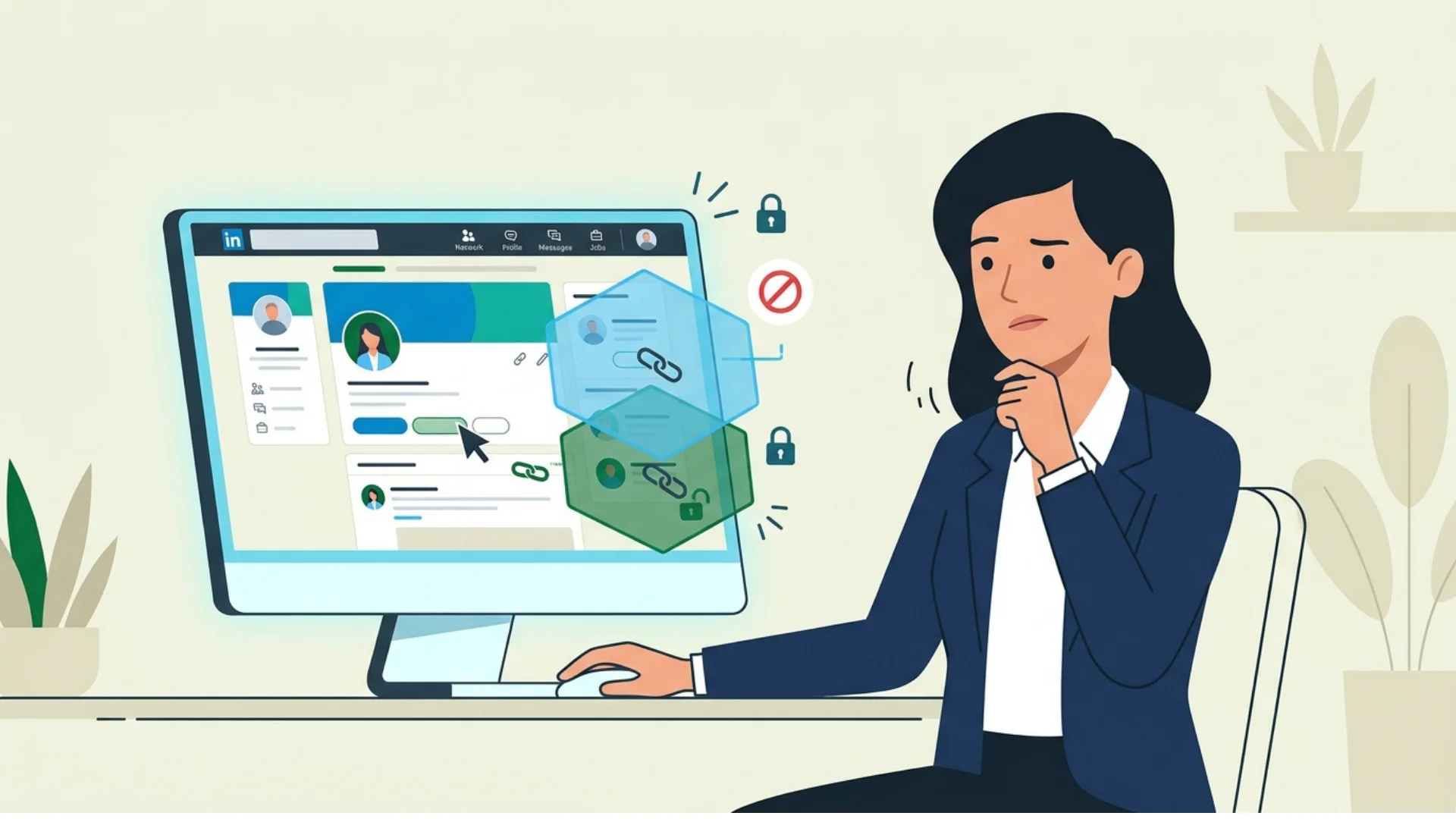
LinkedIn is the default. Ask any HR professional or recruiter where they maintain their professional presence online and the answer is almost always the same. It is the platform that the HR and recruitment world collectively agreed to use, and for a long time that agreement made sense.
But default does not mean sufficient. And for HR professionals and recruiters specifically, the LinkedIn limitations are becoming harder to ignore.
This is not an argument for abandoning LinkedIn. It still has genuine value as a networking and content platform. But when it comes to building a credible, searchable, and verified professional identity as an HR practitioner or recruiter, the platform has some fundamental gaps that most people have simply learned to work around without stopping to question whether they should have to.
This blog is about naming those gaps honestly.
TL;DR
- LinkedIn was built for all professionals across all industries, which means it serves no industry particularly well
- For HR professionals and recruiters, LinkedIn limitations include lack of verification, no HR-specific structure, declining engagement, and growing candidate scepticism
- A profile that exists on LinkedIn alone is visible in only one place, unverified, and indistinguishable from millions of other profiles
- The platform's saturation problem is a structural issue, not one that better content or more connections will fix
- Understanding what LinkedIn cannot do is the first step toward building a professional identity that actually works
What LinkedIn Was Actually Built For
This is the root of most LinkedIn limitations for HR professionals and recruiters, and it is worth saying clearly.
LinkedIn was built as a general professional network. Not an HR network. Not a recruitment platform. A general network for professionals across every industry, every function, and every level of seniority. Its profile structure, search filters, and algorithm were designed with that breadth in mind.
And that breadth is precisely the problem.
A platform designed for everyone cannot go deep for anyone. There is no structured field for HR specialisation. No way to record the workforce size you have managed. No certification framework that maps to how HR credentials actually work. No mechanism to verify that someone who calls themselves an HR Business Partner or a Talent
Acquisition Lead is actually employed in that role right now.
For a profession that is fundamentally about people, trust, and precision, a generic platform creates a genuine identity gap that no amount of profile optimisation can fully close.
The Five Structural Gaps LinkedIn Has for HR
Rather than a general critique, it is more useful to be specific. Here are the five LinkedIn limitations that matter most for HR professionals and recruiters.
1. No employment verification
Anyone can list any employer, any title, and any industry on LinkedIn with no confirmation required. A recruiter who left their firm eight months ago can still appear to be employed there. An HR professional can describe themselves with any designation they choose. In a field where trust is everything, this is a structural credibility problem.
2. No HR-specific profile architecture
LinkedIn profiles were not designed around how HR careers work. There is no structured way to communicate your HR specialisation, the workforce sizes you have operated in, the HR frameworks you work within, or the certifications that are relevant to your specific function. You get a text box. The depth gets lost.
3. Declining candidate engagement
InMail response rates for recruiters have been falling consistently. Candidates have become desensitised to recruiter outreach on the platform because the volume is too high and the quality too inconsistent. The platform that once gave recruiters direct access to passive talent is now one of the hardest places to get a genuine response.
4. No HR-exclusive community
HR professionals networking on LinkedIn are networking alongside every other profession on earth. There is no ability to find, filter, or connect with verified HR practitioners specifically. The community that HR professionals actually need, one built around shared expertise, discretion, and professional trust, does not exist within LinkedIn's architecture.
5. Algorithm dependency
Visibility on LinkedIn is increasingly tied to content output and engagement, not professional credibility. The platform rewards those who post frequently, not necessarily those who are most skilled or most experienced. For HR professionals whose job is not content creation, this creates a visibility model that is both unsustainable and disconnected from actual professional value.
Why More Connections Do Not Mean More Credibility
There is a number that many LinkedIn users quietly track: their connection count. It feels like a proxy for professional influence. A profile with ten thousand connections looks more established than one with three hundred.
But connection count and professional credibility are not the same thing, and confusing the two is one of the most common LinkedIn habits in the HR community.
A large network on LinkedIn means you have sent and accepted a lot of connection requests. It does not mean the right people can find you when it counts. It does not mean your expertise is communicated clearly. It does not mean a hiring manager in another geography knows you exist. And it certainly does not mean a candidate receiving your outreach will trust you more because of it.
Credibility comes from specificity, verification, and consistency. A verified profile on an HR-specific platform with a precise specialisation and confirmed employment carries more professional weight than a LinkedIn profile with thousands of generic connections and a headline that says “Passionate HR Professional.”
The number that actually matters is not how many people you are connected to. It is how many of the right people can find you, understand you, and trust you immediately.
The Content Trap: Why Posting More Is Not the Answer
When HR professionals and recruiters talk about LinkedIn visibility, the advice they most commonly receive is some version of "post more content." Write articles. Share opinions. Comment on trending posts. Build a following.
This advice is not wrong exactly. But it misdiagnoses the problem.
The visibility challenge most HR professionals face on LinkedIn is not a content problem. It is an identity problem. Their profile does not communicate their expertise clearly. Their employment is unverified. Their specialisation is buried in a generic summary paragraph. No amount of posting fixes any of those things.
Content on top of a weak identity is like painting a house with no foundation. It might look better briefly but the underlying problem remains.
Beyond that, content creation is a significant time investment that most HR practitioners cannot sustain alongside a full-time role. The algorithm punishes inconsistency. Engagement drops the moment you stop posting. Visibility built on content output is rented, not owned. The moment you step back, it disappears.
A verified, structured professional identity continues to work for you whether you post today or not. That is a fundamentally different and more durable form of visibility.
The Habits LinkedIn Creates That Hurt Your Career
LinkedIn limitations do not just affect how visible you are. They shape the habits and assumptions that quietly limit how HR professionals think about their own professional identity.
- The single-platform assumption: Because everyone is on LinkedIn, it feels like being on LinkedIn is enough. This assumption means most HR professionals never build the kind of multi-channel, verified professional identity that actually makes them discoverable in the spaces where HR talent searches happen.
- The activity-equals-visibility belief: Liking posts, commenting on articles, and sharing updates feels productive. But activity on a saturated platform does not translate to the kind of professional visibility that brings the right opportunities. It creates the feeling of presence without the substance of it.
- The connection request as networking: Sending a connection request is not the same as building a professional relationship. LinkedIn has made it easy to confuse the two. Real HR networking happens in communities where people know and verify each other, not in a feed of content from people you barely know.
- Profile neglect: Because LinkedIn is always there and always the same, it is easy to update your profile once and forget it. Most HR professionals are representing themselves online with information that is two or three years out of date, in a format that does not capture what they actually do or what they have built.
Building Beyond the LinkedIn Default
The answer to LinkedIn limitations is not a single alternative platform. It is a mindset shift from treating LinkedIn as your professional identity to treating it as one channel within a broader, more intentional presence.
For HR professionals and recruiters, that means a verified professional identity anchored to current employment, a profile architecture designed around how HR expertise actually works, and a presence that travels with you whether someone finds you online or meets you at an event.
Platforms built specifically for the HR community address the gaps LinkedIn cannot close. NextInHR offers verified, HR-exclusive profiles where employment is confirmed through a professional work email, designations follow an HR-specific framework, and profile depth captures the expertise that actually matters in HR talent searches. It is the kind of professional infrastructure that LinkedIn, by design, was never built to provide.
How Much Is LinkedIn Actually Doing For You
Score yourself honestly. Give yourself 1 point for every yes.
- Is your current employment verified on your profile?
- Does your profile clearly communicate your exact HR specialisation?
- Have you received relevant inbound from the right people in the last 90 days?
- Can a global recruiter find you through an HR-specific search?
- Does your professional identity work outside of LinkedIn at events and in emails?
- Is your profile updated to reflect your current role and expertise?
- Can candidates or collaborators verify who you are before engaging with you?
0 to 2: LinkedIn is giving you almost nothing. Your professional visibility has significant gaps that the platform is not equipped to fill.
3 to 4: LinkedIn is doing some work for you but structural limitations are capping how visible and credible you are to the right people.
5 to 7: You have a solid LinkedIn presence. The question now is whether that is enough or whether the gaps in verification and HR-specific depth are costing you opportunities you cannot see.
LinkedIn Is a Tool, Not an Identity
This is the most important reframe for HR professionals and recruiters thinking about their professional presence.
LinkedIn is a tool. A useful one in the right context. But a tool is not the same as an identity, and confusing the two is what leads most HR professionals to significantly underinvest in how they are actually perceived and discovered professionally.
Your professional identity is the sum of how clearly you communicate your expertise, how verifiably you present your credentials, how accessible you are across the channels where the right people look for you, and how consistently that identity holds up whether someone finds you online, meets you at an event, or receives an email from you.
LinkedIn can be a part of that. It should not be all of it. And for HR professionals and recruiters who want to be taken seriously in the spaces where careers are actually made, understanding that distinction is where everything else begins.