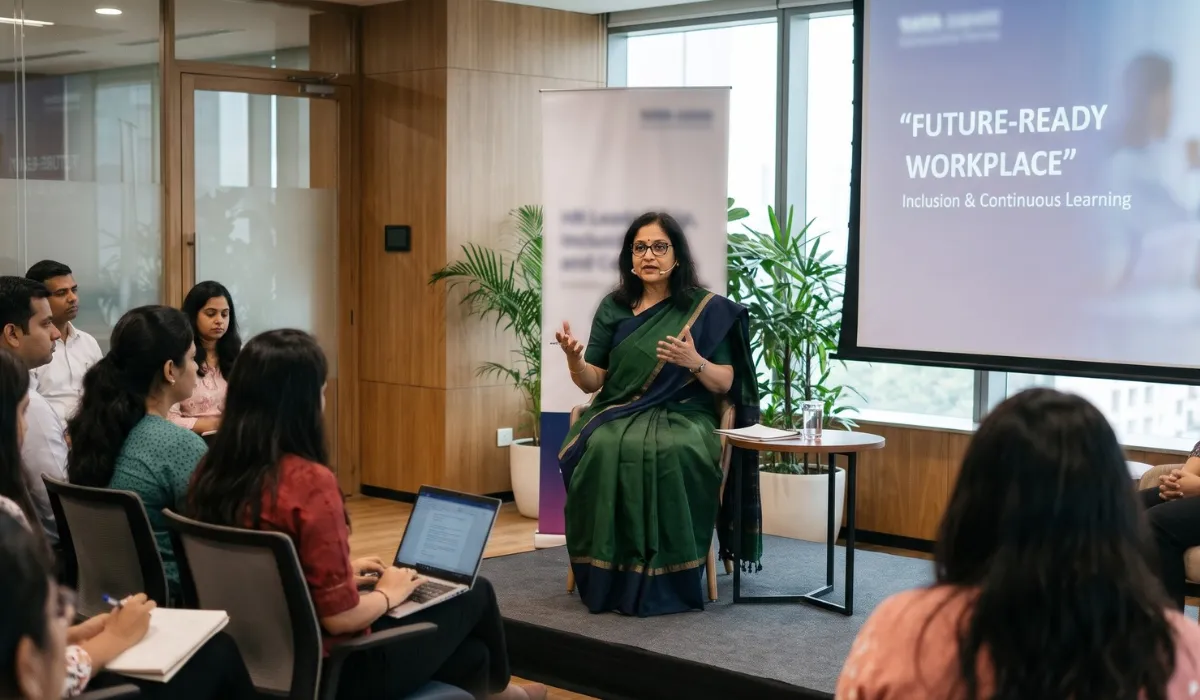
For Shaili Tyagi, Chief Human Resources Officer at Somany Impresa Group, a career in human resources developed from an unexpected professional opportunity into a leadership journey across industries and business environments.
In her recent herSTORY interview with HRKatha, Tyagi reflects on the experiences that shaped her approach to people management, including career transitions, gender inclusion, organisational restructuring and the growing role of technology in manufacturing.
Her professional journey began with an academic interest in Botany and research before an opportunity in corporate facilitation introduced her to HR. Over time, she built her expertise through professional learning, leadership development and experience across different organisations.
Understanding Business Before Designing HR Practices
One of the central themes in Tyagi's leadership approach is the importance of understanding an organisation before introducing people-management practices.
Having worked across multinational businesses and family-run organisations, she believes HR solutions should reflect the operating requirements of individual businesses rather than follow a uniform model.
She also emphasises that consistent standards of fairness and accountability must be accompanied by people practices suited to the needs of each workforce.
Making Leadership Opportunities More Accessible to Women
Tyagi's experience as a woman in senior leadership has influenced her views on workplace inclusion.
She believes professional encouragement must be supported by practical opportunities, including challenging assignments, business exposure and consideration for leadership positions. In manufacturing environments, workplace facilities, transport and shift arrangements can also influence women's access to career opportunities.
Preparing Employees for Technology-Driven Work
Tyagi believes HR should participate in technology and automation decisions before implementation rather than becoming involved only when employees need training.
For manufacturing organisations, this means understanding how changing workflows affect responsibilities, what skills employees will need and where human judgement remains important.
Her approach connects technology investments with employee development, workplace safety, productivity and organisational readiness.
Fairness During Organisational Change
When businesses need to restructure, Tyagi advocates examining alternatives such as redeployment, reskilling and changes to work organisation before making decisions that affect employees.
She places particular importance on transparent communication and fair treatment, recognising that the handling of organisational change influences both departing employees and those who remain.
Her broader message to HR professionals is to understand the business context, continue learning and ensure that people considerations remain part of important organisational decisions.