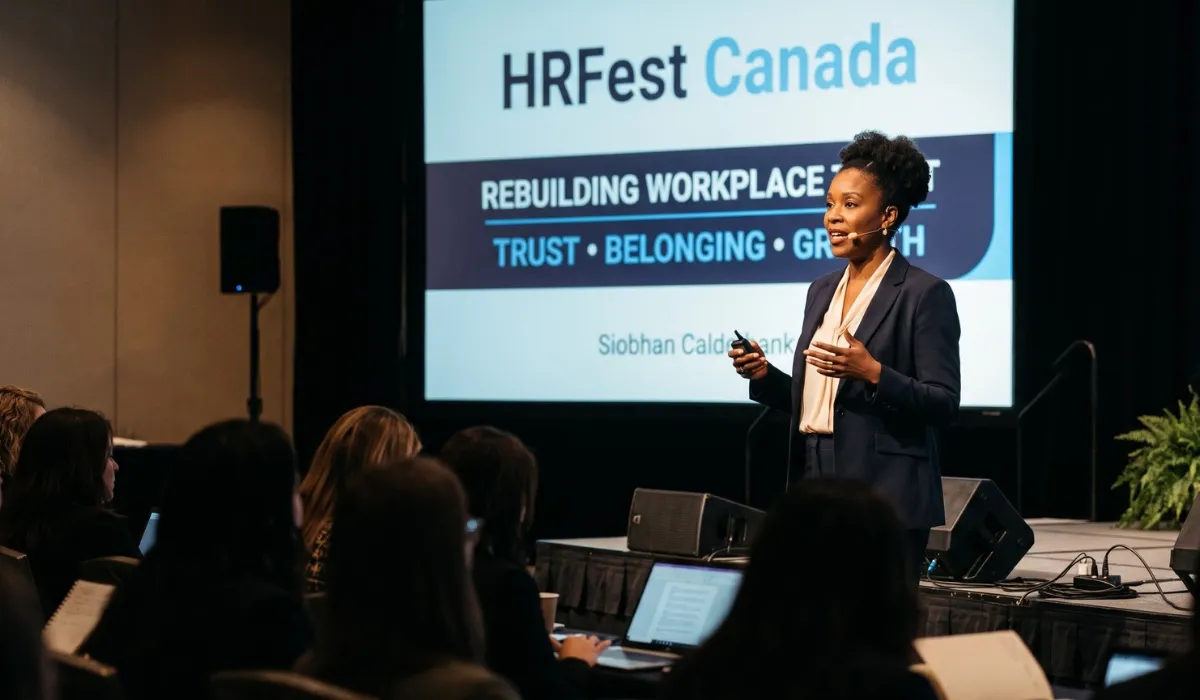
Workplace trust is facing growing challenges as organizations navigate continuous change, shifting employee expectations and evolving workplace relationships.
Edelman's 2026 Trust at Work report found that trust in CEOs declined from 70% to 66%, trust in direct managers fell from 79% to 72%, and trust in coworkers dropped from 82% to 73%.
Speaking at HRFest Canada 2026 in Toronto on November 11, Siobhan Calderbank, vice-president of belonging at Element Fleet Management, highlighted three connected elements that leaders need to strengthen workplace relationships: trust, belonging and career growth.
Trust, Belonging and Growth Must Work Together
Calderbank explained that employees need to feel trusted, included in workplace discussions and supported in their professional development.
Simply inviting employees into meetings is not enough. Leaders must ensure their opinions are heard and influence decisions.
Career opportunities are equally important. Employees who cannot see a realistic path towards advancement may question their future within the organization.
According to Calderbank, all three elements must work together to create an environment where employees feel valued and psychologically safe.
Building Inclusion Through Everyday Leadership
Calderbank emphasized that workplace inclusion needs to extend beyond organizational values and diversity statements.
Managers can strengthen belonging through everyday interactions, including welcoming new employees, checking in with team members and understanding their individual challenges.
She also highlighted the importance of meaningful employee feedback. Collecting opinions without taking action can damage workplace trust.
Organizations should create opportunities for open conversations and demonstrate how employee feedback influences decisions.
Transparency and Listening Are Essential for Leaders
Calderbank identified listening and transparency as important leadership behaviours.
Leaders should encourage employees to express different opinions rather than interpret silence as agreement. Respecting alternative perspectives helps create an environment where employees feel comfortable speaking openly.
Transparency during organizational changes is equally important. When managers withhold information, employees may develop assumptions that damage trust.
Keeping communication open, even when all answers are not available, helps maintain stronger workplace relationships.
Career Development and Sponsorship Matter
Career growth is another important part of building workplace belonging.
McKinsey's Women in the Workplace 2025 report found that 69% of entry-level women want to be promoted, compared with 80% of entry-level men.
The report also found that 31% of entry-level women have a workplace sponsor, compared with 45% of men.
These findings highlight the importance of equal access to mentorship, sponsorship and career advancement opportunities.
Making Workplace Trust a Leadership Responsibility
The discussions at HRFest Canada highlight that rebuilding employee trust requires consistent leadership practices rather than isolated engagement initiatives.
Organizations need to create opportunities for employees to contribute, communicate changes transparently and provide meaningful career development support.
For HR teams, the priority is to help managers turn trust, belonging and growth into everyday workplace practices.