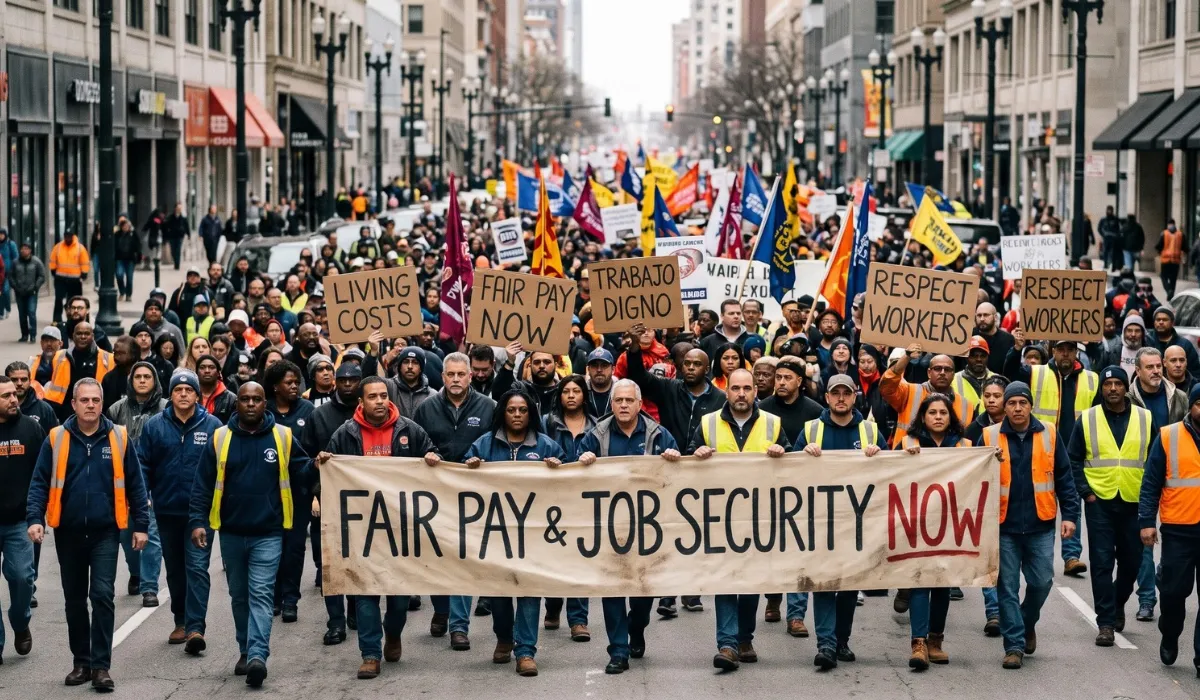
Workers in several countries have taken industrial action in recent days over wages, employment security, working conditions and rising living costs. Recent developments in India, South Korea and Spain show how employees and labour unions are using collective action to press employers and governments for changes to employment policies and working conditions.
The situations differ across regions. While some protests have ended following discussions with authorities, others have led to fresh strike announcements or threatened disruption in the coming weeks.
Coimbatore Sanitation Workers End Strike Following Assurances
More than 4,000 contract sanitation workers employed by the Coimbatore City Municipal Corporation in Tamil Nadu launched an indefinite strike on November 9, demanding regularisation of their employment, statutory wages, bonuses and better working conditions.
Their demands also included higher overtime payments, safety equipment, provident fund and Employees' State Insurance (ESI) benefits, and compensation for families of workers who died while on duty.
The protest disrupted garbage collection across the city. However, the workers suspended their two-day strike on November 11 after discussions with municipal authorities and assurances regarding wage increases and regularisation.
The development highlights ongoing concerns among contract workers over wage disparities, employment stability and access to statutory benefits.
Punjab NHM Employees Announce Further Strike Action
In Punjab, nearly 8,000 contractual employees working under the National Health Mission (NHM) participated in a statewide strike on November 11, affecting healthcare services at government facilities.
The protesting workforce included medical officers, community health officers, staff nurses, auxiliary nurse midwives, laboratory technicians and other healthcare personnel.
Their demands include a permanent service policy, regularisation of long-serving employees, salary revisions and implementation of equal pay for equal work.
Following discussions over their pending demands, the NHM Employees Union announced plans for an indefinite strike from November 17. The union has indicated that further action will depend on whether discussions over job security and financial demands produce a satisfactory outcome.
South Korean Railway Workers Threaten Nationwide Strike
In South Korea, unionised employees of state-run railway operator Korea Railroad Corporation (KORAIL) have announced plans for an indefinite nationwide strike from December 10, 2026, unless their demands are addressed.
The Korean Railway Workers' Union is seeking changes to the existing promotion system, arguing that current arrangements disadvantage frontline employees. The union has also raised concerns about staffing shortages in safety-critical railway operations.
The proposed action could affect high-speed KTX trains, conventional railway services and metropolitan subway operations, creating disruption for commuters and other passengers.
The announcement adds pressure on railway management to address employee concerns over promotion opportunities, staffing levels and workplace safety.
Spain's General Strike Draws Attention to Housing Affordability
Spain experienced its first general strike in 14 years on November 11, as workers and housing activists protested against rising housing costs, rent increases and affordability concerns.
The 24-hour action was supported by major labour unions, including the Workers' Commissions (CCOO) and the General Union of Workers (UGT), alongside housing organisations.
According to Reuters, unions reported participation from more than three million people. Industrial operations, ports, transport services and several manufacturing facilities experienced disruption, although participation varied across sectors. Spain's main employers' association disputed the scale of participation, reporting that most sectors continued to operate normally.
The protest reflected growing concerns about the relationship between wages, housing costs and everyday living expenses. It also brought wider attention to the role of labour organisations in addressing economic pressures that extend beyond traditional workplace disputes.
What These Developments Mean for HR Professionals
These separate labour actions highlight issues that HR teams and employers need to consider when managing their workforces.
Fair compensation, employment security, workplace safety and access to statutory benefits remain important sources of employee concern. Rising living costs can also influence employee expectations around wages and financial stability.
For HR professionals, maintaining open communication with employees, reviewing compensation practices and addressing workplace grievances can help organisations identify concerns before they escalate into formal disputes.
The recent developments also demonstrate the importance of understanding local labour regulations, employee representation and collective bargaining arrangements.
As further discussions and planned industrial action unfold, employers and HR leaders will need to pay attention to changing employee expectations around fair pay, job stability and working conditions.