
 8 mins read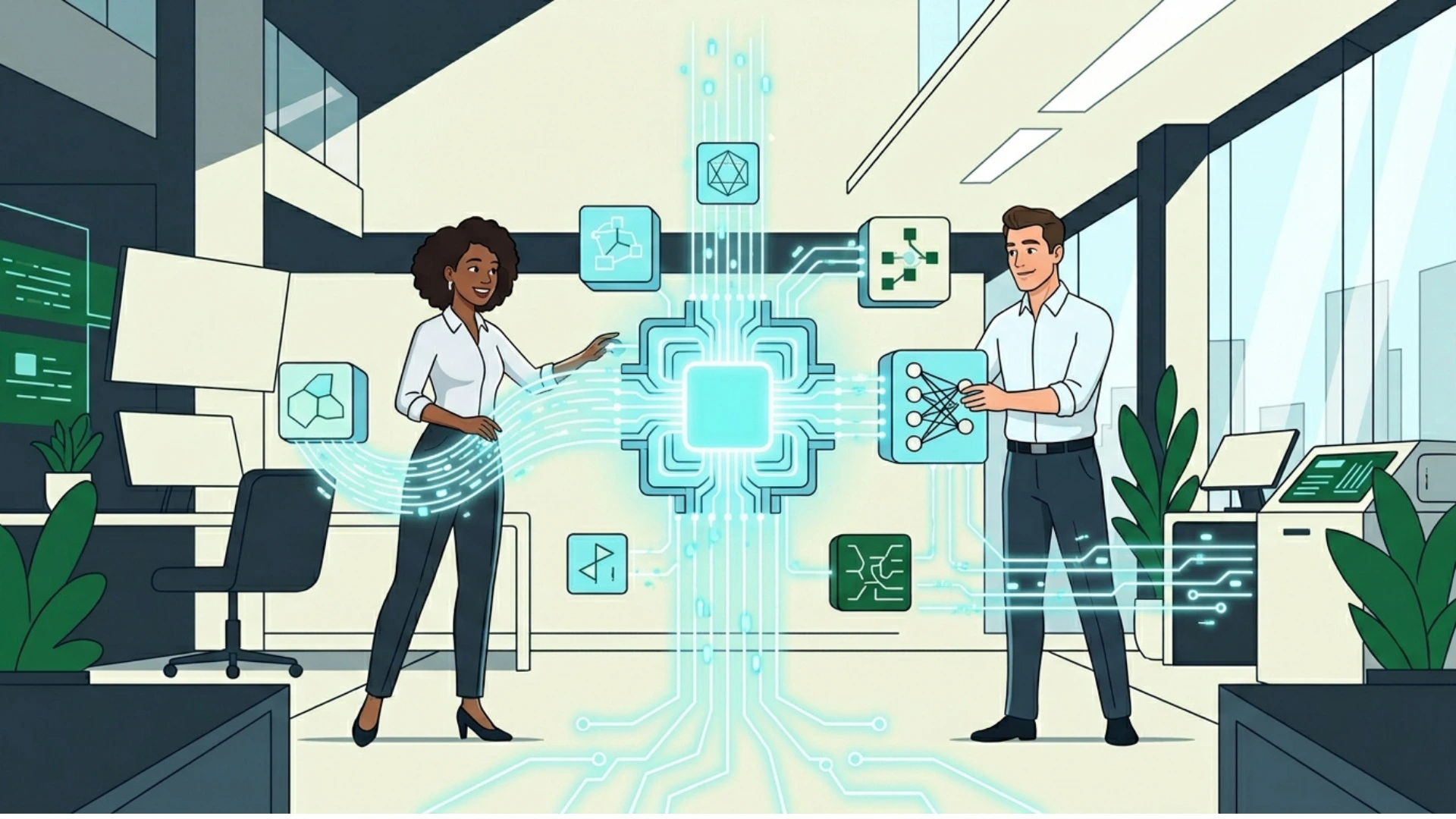
The rise of artificial intelligence has sparked important conversations in HR, but AI in HR is not about replacing people; it is about helping HR teams work smarter. With the right AI HR integration, organizations can use collaborative AI tools to automate repetitive tasks, analyze workforce data, improve hiring decisions, and enhance employee experience while keeping human judgment, empathy, and strategy at the center.
Consider this, nearly 50% of HR processes are expected to be automated with AI, from recruitment to performance management. That doesn’t mean HR jobs will disappear; it means HR professionals have the opportunity to focus on what humans do best: empathy, strategy, and relationship-building. AI can take over administrative burdens, leaving more time for people-centric initiatives that truly make a difference.
TL;DR
- AI in HR empowers HR teams, automating repetitive tasks while letting teams focus on human-centric work.
- Impact areas: Recruitment, onboarding, performance, analytics, and employee engagement through collaborative AI tools.
- Benefits: Saves time, improves decisions with data, enhances employee experience, and supports diversity through AI augmentation HR.
- Top tools: Talent analytics, AI chatbots, personalized learning, and compliance management that support AI HR integration.
- NextInHR provides AI-powered tools and learning resources to help HR teams integrate AI smoothly while keeping the human touch at the core.
What Is AI in HR?
AI in HR is the use of artificial intelligence to automate HR tasks, analyze workforce data, and support better people decisions. It helps HR teams improve recruitment, onboarding, employee engagement, performance management, talent analytics, and retention planning. Instead of replacing HR professionals, AI works as a supportive tool that saves time, improves insights, and allows HR teams to focus on strategy, culture, and employee experience.
How AI in HR is Transforming Modern HR
AI in HR is no longer a futuristic concept; it is actively reshaping HR across industries. Let’s explore how practical AI HR integration delivers value today.
1. Recruitment: Smarter, Faster Hiring
Manually screening resumes, scheduling interviews, and assessing candidates is time-consuming and exhausting. AI-powered HR tools now screen resumes, match candidates to job requirements, and schedule interviews automatically. Chatbots can handle routine candidate queries, ensuring no one feels ignored. When combined with human oversight, AI in HR speeds hiring and improves quality of hire.
2. Onboarding: Personalized and Efficient
A smooth onboarding experience can set the tone for an employee’s entire journey. AI for HR can personalize training paths, automate workflow tasks, and answer employee queries via chatbots, ensuring no step is missed. This creates a consistent and engaging experience for new hires while freeing HR teams from repetitive tasks. Effective AI HR integration here raises new hire retention and time to productivity.
3. Performance Management: Data-Driven Insights
AI provides predictive insights that allow managers to track performance, identify skill gaps, and spot potential disengagement early. Continuous performance analytics helps organizations move beyond annual reviews, creating a more dynamic, fair, and responsive approach. Use AI as a lens for insight while relying on managers and HR to apply context and care.
4. HR Analytics for Strategic Workforce Planning
AI-powered HR analytics helps HR teams move from reactive reporting to strategic workforce planning. By analyzing hiring trends, performance data, engagement signals, and turnover risks, AI can help leaders understand future talent needs and make better decisions about recruitment, retention, and employee development. This supports predictive HR by giving teams earlier insight into workforce gaps and opportunities.
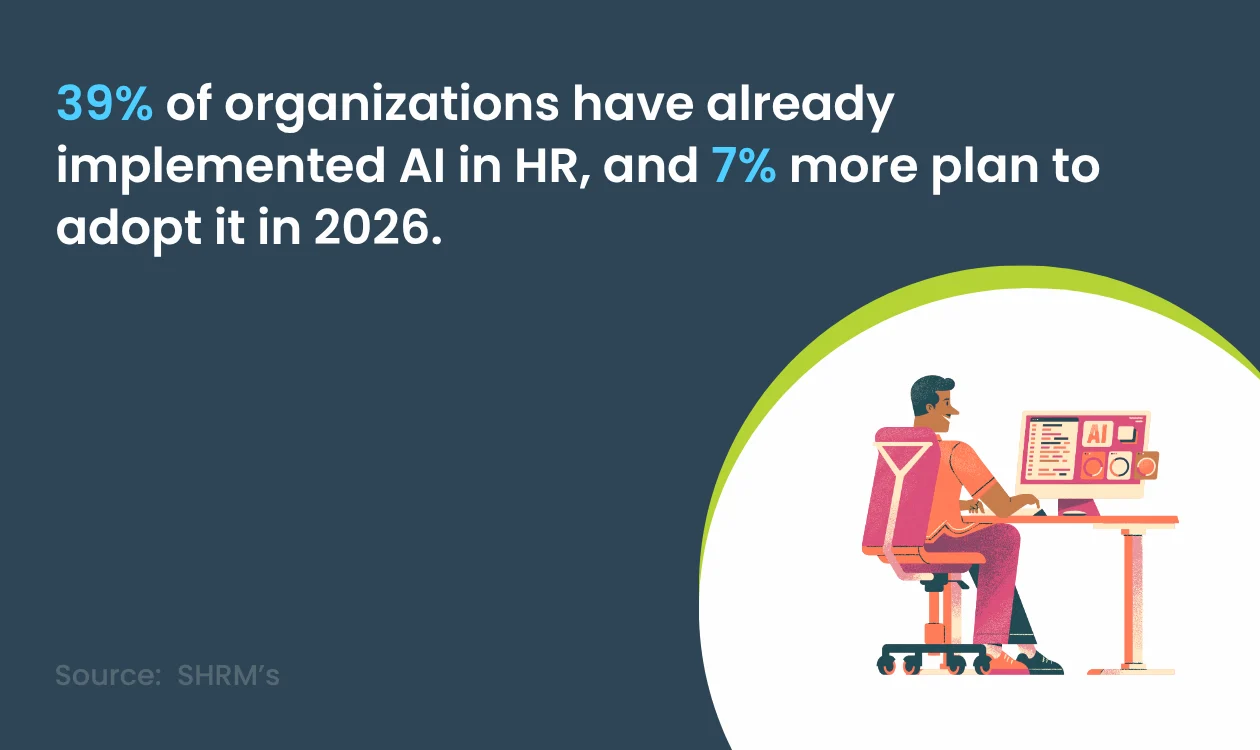
AI adoption in HR is growing, but it is still not universal. According to SHRM’s State of AI in HR 2026 report, 39% of organizations have implemented AI in their HR functions, while another 7% plan to do so in 2026. This shows that AI in HR is moving from experimentation to practical adoption, but success still depends on responsible integration, human oversight, and clear governance.
Collaboration Over Competition: human AI collaboration HR and AI in Action
AI in HR works best when humans and machines collaborate. human AI collaboration HR is the framework that turns automation into amplified human impact. Here’s how the partnership plays out in real life:
- Reducing administrative workload: AI handles repetitive tasks like leave approvals, payroll checks, and compliance tracking. HR professionals now spend more time on employee engagement and strategic initiatives.
- Enhancing decision-making: AI analyzes data to uncover patterns and trends, but human judgment ensures the final decision considers context, ethics, and empathy.
- Improving candidate and employee experience: Faster responses, personalized training, and AI-driven feedback loops enhance engagement.
- Supporting diversity and inclusion: AI can detect unconscious bias in job descriptions or performance reviews, helping HR foster a fairer workplace.
Top AI in HR Applications Transforming Workplaces
AI in HR isn’t just about efficiency; it’s about enhancing the human experience at work. Here are the top applications driving real impact:
1. Talent Analytics & Predictive Insights
AI can forecast workforce trends, anticipate skills shortages, and identify retention risks. HR teams can proactively develop strategies, reducing turnover and ensuring organizational resilience. These predictive models support better hiring plans and succession pipelines when paired with human strategy.
2. Intelligent Employee Engagement Platforms
Modern HR platforms use AI to track employee sentiment, suggest engagement strategies, and detect issues before they escalate. These platforms help HR teams nurture happier, more productive employees. Collaborative AI tools let managers see signals earlier and respond with intentional human actions.
3. Personalized Learning & Career Path Recommendations
AI identifies skills gaps and recommends personalized training paths. Employees feel supported in their growth, and HR gains a smarter approach to talent development. AI augmentation HR helps align learning investments to business outcomes.
4. Virtual HR Assistants / Chatbots
AI chatbots answer FAQs, guide employees through HR policies, and assist with administrative tasks. Employees get instant support, while HR can focus on high-value, human interactions. When integrated responsibly, these tools reduce response time and boost employee satisfaction.
5. AI in Compliance & Policy Management
AI monitors policy adherence and regulatory changes, ensuring the organization remains compliant. HR teams can act proactively, reducing risk and saving valuable time. This capability is central to successful HR digital transformation and trust building.
How HR Teams Can Thrive With AI in HR
Adopting AI in HR isn’t just about flipping a switch. It requires thoughtful planning, culture shift, and continuous learning. Here’s a suggested roadmap for HR teams aiming at scalable AI HR integration:
- Start small and purposeful: Begin with AI tools that solve a real pain point (e.g., resume screening, onboarding automation, chatbots).
- Upskill HR professionals: Offer training on interpreting AI outputs, understanding limitations, and integrating data insights with human judgment.
- Foster a culture of collaboration and trust: Be transparent with employees about where and how AI is used; address privacy and bias concerns openly.
- Blend AI insights with human empathy: Use data-driven insights as a guide, not a replacement for human decision-making.
- Scale gradually: As team confidence grows, expand AI adoption across functions: performance management, learning & development, engagement analytics, compliance.
- Monitor impact and refine continuously: Track metrics: hiring time, retention rate, employee satisfaction, etc. Use the data to improve and evolve your AI-human workflows.
One practical addition is a short pilot governance framework. Assign a cross-functional team to measure outcomes and handle escalation when AI outputs conflict with human judgment. This creates a safe space to iterate and proves value quickly for broader HR technology adoption.
Responsible AI Governance in HR
Responsible AI in HR ensures that automation remains fair, transparent, and human-centered. HR teams should follow clear governance practices such as:
- Privacy : Protect employee and candidate data and use only the information needed for HR decisions.
- Bias checks : Review AI outputs in hiring, performance, promotions, and engagement to reduce unfair outcomes.
- Explainability : Use AI tools that clearly show why a recommendation or result was generated.
- Human oversight : Keep HR professionals involved in sensitive decisions instead of relying only on AI.
- Escalation : Send uncertain, sensitive, or high-risk cases to trained HR professionals for final review.
- Regular monitoring : Check AI tools over time to ensure they remain accurate, fair, and useful.
With the right governance, AI HR integration becomes more trusted, responsible, and aligned with employee experience.
Conclusion
AI in HR is a powerful ally that helps HR teams automate repetitive work, gain actionable insights, and focus on building relationships, shaping culture, and nurturing talent. With thoughtful AI HR integration and human-centered collaboration, organizations can improve hiring speed, decision quality, and employee experience. The future of HR is not HR vs AI; it is HR plus AI, and platforms like NextInHR can help HR leaders adopt intelligent workflows while keeping the human touch at the core.