

 7 mins read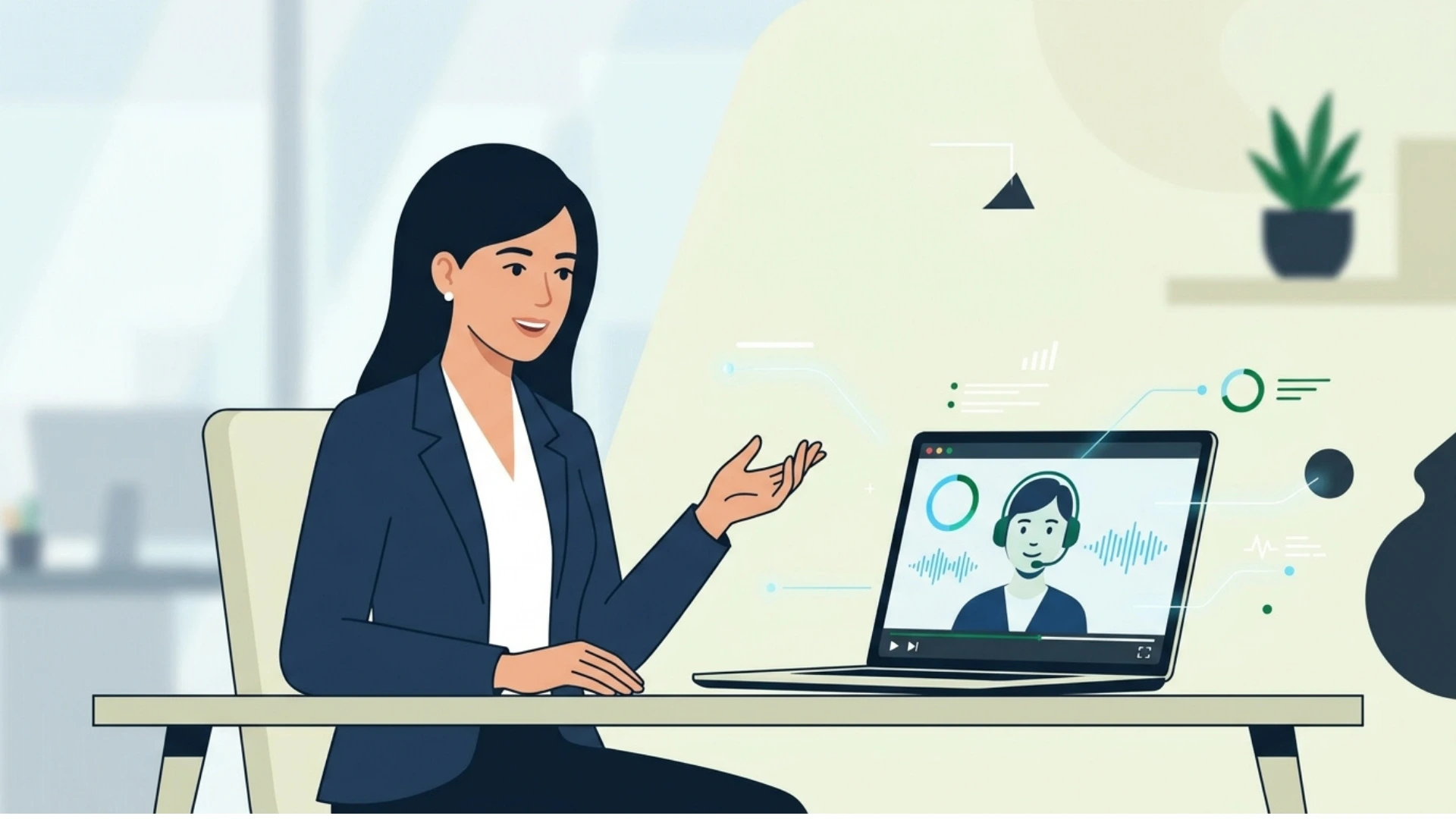
AI interviews give you access to hundreds of candidates before the HR department has had time to check their emails. Rather than wasting the valuable time of your recruiters on conducting lengthy and monotonous phone interviews, these platforms will do all the hard work for you and will select those candidates who deserve further consideration.
Too good to be true? Far from it. According to the SHRM 2024 Talent Trends Report, more than 50% of HR executives believe that the hiring process has become faster due to artificial intelligence, with the cost-per-hire reduced by up to 30% thanks to AI-powered recruitment. Modern AI recruitment platforms combine intelligent selection processes with human recruiters who are well-informed about what they are doing.
TL;DR
- AI interviews automate the initial candidate screening process.
- Candidates complete video or text-based interviews at their convenience.
- AI evaluates responses to identify qualified candidates more efficiently.
- HR teams receive a shortlist of candidates and can focus on deeper assessments.
- Human recruiters should remain responsible for final hiring decisions.
What Is an AI Interview?
Once the applicant has applied to the job opening, they receive an invite, which, upon clicking, prompts them to settle in front of their laptop screen, answering a few questions on video. No humans will be watching them. Instead, many modern AI recruitment platforms use artificial intelligence to analyze responses and assess candidate suitability before HR intervention.
The key aspect here, which most candidates do not know about, is that the algorithm does more than record and archive information. The program actually dissects your answer and evaluates your communication skills and experience, as well as detects some problems that could go unnoticed by any tired recruiter working at 4 pm on a Friday. Some programs even try to detect tone and facial expressions, yet this scares some people off.
Text versions of interviews exist as well. Applicants can simply write down answers and submit them.
Why Shouldn't HR Handle This From Day One?
Because they're buried under piles of paperwork. According to statistics compiled by LinkedIn Talent Solutions, recruiters spend an average of 13 hours every single week sourcing candidates to fill one position. One! Think about filling up eight or twelve different positions. It's just not possible.
Here's the reality of how the lack of AI screening works. An HR department posts an opening for one position. Within days, 300 applications pour in. After two weeks of calling candidates, half of them never show up for the call, and another portion is completely unqualified. When you finally find three great applicants, they've already accepted another offer.
But with AI doing the pre-screening, this problem goes away immediately. Your HR team has already been handed a list of qualified candidates. They go into meetings prepared, instead of feeling exhausted from all the work. Don't misunderstand me. Nobody gets fired. But they will have the chance to do what they're meant to be doing.
Here's How the Whole Process Plays Out
1. Figure Out What Good Actually Means for This Role
Before any tech gets involved, somebody needs to sit down and define the criteria. What hard skills are non-negotiable? Which soft skills will make or break someone on this specific team? What's a dealbreaker versus a nice bonus?
This part is where working with a recruitment partner really pays off. These tools draw from data across thousands of past placements to build screening rubrics that actually predict on-the-job success. We're not talking about basic keyword matching here. This is pattern recognition at scale.
2. Fire Off the Interview Invites
Here's where the candidate experience gets interesting. People receive a link via email or SMS. They sit down and complete the interview whenever it suits them. Could be Tuesday at noon. Could be Saturday at midnight. Zero scheduling headaches on either end.
That convenience factor is huge, by the way. Research from Sapia AI on recruitment abandonment rates shows that 24% of candidates drop out at the screening stage alone.
Traditional video interview methods see dropout rates between 40 and 60% due to technical issues and scheduling friction. Asynchronous AI interviews flip that script. When candidates can complete things on their own time, completion rates climb dramatically.
3. The AI Crunches the Responses
After someone submits their interview, the engine gets to work. It measures relevance, communication clarity, depth of expertise, and how tightly answers align with the role profile. Some platforms give you a simple number. Others hand you a full report with strengths, concerns, and follow-up questions the human interviewer should ask.
The most important part? Every candidate gets measured on exactly the same yardstick. No interviewer fatigue. No, "I just liked that person's vibe." Raw, standardized data.
4. HR Receives a Short List That Is Actually Worth Their Time
Instead of overwhelming HR with 200 resumes, the AI system reduces it to about 10 or 15 who are truly worth their while. Each one comes with a review of their performance, accomplishments, and potential weaknesses to be investigated further.
Now your HR department is actually engaging in meaningful dialogue. This is not yet another screening interview for the fortieth time that week.
What You Actually Get Out of This
Time. Ridiculous amounts of time. The SHRM 2024 Talent Trends report notes that one study found AI cut time-to-fill positions by 40%. If you're hiring at volume, this alone changes everything.
Way less bias up front. The AI has zero idea what your name is, where you studied, or how you sound on the phone. It just looks at your answers. That doesn't magically fix all bias problems, but it's a night-and-day improvement over those first few seconds of a phone screen where snap judgments happen constantly.
People like the experience. AI interviews let candidates show what they've got within days. That kind of respect builds your employer brand in ways most companies underestimate.
Plus, the whole thing scales beautifully. Fifty applicants, five thousand, doesn't matter. The evaluation quality stays consistent. Good luck getting that from a three-person recruiting team running manual screens.
Where This Goes Wrong
Hiding AI from candidates is a terrible idea. If they find out later that a robot screened them without disclosure, your reputation takes a hit you won't recover from easily. Be upfront. Always.
How smart an AI is depends on how smart you train it to be. If you input flawed metrics, benchmarks, or even questions, it will be happy to apply that flaw to every applicant that comes in. That ought to be enough motivation for you to get your act together.
And this is very important. Never allow an AI to be the final decision-maker on which candidates to hire. It's there to screen, filter, and rank, but never decide.
That's why there are seasoned recruitment partners. The AI recruitment tools use their own AI to screen and then employ a team of real people to verify every candidate it puts forward.
What's the Adoption Story in India and the USA?
The American story is different, but it ends up in the same place. With the labor shortage after the Great Resignation period, speed became paramount to success. According to the LinkedIn 2024 State of Recruitment report, 60% of talent leaders said that artificial intelligence would be the most important factor behind recruiter productivity. If you cannot make contact within 48 hours, the candidate will have already joined another company. AI-driven screening is the way to achieve such rapid response times.
Two different roads, but the same destination. There's no point in standing idly by anymore.
