

 7 mins read
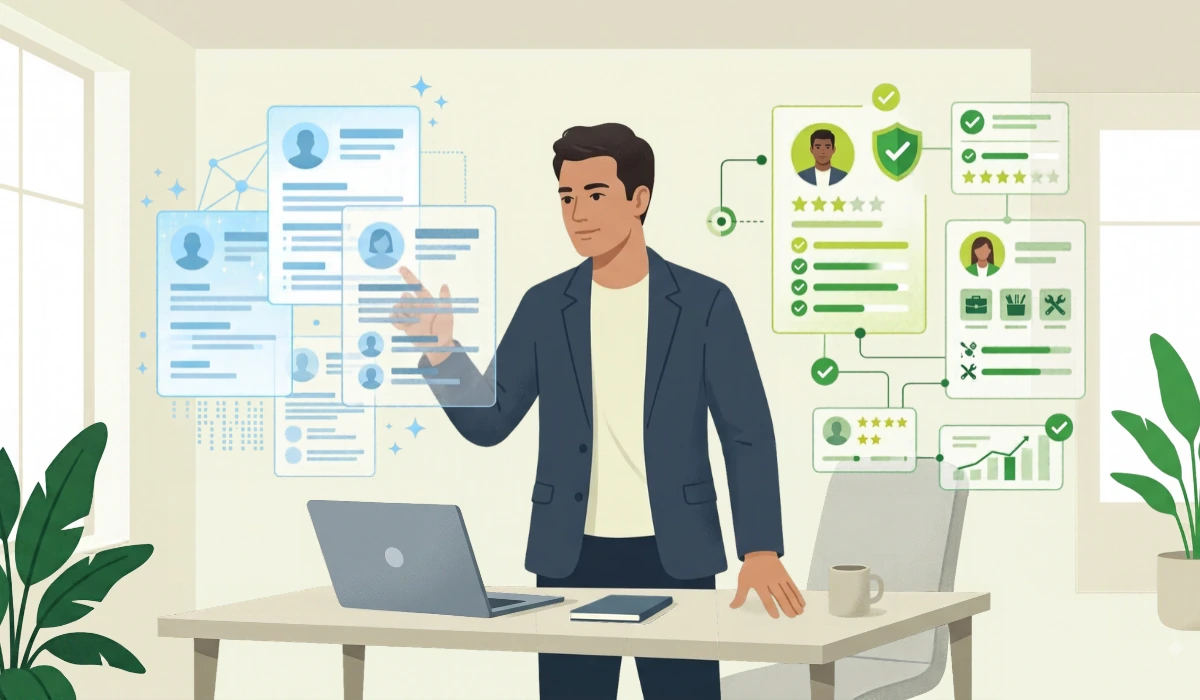
Recruiters today open a stack of resumes and notice something strange. The bullet points sound polished, the summaries use the same confident phrases, and dozens of applicants describe themselves as "results-driven professionals with a passion for innovation." Generative AI tools have made it possible for anyone to produce a clean, keyword-rich resume in under a minute. For candidates, this is a convenience. For hiring teams, it creates a real challenge: when every application looks strong on paper, how do you find the people who can actually do the job?
This guide explains why AI-written resumes have become so common, how to recognize them, and how to adjust your hiring process so it rewards genuine skills and fits the way people apply for jobs today.
Why AI-Written Resumes Have Become the Norm
Job seekers use AI for practical reasons. Applicant tracking systems scan for keywords, job boards make it easy to apply to hundreds of roles, and many candidates feel they need a tailored resume for every opening. AI tools promise to handle that tailoring instantly. Creating clear and specific job descriptions also helps recruiters communicate role expectations and identify relevant candidate skills. Learn more about writing clear and effective HR job descriptions. Entry-level candidates face the most pressure. Many have limited work experience and little practice describing what they have done in professional terms.
Much of that gap traces back to college. Students spend years writing assignments under tight deadlines, and many graduate without ever learning how to build a clear argument about their own achievements, so a chatbot becomes the easiest way to fill a blank page. Students who work with experienced paper writers during their studies get a different kind of preparation: they see how a strong paper organizes evidence, connects claims to proof, and holds the reader's attention, and they receive feedback they can apply to their own writing. Graduates with that background tend to describe their projects and internships in concrete, specific language, which makes their resumes easier for recruiters to evaluate and much harder to confuse with generic AI output.
For HR teams, the takeaway is simple. AI use in applications is widespread and here to stay, and the goal is to see past the formatting to the person behind it.
Signs a Resume Leans Too Heavily on AI
Using AI to fix grammar or format a document is reasonable. Problems start when the tool writes the content and the candidate adds little of their own. Watch for these patterns:
- Generic achievements. Phrases like "drove cross-functional collaboration" or "spearheaded strategic initiatives" with no numbers, names, or outcomes attached.
- Repeated buzzwords. The same adjectives appear across the summary, experience, and skills sections.
- Perfect keyword matching. The resume mirrors the job description almost word for word, including tools the candidate's experience doesn't seem to support.
- Inconsistent detail. A highly polished summary sits above vague or thin job entries.
- Cover letters that could fit any company. There is no mention of the organization's products, mission, or recent work.
None of these signs proves a candidate is unqualified. They simply tell you the document carries less information than it appears to, and you will need other ways to learn about the person.
The Problem with Blanket Bans on AI
Some employers respond by forbidding AI in applications altogether. This approach is hard to enforce and often unfair. Many candidates use AI to overcome language barriers, dyslexia, or a lack of access to career coaching. Others use built-in writing assistants without thinking of them as AI at all. A strict ban can push honest applicants to hide normal tool use and filter out people who would perform well in the role. It also sends a confusing message when the same company expects employees to use AI tools on the job.
A more useful question for HR is which parts of the hiring process need to reflect the candidate's own thinking, and how to design those parts well.
Shift the Weight to Skills-Based Assessment
When the resume is no longer a reliable signal of ability, other stages of hiring need to carry more weight. Skills-based assessment gives candidates a chance to show what they can do in conditions that resemble the actual job.
Short work samples
Ask a marketing applicant to outline a campaign brief, or a support candidate to draft a reply to a difficult customer email. Keep tasks brief and relevant, and pay candidates for anything that takes more than an hour or two.
Live problem-solving
A 20-minute exercise during the interview reveals how someone thinks through a problem in real time.
Structured interviews
Ask every candidate the same questions and score answers against a shared rubric. Questions about specific past situations ("Tell me about a time you had to change a project plan at the last minute") are difficult to answer with memorized AI-generated content.
Resume deep dives
Pick two or three claims from the resume and ask the candidate to walk you through them. People who did the work can explain the context, the obstacles, and the result in detail.
These methods improve fairness as well. Candidates without strong professional networks or paid resume help get a clearer path to demonstrate their skills.
Use HR Technology Carefully
AI detection tools are tempting, and many vendors now offer them for recruitment. Treat their results with caution. Detectors work on probability, and they regularly flag human writing as machine-generated, especially text written by non-native English speakers. Rejecting a candidate based on a detector score alone creates legal and reputational risk.
Other technologies offer more dependable support:
- Verified credentials and profiles. Digital badges, verified certifications, and platform-verified work histories confirm facts that a resume can only claim.
- Skills assessment platforms. Standardized tests for coding, writing, data analysis, or language skills produce comparable results across candidates.
- Structured interview software. Tools that store question banks and scoring rubrics help hiring managers stay consistent.
- ATS configuration reviews. Overly rigid keyword filters encourage applicants to stuff resumes with AI-generated terms. Adjusting knockout criteria can reduce that pressure.
Whatever tools you choose, keep a human reviewer involved in every rejection decision and audit outcomes regularly for bias.
Set a Clear AI Policy for Candidates
Candidates often guess what employers expect, and those guesses vary widely. A short, public policy removes the uncertainty. State in job postings or on your careers page:
- which uses of AI are acceptable, such as grammar checks, formatting, and translation support;
- which stages require the candidate's own work, such as take-home assignments or live exercises;
- how your company uses AI in screening, if it does.
Transparency builds trust on both sides. It also helps you comply with emerging regulations in several regions that require employers to disclose automated decision-making in hiring. Review the policy every six months, since both the tools and the rules are changing quickly.
Hiring for Substance in an AI-Assisted Job Market
AI-written resumes reflect how job searching has changed, and HR teams can adapt with a few practical steps. Treat the resume as a starting point. Move the real evaluation into work samples, structured interviews, and verified credentials. HR professionals can also strengthen their recruitment knowledge through relevant professional certifications in HR. Use detection technology cautiously, keep people in charge of final decisions, and tell candidates clearly what you expect. Organizations that follow this approach get to know candidates faster and make hiring decisions with greater confidence. The outcome is a hiring process that treats applicants fairly and consistently finds the right person for each role.