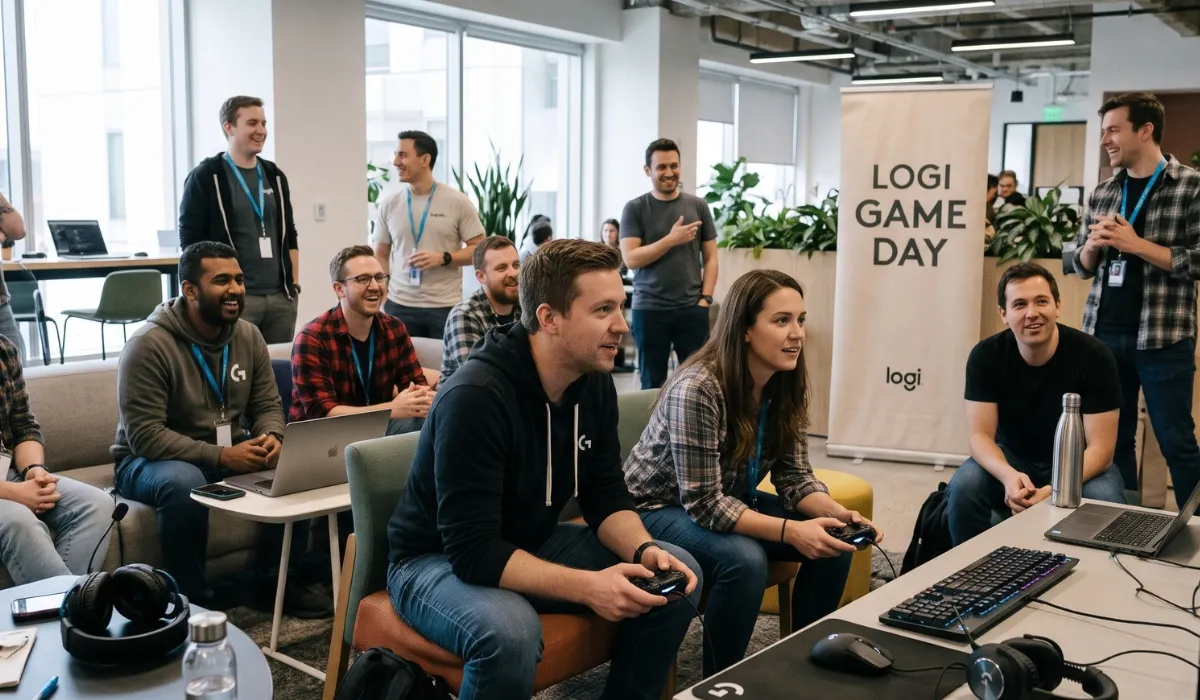
Logitech has introduced an unusual employee benefit called Logi Game Day, giving its global workforce a dedicated paid day off to play video games. The initiative reflects the company's view that recreational activities, personal interests and gaming can support employee wellbeing and professional development.
Announced on November 10, 2026, the initiative covers employees ranging from interns to full-time staff. Employees can use the additional day to play a game of their choice.
Gaming as Part of Employee Wellbeing
The initiative was announced ahead of the November 19 launch of Grand Theft Auto VI. However, employees are not restricted to playing that game and can choose when to use their gaming day within the available benefit period.
Logitech also organised a gaming livestream at its Americas headquarters in San Jose on November 19, hosted by Logitech G general manager Robin Piispanen.
According to Logitech Chief People Officer Elaine Laird, dedicated time for recreation can help employees disconnect from work, recharge and return with renewed focus and energy.
Logitech Research Highlights Workplace Connections
The initiative is supported by Logitech's Ctrl Tomorrow study, which examined how technology and gaming relate to confidence, wellbeing and professional experiences.
The study covered nine countries, surveying 900 adults in each country alongside additional gamer samples.
According to Logitech, 81% of surveyed gamers believe gaming builds real-world confidence, reduces anxiety and is associated with stronger day-to-day work performance.
These findings reflect participants' reported perceptions of gaming rather than proof that gaming directly improves employee productivity.
A Different Approach to Employee Benefits
Logitech's Logi Game Day highlights how employers are exploring employee benefits beyond conventional leave policies.
By recognising recreation and personal interests as part of employee wellbeing, the initiative offers an alternative approach to workplace culture, engagement and recovery.
For HR leaders, it also raises an interesting consideration: employee benefits do not always need to focus directly on work to support a positive employee experience.