

 10 mins read
The candidate screening process determines whether top talent moves through your funnel or drops out early. HR teams that treat screening as a tactical checklist lose candidates, waste recruiter time, and create hiring inconsistencies. This guide explains practical screening process improvement tactics, from standardized scorecards to ATS automation and smart AI usage, so you can start fixing candidate screening pain points today.
TL;DR
- Define clear role criteria and standardized scorecards for faster, fairer decisions
- Use structured screening steps and ATS automation to reduce bias and time to hire
- Measure quality with screening-to-interview and interview-to-offer conversion rates
- Combine objective assessments with AI for resume triage and skills validation
- Improve candidate experience with clear communication and concise stages
- Train hiring managers and recruiters on consistent evaluation and legal compliance
- Iterate using data and regular reviews to keep the process efficient and compliant
Why a Broken Candidate Screening Process Costs You Talent
The candidate screening process is the first real impression a job seeker gets of your company. When screening is inconsistent, slow, or opaque, you lose qualified candidates, inflate recruiter workload, and risk bad hires. Talent acquisition teams report long screening cycles and low funnel conversion as top pain points. Fixing the screening process is not just about speed. It is about quality, fairness, scalability, and candidate experience.
Signs Your Candidate Screening Process Is Broken
Common symptoms include inconsistent feedback, large numbers of unqualified candidates being advanced to interviews, poor hiring manager satisfaction, and long time to fill. You may also see legal risks from ad hoc screening criteria. Another red flag is manual resume reviews by multiple people that produce different outcomes for similar profiles. If your ATS is underused or misconfigured, that makes these problems worse. Look for high candidate drop rates at the screening stage and low screening-to-interview conversion as clear indicators of screening bottlenecks.
Candidate Screening Process Stages
A clear candidate screening process helps HR teams move applicants through the screening funnel faster and more fairly. Each stage should have a defined purpose so recruiters can reduce screening bottlenecks and improve candidate experience.
Stage | Purpose | Key Action |
Application review | Check if the applicant meets basic role requirements | Review application details, eligibility, and required information |
Knockout questions | Remove candidates who do not meet must-have criteria | Use ATS automation for location, experience, availability, or certification checks |
Resume triage | Identify candidates with the most relevant background | Review skills, experience, achievements, and role fit |
Skills assessment | Validate practical ability before interviews | Use a short test, work sample, or role-based task |
Phone screen | Confirm motivation, expectations, and communication fit | Discuss salary, notice period, interest, and basic fit |
Hiring manager review | Align shortlisted candidates with role expectations | Compare candidates using a structured scorecard |
Interview shortlist | Select the strongest candidates for formal interviews | Move best-fit candidates to the next interview stage |
This simple structure makes HR candidate evaluation more consistent and helps improve the interview-to-offer rate by sending better-qualified candidates into interviews.
Screening process improvement: common bottlenecks and quick fixes
Many teams focus on downstream interviewing and miss the upstream causes. Typical screening bottlenecks include unclear role definitions, inconsistent evaluator standards, slow scheduling, and an overreliance on keyword resumes. A focused fixing candidate screening approach targets each bottleneck with a specific fix: tighten the role brief, introduce a standardized scorecard, automate scheduling, and add lightweight skills checks to validate core requirements.
Why Standardization Matters
Standardization reduces subjectivity. A clear job brief and a standardized scorecard let recruiters and hiring managers evaluate candidates against the same criteria. This improves the reliability of decisions and leaves an audit trail for compliance. When you standardize, you can also automate parts of the workflow and measure improvement over time. According to SHRM 2026, teams that apply consistent screening criteria report measurable improvements in time to hire and candidate quality across multiple hiring cohorts.
Key Metrics to Track
Start with a few measurable signals. Track screening-to-interview rate and interview-to-offer rate. Monitor time spent per screened candidate and candidate drop rate at the screening stage. Add quality-of-hire metrics after onboarding, such as performance scores and retention at key milestones. These numbers show whether your changes actually improve hiring outcomes. For HR candidate evaluation, make sure you baseline metrics for at least one full hiring cycle before claiming success.
Step 1: Clarify Role Requirements and Must Haves
Begin by working with the hiring manager to create a concise role brief. Separate must-have skills and credentials from nice-to-haves. Too many requirements lead to unnecessary rejections or over-filtering. Put these requirements into the ATS job profile so the whole team uses the same baseline during the candidate screening process. Document examples of acceptable proxies for must-haves to speed consistent decisions.
Step 2: Build a Structured Screening Scorecard
Create a two-part scorecard that combines objective checks and behavioral criteria. Objective checks include certifications, years of experience, and required technical skills. Behavioral criteria cover communication, problem solving, and cultural fit. Score each area with numeric ratings and a pass threshold. Require the screeners to capture short evidence notes to justify scores. This makes later calibration and legal reviews straightforward.
Step 3: Use Technology to Eliminate Repetition
An ATS with configurable workflows can automate resume parsing, prescreen questionnaires, and initial score mapping. Use short prescreen questions to validate must-haves before a human review. Implement resume triage with AI to surface the best matches, but always review high confidence decisions manually. Automate interview scheduling and candidate notifications to shorten the candidate screening process and lower drop rates. A smart resume screening fix reduces time-to-interview while maintaining fairness.
Step 4: Blend Skills Assessments and Work Samples
Objective assessments reduce bias. Use short coding tests, work sample tasks, or role-relevant simulations early in the screening funnel. Keep assessments brief and directly tied to job tasks. A good practice is to require a lightweight assessment only for shortlisted candidates, not for every applicant, to avoid candidate friction. Tracking assessment completion rates helps identify candidate filtering process issues before they affect offer acceptance.
Step 5: Train Recruiters and Hiring Managers
Provide calibration sessions where hiring managers and recruiters score the same candidates and discuss differences. This helps align expectations and improves the reliability of the candidate screening process. Training should include how to use the ATS, how to complete the scorecard, and what constitutes disqualifying information. Include legal and bias awareness training to reduce risk. Regular calibration is essential to keep HR candidate evaluation consistent across hiring cohorts.
Step 6: Improve Candidate Communication
Clear, timely communication reduces candidate dropouts. Use templates for screening rejection emails, next steps, and interview confirmations. Give concise feedback when possible. Candidates who understand the process are more likely to stay engaged and accept offers. A transparent timeline and a single point of contact reduce uncertainty and improve candidate experience during a hiring screen overhaul.
Tip: A quick prescreen call of ten minutes can save hours of interviewing for both the team and the candidate.
Fixing Common Technical Issues in Your ATS for the candidate screening process
Many companies underuse their ATS features. Audit your ATS setup. Ensure job templates include the standardized job brief, scorecards are integrated into the candidate record, and automation rules handle basic routing. Configure reporting dashboards for the metrics you track. Remove duplicate records and set consistent tags so search and pipelines work predictably. These small technical fixes often deliver the biggest gains in screening throughput.
How AI Can Help the candidate screening process Without Replacing Human Judgment
AI can accelerate resume triage, identify relevant skills, and flag potential biases in job descriptions. Use AI to rank candidates and suggest matches, but keep a human in the loop for final decisions. Validate AI models with historical hiring data to ensure they do not amplify past biases. Treat AI as a tool that improves throughput in the candidate screening process rather than an omniscient decision maker.
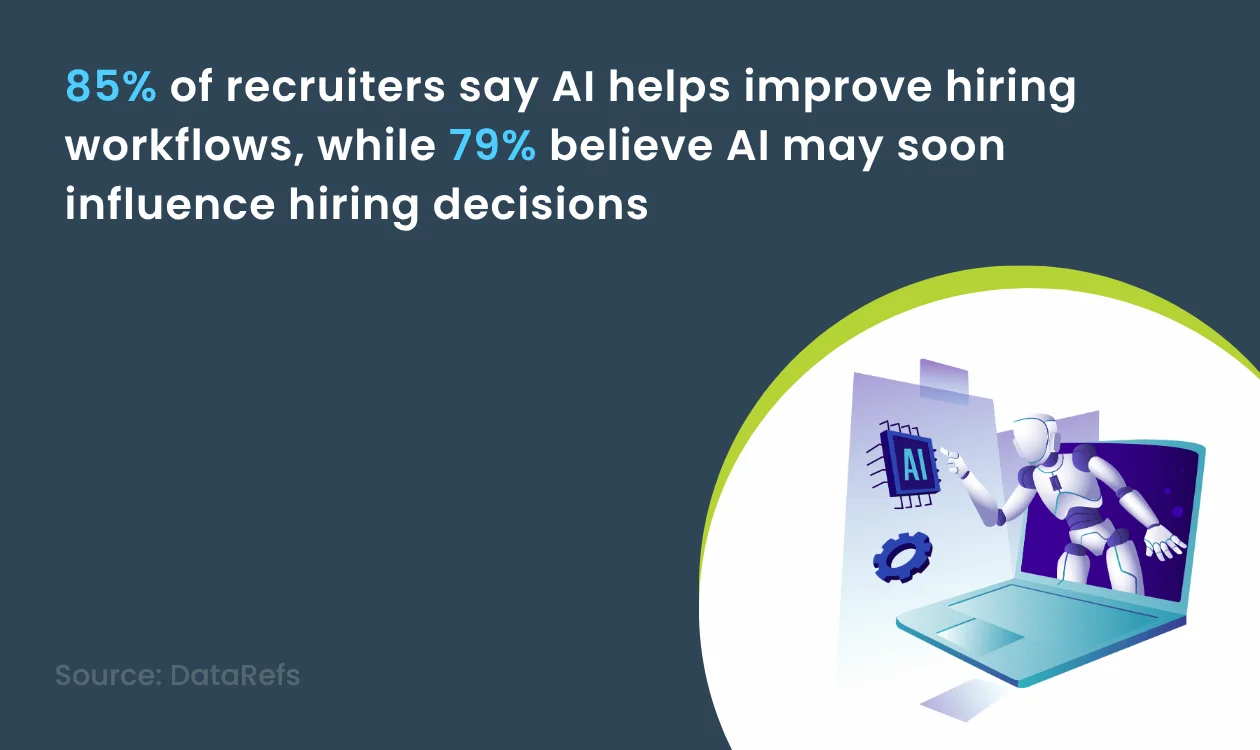
According to a DataRefs survey, 85% of recruiters say AI helps improve hiring workflows, while 79% believe AI may soon influence hiring decisions, highlighting the importance of smart AI use rather than blind automation.
Real Example: A Staffing Team Reduced Time to Interview by Half
A mid-sized staffing firm revamped its screening process by introducing a one-page role brief, a five-item scorecard, and a short skills assessment. They automated initial resume parsing and scheduling through their ATS. The result was a 50 percent reduction in time to first interview and higher interview-to-offer conversion. Recruiters reported less manual work and hiring managers reported better candidate fit. The firm used weekly metrics to iterate and refine prescreen questions. This is a practical example of a hiring screen overhaul that combined standardization with automation.
Balancing Speed and Candidate Experience
Speed is important, but so is fairness. Fast triage that relies solely on keyword matching can exclude diverse talent pools. Design the screening funnel so that early filters check only must-haves. Use inclusive language in job descriptions and anonymize resumes for early stages when possible. Maintain transparency with candidates about how long each stage takes and what to expect. These steps help avoid a resume screening fix that improves speed but harms diversity.
Legal and Compliance Considerations
Document screening criteria and keep evaluation records in the ATS for compliance. Avoid questions that probe protected characteristics. Regularly review your process for adverse impact, especially when using assessments or AI. Work with legal counsel or HR compliance experts when implementing new tools that change how candidates are screened. Clear documentation also supports audits and defends your hiring decisions.
Practical Checklist to Fix a Broken Process
- Create a concise role brief and store it in the ATS
- Design a standardized scorecard with objective and behavioral items
- Configure ATS workflows for prescreen questionnaires and scheduling
- Introduce short, role-relevant assessments for shortlists
- Run calibration sessions monthly for hiring teams
- Automate routine communications to improve candidate experience
- Track screening-to-interview and interview-to-offer conversion rates
Measuring Success and Iterating the candidate screening process
Set baseline metrics before you change the process and run a test for at least one full hiring cycle. Measure improvements in conversion rates, time to interview, candidate drop rates, and hiring manager satisfaction. Use qualitative feedback from candidates to refine communication templates. Continuous measurement allows you to spot regressions and scale successful practices across teams. Use dashboards and weekly reviews to catch regressions early.
Final Checklist for Sustainable Improvements
- Standardize and document role requirements
- Implement a structured scorecard in your ATS
- Use automation for repetitive tasks but keep human oversight
- Include objective assessments tied to job tasks
- Train stakeholders and calibrate regularly
- Monitor key metrics and iterate based on data
Conclusion
A broken screening process slows hiring, risks poor candidate experiences, and drains HR resources. By defining clear role criteria, standardizing scorecards, leveraging ATS automation, and thoughtfully integrating AI with human oversight, HR teams can create a faster, fairer, and more consistent candidate screening process. Regular measurement, training, and iteration ensure the process stays efficient, compliant, and aligned with business goals. Fixing the screening stage is not just an operational improvement, it is a strategic move that helps attract top talent, retain high performers, and strengthen your organization’s competitive edge. Stay ahead of the curve - explore more HR insights on NextInHR