
 7 mins read
The rise of HR technology, analytics, and hybrid work means HR leaders must focus intentionally on the top HR skills that deliver strategic impact. This guide lays out the skills hiring teams will value most in 2026, practical steps to build them quickly, and realistic examples you can apply in your role today.
HR skills are the technical, analytical, strategic, and interpersonal abilities that help HR professionals manage people, improve hiring, support employee engagement, use HR technology, and align workforce decisions with business goals.
TL;DR
- HR is moving from administrative work to strategic, tech-enabled leadership; focus on the top HR skills.
- Core technical competencies include HR digital skills, people analytics, and automation fluency.
- Human skills such as leadership, emotional intelligence, and communication remain essential.
- Fast development routes: microlearning, project-based learning, and mentoring for measurable growth.
- Plan for ethical AI and predictive analytics as future HR capabilities that will shape talent outcomes.
- Measure upskilling impact with clear KPIs to show ROI and sustain investment in learning.
Top HR Skills you Must Master in 2026
The foundation of modern HR rests on several critical skills that every practitioner should prioritize. These top HR skills for 2026 separate strategic HR partners from reactive administrators, and they combine technical ability with business acumen.
Digital Literacy and HR Technology Skills
In 2026, HR digital skills are non-negotiable. Navigating AI-powered HR software, automation platforms, and applicant tracking systems is part of daily work. HR professionals must be fluent in AI tools for talent acquisition, people analytics dashboards, and common integrations between HR systems.
Industry trends show sustained investment in HR tech: many organizations increased HR technology budgets in recent years to support remote work and analytics. That budget shift makes understanding HR platforms a core career requirement.
Organizations that combine HR digital skills with clear process design reduce time-to-hire and improve candidate experience, making tech fluency a strategic advantage.
Example: Consider virtual onboarding platforms and AI-driven performance tools. HR teams with platform competence cut time-to-productivity by improving workflows, measured through faster ramp metrics and better early engagement scores.
Strategic and Analytical HR Skills
Strategic capability and data analytics turn HR into an engine for business outcomes. Workforce planning, talent segmentation, and predictive modeling help HR leaders link people investments to revenue and retention objectives. These top HR skills include the ability to translate HR metrics into board-level insight.
Practical analytics skills mean being able to run cohort analyses, build simple predictive models, and present findings with clear recommendations. Put another way, data analytics HR competence is the bridge between raw HR data and strategic decisions.
Example: Predictive analytics can reveal flight risk among high performers and inform targeted retention programs. Teams that apply these methods reduce avoidable turnover and make succession planning far more precise.
People Management and Leadership
Despite digital advances, leadership and people management remain core HR professional skills. Emotional intelligence, coaching ability, and inclusive leadership drive engagement and culture. HR leaders who combine technical insight with strong people skills produce better outcomes for distributed teams.
Example: Effective HR leadership builds policies that balance flexibility with accountability, supports wellbeing initiatives, and fosters psychological safety across hybrid environments. Those actions directly improve retention and productivity.
Secondary HR skills that amplify your effectiveness
Beyond the core competencies, several supporting skills multiply your impact as an HR professional. These secondary capabilities are essential to deliver the full value of the top HR skills you build.
Change Management and Adaptability
Change management remains essential as organizations transform. Skilled HR practitioners design communication plans, training paths, and feedback loops that minimize disruption and preserve productivity. These capabilities help teams move confidently through reorganization, technology rollout, or new policies.
Example: During restructuring, HR professionals who map stakeholder impacts and deploy phased communication reduce confusion and maintain morale. This hands-on approach prevents common HR mistakes and sustains performance.
HR Soft Skills
Core HR soft skills include negotiation, facilitation, and virtual collaboration. These skills enable HR specialists to influence stakeholders, resolve conflict, and maintain strong cross-functional relationships. Soft skills are what make technical recommendations actionable.
Example: Virtual mediation requires listening for nuance and using structured frameworks to resolve disputes without face-to-face interaction. HR professionals with strong facilitation skills keep teams aligned in digital settings.
HR Upskilling and Continuous Learning Trends
Upskilling is not optional. HR professionals who commit to ongoing learning stay relevant and expand their influence. Microcredentials, short bootcamps, and vendor-specific HR tech certifications sharpen your toolkit quickly.
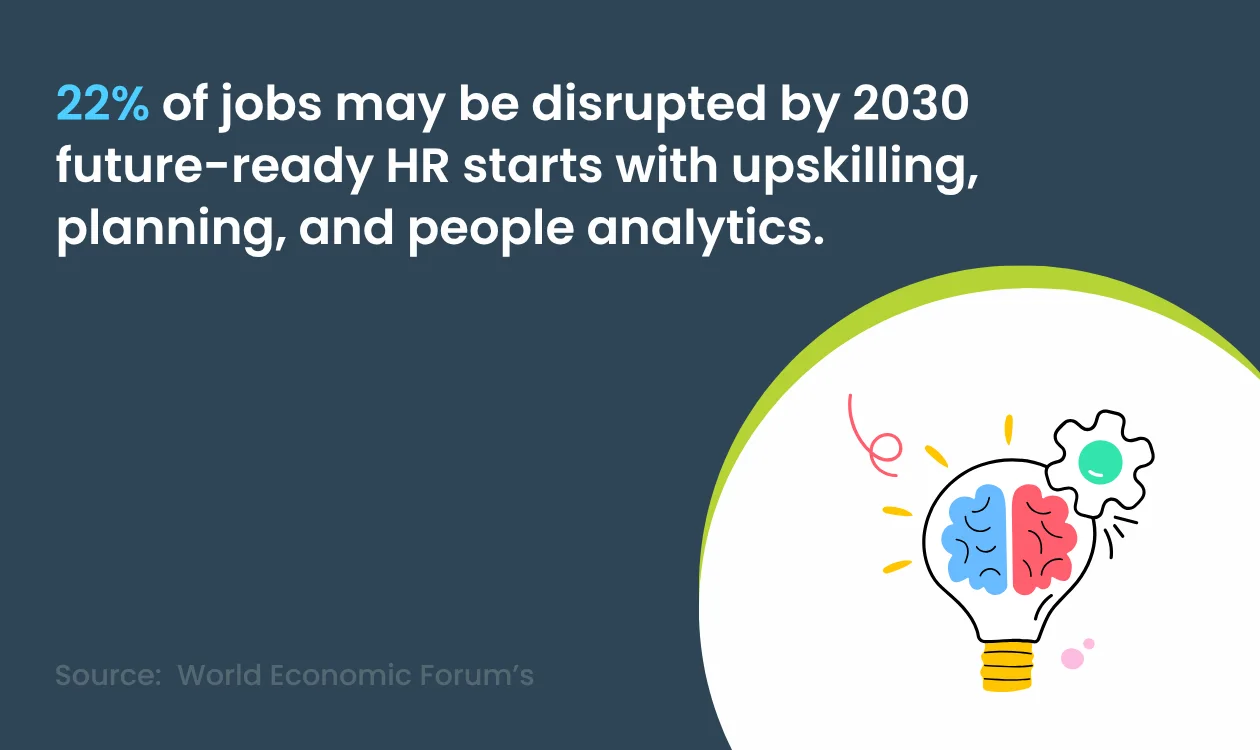
According to the World Economic Forum’s Future of Jobs Report 2025, job disruption is expected to affect 22% of jobs by 2030, with 170 million new roles created and 92 million roles displaced. For HR professionals, this highlights the importance of continuous HR upskilling, workforce planning, HR technology, and people analytics to prepare employees and organizations for future skill demands.
Practical tip: Build a 6-month learning plan with measurable milestones. Combine short courses in people analytics with a project that applies those skills to a real problem, then present results to stakeholders to demonstrate impact.
How to Develop Top HR Skills Fast
Ready to accelerate capability-building? Focus on learning that combines theory with real work application. The fastest route to the top HR skills organizations need is a blend of structured learning, mentoring, and project experience.
Online learning platforms like LinkedIn Learning, Coursera, and professional association courses deliver targeted modules on HR analytics, recruitment automation, and strategic workforce planning. Use microlearning to keep progress steady when you have limited time.
Mentoring relationships provide practical insight from experienced HR leaders. Pair study with sponsored projects at work to test new approaches in a low-risk setting. This combination accelerates retention and builds credibility.
Project-based learning applies new skills immediately. Volunteer for initiatives that involve HR automation, data dashboards, or talent segmentation to gain hands-on experience and visible results.
Professional certifications remain valuable signals of competence. Choose credentials that match the HR tech and analytics tools your organization uses to maximize relevance.
Common Challenges in HR Skills Development and How to Overcome Them
Time, budget, and motivation commonly block progress. Address these barriers with realistic planning and clear measurement.
For time constraints: Dedicate 15 to 30 minutes daily to microlearning. Consistency beats intensity when building new skills.
For budget concerns: Tap employer development funds, professional association discounts, and high-quality free resources. Demonstrate early wins to secure ongoing investment.
For motivation: Join HR communities for accountability and peer support. Set small, trackable goals and celebrate progress to maintain momentum.
Measuring ROI: Track learning outcomes with simple KPIs such as time-to-hire, quality-of-hire, retention rate, or ramp time. Use those metrics to build a business case for further investment in HR professional skills.
Practical Examples: HR Skills in Action
The following examples are illustrative scenarios showing how HR skills can create measurable business impact when applied effectively.
Practical Examples 1: A mid-sized tech firm used predictive analytics to identify at-risk employees and implemented targeted retention programs, cutting turnover by 25 percent in a year.
Practical Examples 2: A global retailer applied HR digital skills to build an AI-assisted onboarding process that shortened time-to-productivity by 40 percent and improved new hire satisfaction.
Practical Examples 3: An HR leader focused on people management and authentic leadership restored a low-performing unit, lifting engagement from 52 percent to 78 percent over 18 months.
Future Outlook - Emerging HR Skills to Watch Beyond 2026
Looking ahead, future HR skills will center on ethical AI use, prescriptive people analytics, and continuous reskilling strategies. HR will need stronger governance capability to ensure AI-driven decisions are fair and explainable.
Data science literacy and the ability to operationalize model outputs will be differentiators. If you want to stay competitive, watch for roles that blend HR domain knowledge with analytics and AI governance skills.
Conclusion
Mastering the top HR skills positions you as a strategic business partner rather than an administrative support role. The most in-demand skill set for 2026 combines HR digital skills, data analytics HR competence, strong people management, and adaptable soft skills.
Your investment in developing these skills today will determine the scope of opportunity you have tomorrow. Start small, measure impact, and expand what works. Stay ahead of the curve by continuing your learning journey and exploring more HR insights on NextInHR.