

 10 mins read
Starting a career in Human Resources can feel like navigating uncharted waters, and recognizing Common HR Mistakes early helps you avoid missteps that slow your progress. This guide highlights practical, actionable advice and HR career tips freshers can apply immediately to improve onboarding, compliance, people management, and strategic impact while shortening the HR learning curve.
TL;DR
- Common HR Mistakes often come from treating HR as purely administrative.
- Plan onboarding end to end to avoid core HR onboarding errors that hurt retention.
- Prioritize emotional intelligence and active listening to resolve sensitive issues.
- Use HR analytics to turn data into actionable talent decisions.
- Focus on continuous feedback and practical HR career tips freshers can apply now.
- Stay proactive with compliance, DEI, time management, and learning roadmaps.
Common HR Mistakes: Understanding the Freshers' Perspective in HR Roles
Stepping into your first HR position brings a unique set of obstacles that seasoned professionals rarely discuss. The gap between academic coursework and workplace application becomes clear when you face actual employee concerns, organizational politics, and urgent business needs. Recognizing Common HR Mistakes from the start reduces costly trial and error and eases the HR learning curve.
Freshers often underestimate how much interpersonal dynamics influence HR effectiveness. Textbooks teach policies and procedures, but they cannot fully prepare you for managing difficult conversations or navigating sensitive workplace situations. These types of HR fresher mistakes show up when new professionals rely on theory rather than judgment and contextual awareness.
The learning curve involves more than memorizing labor laws or mastering HRIS systems. It requires developing judgment, building trust across departments, and understanding how HR functions connect to broader business objectives. This awareness forms your first line of defense against making preventable mistakes.
Common HR Mistakes: Neglecting the Importance of Strategic HR Vision
One of the most significant Common HR Mistakes involves treating the role as purely administrative. Many freshers find themselves drowning in paperwork, responding to immediate requests, and handling transactional tasks without understanding the bigger picture.
True HR professionals contribute to organizational strategy, talent development, and cultural transformation. When you focus solely on processing leave requests or updating spreadsheets, you miss opportunities to influence workforce planning, succession strategies, and employee engagement initiatives. Avoid entry level HR errors by asking how your daily tasks map to company objectives.
Developing strategic thinking from day one means asking why processes exist, how they support company goals, and what improvements could drive better outcomes. This mindset shift separates HR administrators from HR business partners who add genuine value to their organizations. Make strategic curiosity a daily habit to reduce beginner HR mistakes over time.
HR fresher mistakes: Onboarding Pitfalls for Freshers to Watch
The onboarding process creates employees' first impressions of your organization, yet HR onboarding errors frequently undermine this critical phase. Freshers sometimes rush through paperwork without ensuring new hires feel genuinely welcomed and prepared for success.
Subtle onboarding errors include failing to coordinate with IT for system access, neglecting to introduce new employees to key team members, or providing generic information that does not address specific role requirements. These HR onboarding errors signal disorganization and can diminish employee confidence before they complete their first week.
Modern technology offers solutions that enhance onboarding accuracy and engagement. Digital platforms can automate administrative tasks while freeing you to focus on personalized welcome experiences, scheduled check-ins, and meaningful cultural integration. Leveraging these tools shows professionalism and attention to detail that builds credibility and avoids Common HR Mistakes in the onboarding phase.
Underestimating the Power of Emotional Intelligence in HR
Technical knowledge matters, but emotional intelligence often determines whether freshers truly succeed in HR roles. beginner HR mistakes in relationship-building stem from inadequate empathy, poor listening skills, or an inability to read nonverbal cues during sensitive conversations.
Employees approach HR during their most vulnerable moments, when facing performance issues, personal crises, or workplace conflicts. Your capacity to respond with genuine understanding while maintaining professional boundaries makes the difference between resolution and escalation. New HR professional advice recommends practicing active listening and showing consistent empathy.
Freshers can strengthen emotional intelligence through deliberate practice. Active listening exercises, seeking feedback on your communication style, and reflecting on challenging interactions all build essential skills. Role-playing difficult scenarios with mentors provides safe opportunities to develop conflict resolution approaches before facing real situations and prevents beginner HR mistakes when tensions rise.
Avoiding Compliance and Ethical Blind Spots in HR
HR compliance mistakes can expose organizations to legal liability and reputational damage. Freshers sometimes unknowingly violate regulations because they do not fully understand employment law nuances or industry-specific requirements.
Consider scenarios like misclassifying employees as contractors, failing to maintain proper documentation during terminations, or not accommodating disabilities according to ADA guidelines. These are not just administrative oversights. They are serious compliance violations with costly consequences. Regularly review processes to reduce mistakes in HR management.
Understanding ethical boundaries means knowing when to enforce policies firmly versus when situations require discretion and compassion. Being too rigid can damage employee relations, while being too lenient creates precedents that undermine policy effectiveness. Maintaining detailed checklists, regularly consulting with legal counsel, and staying current on regulatory changes helps ensure ongoing vigilance and prevents beginner HR mistakes that can escalate into legal issues.
Failing to Harness HR Analytics and Data for Decision-Making
Modern HR increasingly relies on data-driven insights, yet HR data mistakes remain prevalent among newcomers to the field. Freshers often collect information without understanding what metrics matter or how to interpret trends meaningfully.
Poor data practices impact recruitment effectiveness, retention rates, and employee satisfaction initiatives. For example, tracking time-to-fill without considering quality-of-hire provides an incomplete picture of recruitment success. Similarly, measuring training completion without assessing actual skill development wastes resources on ineffective programs. These are frequent entry level HR errors that diminish impact.
Start applying simple analytical frameworks immediately. Calculate turnover rates by department to identify problem areas. Track the source of quality hires to optimize recruitment spending. Analyze performance review distributions to spot rating inflation or deflation. These straightforward analyses generate actionable insights that demonstrate your strategic value and reduce Common HR Mistakes driven by intuition alone.
Good HR decisions combine data with human judgment. Use analytics to inform choices, not replace conversations with employees.
Mishandling Feedback Loops and Performance Reviews
HR feedback mistakes create lasting damage to employee morale and performance improvement efforts. Freshers commonly struggle with delivering constructive criticism effectively or creating environments where honest dialogue feels safe.
Annual performance reviews alone cannot sustain high-performing cultures. Organizations need continuous feedback mechanisms that address issues promptly and recognize achievements regularly. Waiting twelve months to discuss performance problems allows poor habits to solidify and frustration to build.
Innovative approaches include implementing quarterly check-ins, peer feedback systems, and real-time recognition platforms. Train managers on giving specific, behavior-focused feedback rather than vague generalizations. Model these practices in your own interactions to establish credibility and encourage adoption across the organization and avoid Common HR Mistakes that erode trust.
Poor Time Management: How Freshers Can Master HR Priorities
HR time management errors often stem from difficulty distinguishing urgent tasks from important ones. Freshers feel pressure to respond immediately to every request, leading to constant interruptions and incomplete strategic projects.
Identify common time wasters like unnecessary meetings, redundant documentation, or manual processes that technology could automate. Implement prioritization techniques such as the Eisenhower Matrix to categorize tasks by urgency and importance. These practical HR career tips freshers can use daily prevent burnout and increase impact.
Aligning daily activities with long-term HR goals prevents burnout and ensures progress on initiatives that matter. Block focused time for strategic work, batch similar administrative tasks, and learn to delegate appropriately. These habits compound over time, dramatically increasing your effectiveness and reducing Common HR Mistakes caused by task overload.
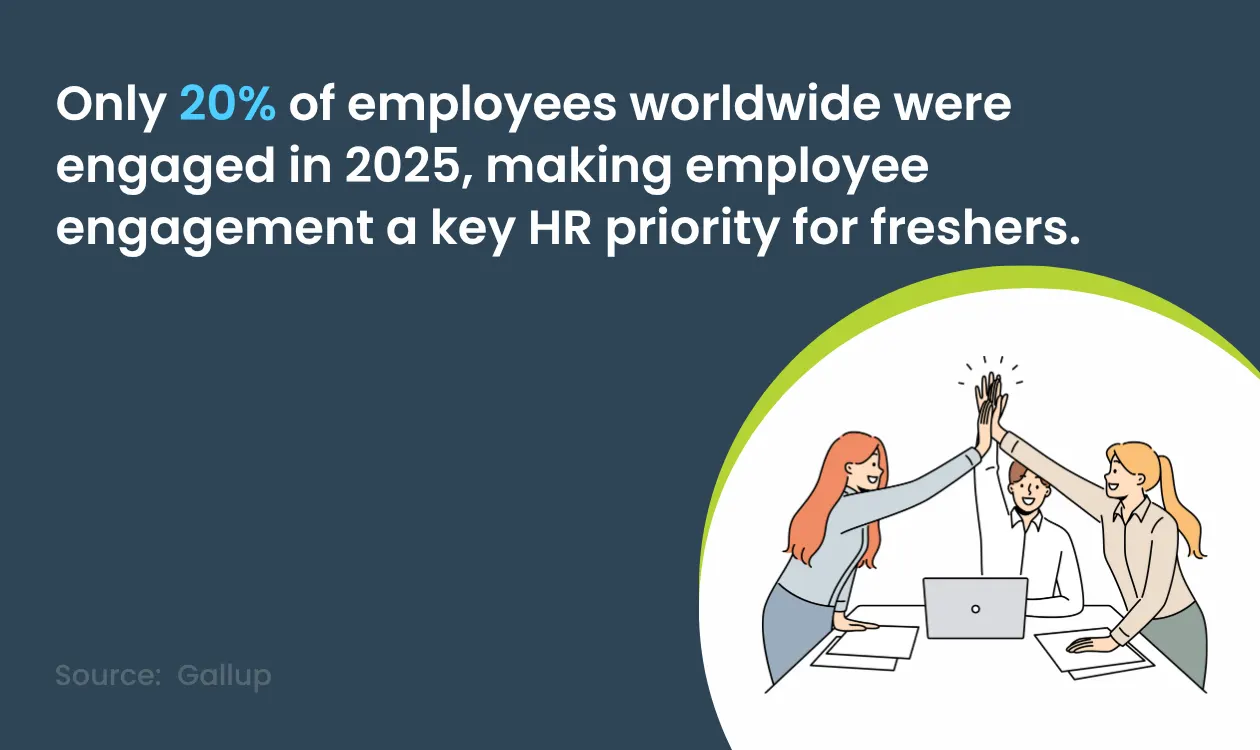
Employee engagement is a major business issue, not just an HR activity. Gallup’s 2026 State of the Global Workplace report found that only 20% of employees worldwide were engaged in 2025. This makes it important for HR freshers to understand how onboarding, feedback, communication, and employee engagement connect to business performance.
Overlooking Diversity, Equity, and Inclusion Initiatives
Ignoring diversity, equity, and inclusion represents critical HR culture understanding errors that freshers face in today's workplace. Organizations increasingly recognize that diverse teams drive innovation and better business outcomes, yet implementing meaningful DEI initiatives requires intentional effort.
Common HR Mistakes in this area include tokenism in hiring, failing to address microaggressions, or treating DEI as a checkbox exercise rather than a fundamental cultural transformation. Freshers must develop awareness of their own unconscious biases and how those biases influence recruitment, promotion, and workplace interactions.
Your role extends beyond posting equal opportunity statements. Actively promote inclusive hiring practices by ensuring diverse interview panels, writing bias-free job descriptions, and evaluating candidates against objective criteria. Champion employee resource groups, support mentorship programs for underrepresented groups, and hold leadership accountable for creating equitable opportunities to prevent long term mistakes in HR management.
Proactive Career Building - Avoiding Stagnation in HR Roles
Freshers' HR challenges include the tendency to wait passively for opportunities rather than actively shaping their career paths. beginner HR mistakes related to professional development include avoiding networking, declining stretch assignments, and failing to pursue continuous learning that HR freshers need for advancement.
The HR field evolves rapidly with changing regulations, emerging technologies, and shifting workplace expectations. What you learned in college becomes outdated quickly without ongoing education through certifications, workshops, industry conferences, and professional associations. A roadmap that includes specific milestones reduces the HR learning curve and entry level HR errors.
Build a proactive roadmap that identifies specific skills you need to develop, experiences you want to gain, and milestones you hope to achieve. Seek mentors who can provide guidance, challenge your thinking, and open doors to new opportunities. Take initiative on projects that stretch your capabilities and demonstrate leadership potential to sidestep Common HR Mistakes tied to passivity.
Practical Checklist to Avoid Common HR Mistakes
Freshers can avoid most common HR mistakes by following a simple weekly checklist instead of handling HR tasks randomly.
- Use an HR onboarding checklist before every new hire joins.
- Confirm laptop, email, system access, and HRIS profile setup with IT.
- Schedule 30-day, 60-day, and 90-day check-ins for new employees.
- Document employee conversations, policy exceptions, and compliance-related decisions.
- Track basic HR analytics such as turnover, attendance, time-to-fill, and engagement trends.
- Prepare structured notes before performance reviews or feedback discussions.
- Review DEI, leave, attendance, and workplace conduct policies regularly.
- Block time each week for learning, reporting, and follow-ups.
Example: If a new employee joins on Monday, an HR fresher should confirm system access by Friday, send the onboarding schedule before joining day, assign a buddy, and plan the first check-in within the first week. This prevents onboarding mistakes and creates a smoother employee experience.
Conclusion
Every HR professional, regardless of experience level, makes mistakes. The difference between stagnation and growth lies in how you respond to those inevitable errors. Approach Common HR Mistakes with curiosity and a plan to improve, and you will accelerate your impact in HR.
Develop self-awareness by regularly reflecting on what worked, what did not, and what you would do differently next time. Seek candid feedback from colleagues, supervisors, and even employees you support. These perspectives reveal blind spots and accelerate your professional development and reduce frequent HR fresher mistakes.
Remember that your fresher status offers unique advantages. You bring current academic knowledge, fresh perspectives, and genuine enthusiasm for building positive workplace cultures. Combine those strengths with intentional learning from both successes and Common HR Mistakes, and you will make meaningful contributions throughout your HR career journey. Stay ahead of the curve - explore more HR insights on NextInHR.