

 10 mins read
High-growth HR careers are no longer built on experience alone. As organizations adopt people analytics, automation, and digital HR tools, the expectations from HR professionals have shifted from administrative support to measurable business impact. For HR pros aiming for rapid advancement, deliberate skills building in analytics, HR technology, and stakeholder influence matters more than ever.
Today, the HR leaders who advance quickly share a consistent set of traits, including data fluency, technology confidence, strong business acumen, and the ability to influence stakeholders. These qualities help them design talent strategies that directly improve hiring outcomes, employee experience, and organizational performance.
High-growth HR careers are career paths that offer expanding responsibilities, strong employer demand, increasing strategic influence, and opportunities for faster professional advancement. These careers commonly combine people analytics, HR technology, business acumen, stakeholder management, and the ability to connect workforce decisions with measurable business outcomes.
This guide explores the traits that define high-growth HR careers and outlines practical ways HR professionals, recruiters, and staffing teams can deliberately build them.
TL;DR
- High-growth HR careers share clear traits: data fluency, business acumen, and strong stakeholder influence
- Technology confidence and analytics thinking set top HR professionals apart
- Continuous learning and adaptability open doors to HR tech and strategic roles
- Outcome orientation; measuring impact, not activity, accelerates promotions
- Practical steps include stretch projects, microlearning, and mentoring
- Recruiters should map these traits to hiring profiles and career pathways
Why High-Growth HR Careers Matter
The expectations placed on HR teams have changed dramatically. Organizations no longer look to HR solely for compliance, payroll, or administrative support. They expect HR to shape workforce strategy, improve productivity, and deliver measurable business outcomes.
As a result, professionals pursuing high-growth HR careers must go beyond traditional responsibilities. The roles advancing fastest today require analytical thinking, confidence with HR technology, strong business acumen, and the ability to influence leaders across functions. Without these traits, HR work risks remaining operational rather than strategic.
Understanding what separates fast-moving HR professionals from the rest is critical, because those shared traits often determine who gets larger projects, leadership visibility, and promotions.
Core Traits That Define High-Growth HR Careers
Below are traits that consistently appear in profiles of professionals who rise quickly in HR. Each trait includes concrete examples and actions you can take today.
1. Data and Analytics Fluency
High-growth HR careers require more than occasional reporting. These professionals can interpret people data, surface trends, and translate insights into business recommendations. For example, an HR business partner who uses people analytics to reduce first year turnover by pinpointing role mismatch and improving onboarding has created clear business value. Demand for HR roles with analytics skills has grown rapidly as organizations look to quantify talent strategies.
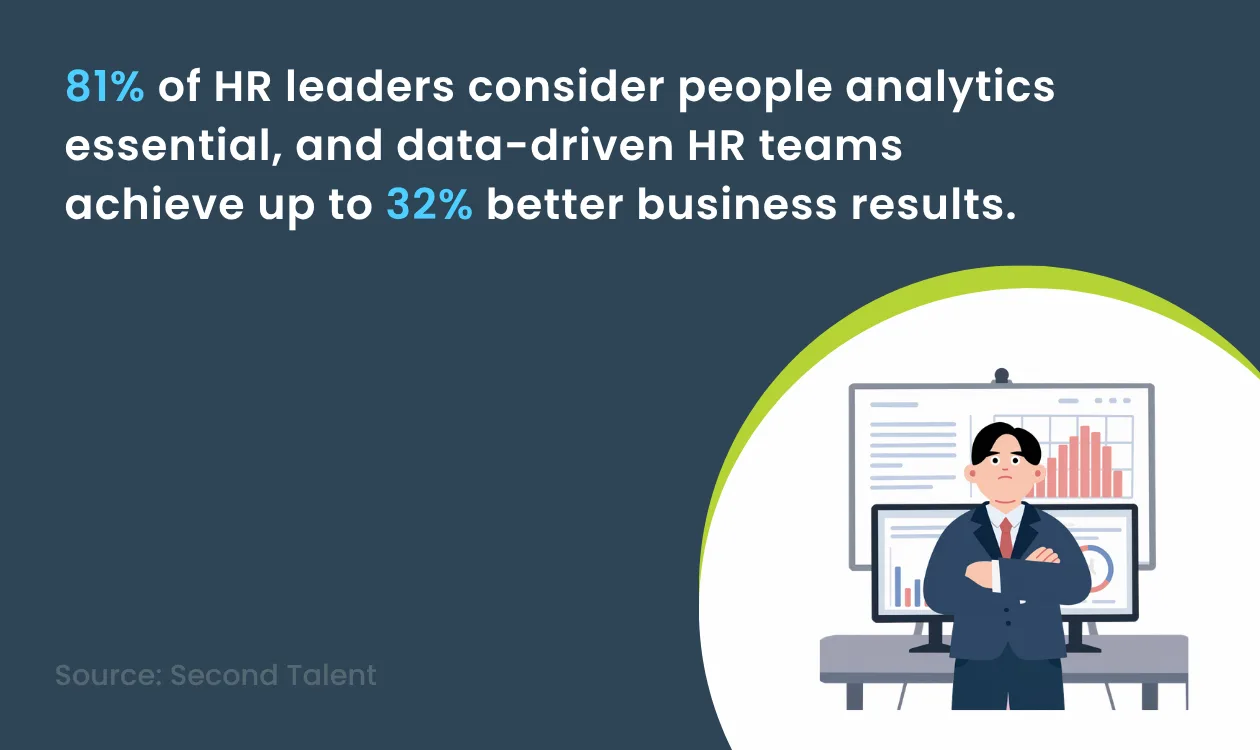
Today’s HR professionals aren’t just expected to run reports, they’re expected to drive strategic decisions with data. According to the Second Talent industry survey, 81% of HR leaders now consider analytics essential for strategic planning, and organizations that leverage people analytics report up to 32% better business outcomes than those that don’t.
Practical skills include descriptive and diagnostic analytics, basic SQL or spreadsheet modeling, and familiarity with visualization tools like Power BI or Tableau. Building a small dashboard or running a predictive attrition model on a pilot population makes the skill visible and valuable.
2. Comfort with HR Technology and Automation
Top HR pros understand ATS, HRIS, learning platforms, and basic automation workflows. They do not need to be engineers, but they can configure systems, design candidate experience in an ATS, and partner with IT to automate routine tasks. A talent acquisition manager who implements automated screening rules and reduces time to hire by optimizing the ATS demonstrates an outcome that supports a high-growth HR career.
3. Strong Business Acumen
High-growth HR careers are grounded in business impact. Successful HR leaders speak the language of revenue, margins, and customer outcomes. They align talent strategies with business priorities and create metrics that matter to executives. For instance, an HR leader who ties a leadership development program to improved sales performance can demonstrate ROI that executives respect.
4. Consultative and Influencing Skills
Stakeholder management matters. People who move fast can influence peers, managers, and senior leaders without formal authority. They present data, propose options, and build coalitions to implement talent solutions. Staffing teams that embed consultative practices have higher acceptance for change initiatives and faster adoption of new processes.
5. Continuous Learning and Curiosity
High-growth HR careers are a product of deliberate learning. Professionals pursue certifications, microcredentials, and on-the-job stretch projects to stay current. Curiosity about AI, recruitment automation, and talent science keeps them ahead. A recruiter who learns to run basic SQL queries or build dashboards can pivot into people analytics or strategic talent planning roles.
6. Outcome Orientation and Measurement
Moving up requires measuring impact. High-growth HR careers are defined by people who set clear goals, track outcomes, and iterate. Whether improving candidate quality, reducing voluntary turnover, or speeding internal mobility, top HR professionals rely on data to prove the value of their interventions.
7. Agility and Change Management Skills
Organizations change quickly and HR must lead many of those changes. Professionals who can manage transitions, design communication plans, and support leaders through change are more likely to be promoted. Implementing new ATS processes or rolling out automated performance cycles are examples that test and develop these skills.
High-Growth HR Career Paths and Skills
Different HR career paths require different combinations of technology, analytics, business knowledge, and stakeholder management. The table below highlights the core skills associated with five common paths.
Career path | Example roles | Important skills | How to demonstrate readiness |
HR technology | HRIS analyst, ATS administrator, HR systems manager | System configuration, automation, process improvement, data governance | Improve an HR workflow, support a system implementation, or reduce manual work |
People analytics | People analyst, HR analyst, workforce analyst | Data analysis, visualization, metric design, business storytelling | Build a dashboard or use workforce data to recommend a measurable action |
Talent acquisition | Recruiter, sourcing specialist, talent acquisition manager | Candidate assessment, sourcing, recruitment automation, funnel analysis | Improve time-to-hire, candidate experience, sourcing results, or hiring conversions |
HR business partner | HR business partner, people partner, strategic HR advisor | Business acumen, workforce planning, consultation, stakeholder influence | Connect an HR recommendation to a business goal or workforce outcome |
HR leadership | HR director, head of people, chief people officer | Strategic planning, change management, executive communication, team leadership | Lead a cross-functional initiative or demonstrate people-strategy impact at scale |
These paths often overlap. For example, recruiters may move into people analytics, HR generalists may specialize in HR technology, and HR business partners may progress into HR leadership. Transferable skills in analytics, technology, communication, and business strategy make it easier to move between HR specializations.
Real-World Examples of Fast Growing HR Careers in Action
Consider a mid-sized technology firm that redesigned its recruiting process. By training recruiters on an advanced ATS configuration, adding automated interview scheduling, and creating a dashboard to track pipeline health, the firm reduced time to hire by a measurable amount and improved candidate satisfaction. The talent acquisition lead who drove that project moved into a director role within months because the results were clear and tied to hiring velocity.
High-growth HR careers are built on a habit of turning people problems into measurable business outcomes.
Industry surveys and labor data highlight the shift toward skills in analytics and digital HR. For example, workforce analytics and recruitment automation are commonly cited as priority investments for HR teams in recent industry reports. Recruiters and HR leaders should treat these trends as signals to evolve hiring profiles and learning programs. Framing these initiatives as contributions to revenue, cost control, or speed to market makes the value clear to business leaders.
How to Build the Traits That Fuel High-Growth HR Careers
Here are practical steps individuals and teams can take to develop the traits above.
1. Create a Learning Roadmap
Identify one technical and one interpersonal skill to develop each quarter. For technical skills, consider courses on people analytics, ATS administration, or automation tools. For interpersonal skills, choose negotiation, stakeholder influence, or coaching. Track progress with small projects that demonstrate impact.
2. Use Stretch Assignments to Practice
Volunteer for projects that cross functions. Lead an initiative to integrate recruitment metrics into business reviews or pilot an automation project with operations. These assignments build credibility and create artifacts you can show during performance discussions.
3. Measure and Communicate Impact
Translate activities into metrics. Convert recruiter process improvements into percentage reductions in time to fill or increases in offer acceptance rate. Use dashboards to make results visible. Clear metrics are the currency of high-growth HR careers.
4. Build a Network of Mentors and Sponsors
Mentors provide learning. Sponsors open doors. Seek leaders who appreciate HR tech and business strategy as sponsors. Regular check ins and demonstration of results will strengthen advocacy for promotions and new roles.
5. Practice Product Thinking in HR
Treat HR programs like products. Define user personas, map journeys, run experiments, and iterate. Whether designing an onboarding experience or a manager self service, product thinking leads to better experiences and measurable improvements.
In addition, build a short portfolio of measurable projects. Keep before and after metrics, dashboards, and a concise one page summary for each initiative. That portfolio accelerates internal visibility and supports career conversations with evidence rather than anecdotes.
What Recruiters and Staffing Firms Should Do
Staffing teams play a dual role. They must hire for high-growth HR careers and help existing talent develop. Here are actions for teams that want to support rapid HR career growth.
- Update job descriptions to list measurable outcomes and required tech skills such as ATS configuration or analytics experience.
- Create competency frameworks that map to career paths emphasizing data, tech, and influence.
- Partner with learning vendors to offer microcredentials in HR analytics and automation.
- Use internal mobility programs to create rotational opportunities across HR functions.
For external recruiting, emphasize signal detection. Look for candidates who have led measurable projects, used HR tech to improve outcomes, or demonstrated cross functional influence. Assess candidates by asking for short case summaries of projects they owned and the measurable impact those projects achieved.
Measuring Progress Toward High-Growth HR Careers
Define metrics at the individual and team level. Examples include improvements in time to hire, internal mobility rate, manager satisfaction with HR, or the percentage of HR decisions informed by analytics. Regular review cycles help maintain momentum and identify development gaps early.
Tools that help measure progress include ATS analytics, people analytics platforms, and simple dashboards built in modern BI tools. Public resources such as the Bureau of Labor Statistics provide occupational data that can help organizations benchmark roles and compensation. Schedule quarterly career reviews that align individual learning roadmaps to those measurable team goals.
Conclusion
High-growth HR careers are attainable with focused effort. The people who rise quickly combine technical skill with business perspective, influence, and a habit of measuring impact. Whether you are a recruiter, HR generalist, or leader, focus your time on building data fluency, mastering HR technology, and delivering measurable solutions. Those actions create momentum and position you for leadership in HR. Start with one measurable project, document outcomes, and use that success to claim the next role on your career ladder toward high-growth HR careers. Stay ahead of the curve - explore more HR insights on NextInHR.