

 9 mins read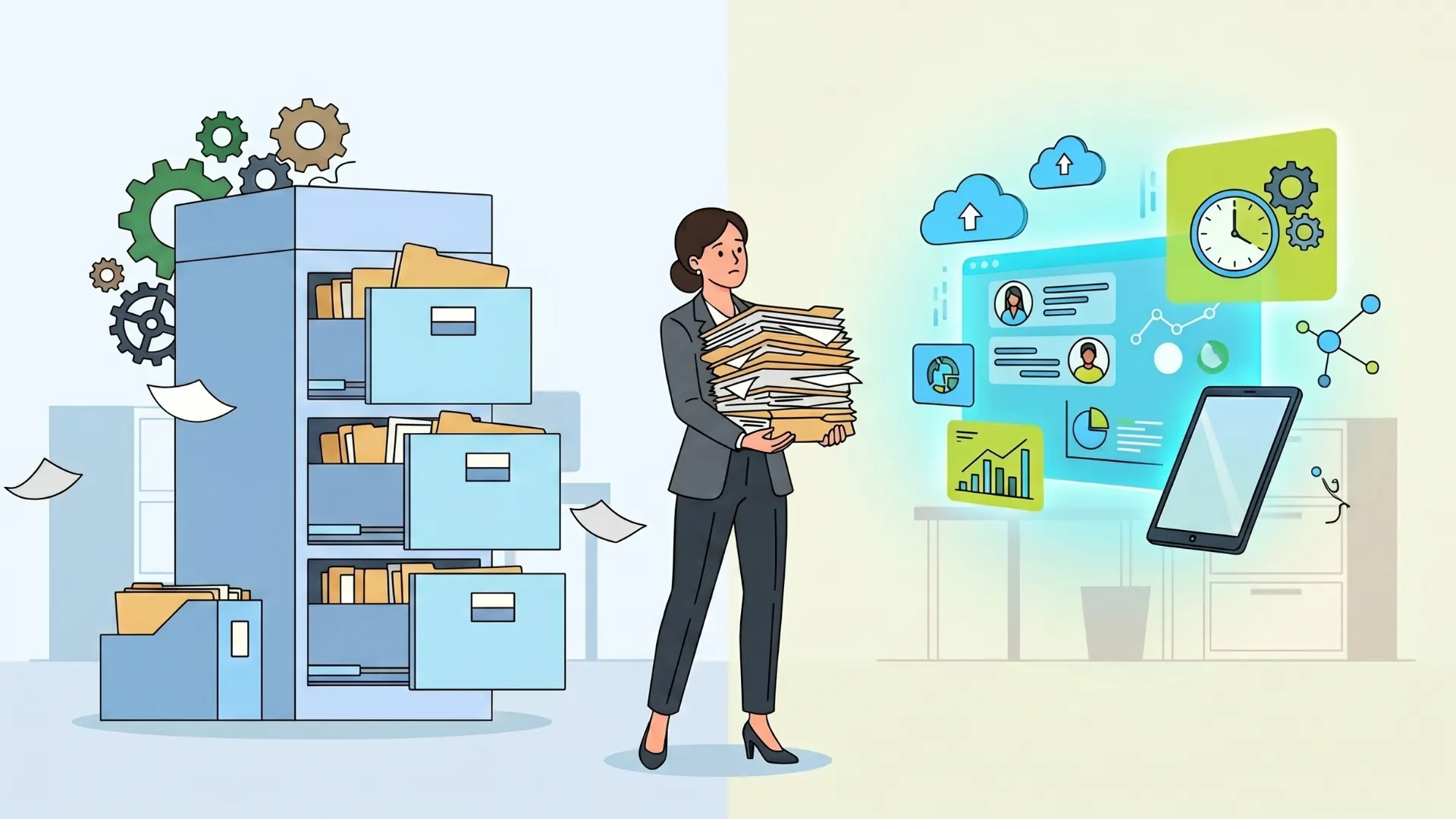
Work today is faster, more digital, and more flexible than ever before. Yet many organizations still rely on traditional HR models built for stable, office-based environments and predictable career paths. That gap between design and reality creates friction across recruiting, learning, and workforce planning and drives the urgent HR transformation need many leaders now face.
Modern work demands agility, skills fluidity, and real-time decision-making, areas where traditional HR models often struggle to keep up.
TL;DR
- Traditional HR models were built for predictability. Modern work is defined by volatility, velocity, and continuous reinvention.
- They struggle with hybrid work, skills-based hiring, fast automation, and real-time analytics.
- Core gaps include slow processes, data silos, weak candidate experience, and limited AI integration.
- Staffing teams can modernize by shifting to skills frameworks, continuous sourcing, and smarter ATS use.
- Practical steps include automation of routine tasks, better data pipelines, and reskilling programs.
- Measure impact with time to fill, quality of hire, workflow cycle time, and candidate NPS.
- Traditional HR models can adapt but require leadership, tech investment, and design thinking.
Where the Mismatch Begins for Traditional HR Models
Traditional HR models assume clear job roles, fixed career paths, and predictable hiring needs. That assumption breaks down when skills change faster than job descriptions, when remote and contingent workers join teams, and when business priorities change weekly rather than quarterly. The result is slower hiring, higher turnover, and missed opportunities to tap talent pools that operate differently than the assumptions behind legacy HR practices.
These mismatches show why traditional HR models can no longer be the default design for workforce systems and why leaders must prioritize an HR transformation need now.
The Shift to Hybrid and Distributed Work
Traditional HR models were built around physical offices, fixed schedules, and direct managerial oversight. Modern work operates differently. Hybrid teams collaborate across time zones, and productivity is measured by outcomes rather than presence.
Most traditional HR models do not measure productivity by outcomes, which creates misalignment between managers and remote contributors. Legacy attendance-based thinking does not translate well into output-based environments.
Organizations with mobile workforces can also benefit from implementing field service management software to improve scheduling, team coordination, and real-time visibility across distributed operations.
Without redesigning performance metrics and communication rhythms, old HR models create friction instead of flexibility. Addressing this requires updating policies and tools built around supporting remote employees, so distributed decision making and asynchronous collaboration can actually work in practice.
Changing Employee Expectations and Experience
Modern employees expect more than stability and salary. They seek flexibility, growth opportunities, purpose, and continuous feedback. Traditional HR models rely heavily on annual reviews, rigid promotion cycles, and standardized policies.
That mismatch reduces engagement. Continuous feedback systems, internal mobility platforms, and personalized development pathways are becoming core components of the modern workplace. HR must move from policy enforcement to experience design to improve retention and attract talent.
Because traditional HR models emphasize process control over employee experience, employers that fail to adapt face higher churn and weaker employer brand over time.
Organizational Agility and Faster Decision Cycles
Traditional HR models operate on annual workforce plans and layered approval chains. Modern work moves faster. Business priorities shift quarterly or even monthly. Teams form and dissolve around projects.
When HR processes cannot keep pace with business velocity, talent gaps widen. Agile workforce planning, rolling forecasts, and decentralized decision-making allow HR to support dynamic growth rather than slow it down. In practice, many organizations discover that their traditional HR models lengthen approval loops and delay offers in competitive markets.
Core Limitations of Traditional HR Models
Understanding the specific limitations helps shape solutions. Below are the most common structural and technical gaps I see with clients in recruiting and staffing.
1. Process cadence and timing
Traditional HR models use annual performance reviews, quarterly workforce plans, and batch hiring. Modern work needs continuous talent supply and faster decision cycles. When recruiters follow slow approval paths and long interview schedules, top candidates accept offers elsewhere. A mid-size staffing firm I worked with cut hiring cycle time by 40 percent after redesigning approvals and scheduling.
2. Role focus instead of skills focus
Legacy models map people to fixed roles. Modern work requires mapping people to skills and outcomes. Organizations that persist with role-based job descriptions miss internal talent who could fill needs if given short development plans. Moving to skills taxonomies improves internal mobility and cuts external hiring costs. Reorienting job architecture away from roles is one of the fastest ways to reduce dependency on external hiring.
3. Data silos and weak analytics
Many traditional HR models treat HR data as separate from operational data. Recruiting metrics live in ATS, learning metrics live in LMS, and performance data lives in a separate system. That fragmentation prevents real-time decisions. Teams that integrate candidate, performance, and skills data see better quality of hire and more predictable staffing forecasts.
4. Candidate experience and employer brand
Traditional HR models often focus inward on compliance and process. That leads to poor candidate experience. In a competitive market, candidate experience is a differentiator. Recruiters who automate scheduling, provide timely updates, and use conversational AI for screening improve acceptance rates and reduce ghosting.
5. Tech gaps and automation underuse
Even when organizations adopt ATS or HRIS solutions, they often use them as electronic filing systems. Traditional HR models do not prioritize automation, orchestration, or intelligent routing. Modern recruiting automation that integrates with ATS and calendars frees recruiters for high value work.
Real Examples That Highlight the Gap
Concrete examples help explain how the weaknesses play out in live settings.
Example 1: A global company with slow hiring
A global firm using a traditional approach required five approvals before an offer could be extended. The process took over six weeks. By the time they moved, top candidates had multiple offers. The company reworked approvals, added preapproved pay bands, and introduced recruiter-led offers for critical roles. Time to offer dropped dramatically and hiring success improved.
Example 2: Skills mismatch in internal mobility
An enterprise client relied on job titles to identify internal candidates. Talent mobility was limited. When the HR team defined a clear skills taxonomy and integrated it into the ATS and learning platform, internal moves increased and cost per hire decreased. The change helped retain high performers who wanted new challenges.
Quote: "We thought our ATS would solve everything. It did not until we connected it to skills data and automated workflows."
Practical Steps to Modernize Beyond Traditional HR Models
Moving from traditional HR models to a modern approach is a series of focused changes. These changes reduce friction, improve outcomes, and position teams to use AI and automation effectively.
1. Shift to skills-first hiring
Create a skills taxonomy and use it in job descriptions, candidate screening, and internal mobility. Replace rigid job titles with flexible skills profiles. This simple change increases internal matches and reduces time spent sourcing external candidates.
2. Adopt continuous workforce planning
Replace annual forecasts with rolling forecasts tied to business drivers. Use short planning cycles, scenario modeling, and proactive talent pools. Continuous planning reduces last-minute hiring and prevents overreliance on expensive third party staffing.
3. Modernize the ATS experience
Use your ATS as a workflow engine and data hub. Integrate it with sourcing tools, CRM, calendar systems, and background checks. Automate routine tasks such as interview scheduling, candidate messaging, and offer approvals. That lets recruiters focus on candidate engagement and stakeholder alignment.
4. Introduce intelligent automation and AI
Deploy AI for candidate matching, resume parsing, and chat screening. Use automation to route candidates to the right recruiter and to trigger learning pathways for near matches. Be careful to monitor for bias and to validate models with real outcomes.
5. Build feedback loops and real time analytics
Collect candidate NPS, time-based metrics, and hiring manager satisfaction continuously. Use dashboards that show pipeline health, diversity metrics, and skills coverage. Feedback loops allow teams to test process changes and show quick ROI.
6. Invest in reskilling and microlearning
Modern work favors skills upgrades. Create microlearning paths tied to open roles. Pair learning credits with stretch assignments. When employees see clear routes to new roles, retention improves and talent becomes more adaptable.
How Recruiters and Staffing Leaders Can Prioritize Changes when adapting HR models
Not every organization can change everything at once. Prioritize actions that deliver the fastest value.
- Audit key bottlenecks: time to fill, interview cadence, approval loops.
- Define one or two leader metrics, such as time to offer and candidate NPS.
- Automate scheduling and repetitive outreach first to free recruiter time.
- Start a pilot skills taxonomy in one function and scale it across the company.
- Align IT and HR to build a single data pipeline from ATS to analytics.
Measuring Progress Beyond Checkboxes
Outcomes matter more than tool adoption. Traditional HR models often report activity metrics instead of outcome metrics. Measure what changes impact the business.
- Time to fill and time to offer for critical roles.
- Quality of hire measured by performance and retention at 6 and 12 months.
- Candidate NPS for the recruitment experience.
- Internal mobility rate and percentage of roles filled internally.
- Reskilling completion rates and post-training role match rates.
Include a mix of short and medium term metrics so leaders can see progress. Track how changes to your systems reduce the bottlenecks caused by traditional HR models, and report improvements back to business stakeholders monthly.
Common Pitfalls When Moving Away from Traditional HR Models
Change efforts often stall because of common mistakes. Watch for these traps.
- Trying to replace culture with technology. Change needs both process and people work.
- Rushing AI adoption without governance. Poor models amplify bias and erode trust.
- Ignoring hiring manager experience. Tools must speed decision making for managers as well as recruiters.
- Neglecting vendor consolidation. Too many point solutions add complexity and data fragmentation.
Conclusion
Traditional HR models are not outdated by design, they are outdated by context. As work becomes more dynamic and skills-driven, HR must shift from rigid processes to adaptive systems. The move away from old HR models and legacy HR practices requires design thinking, measurable goals, and incremental pilots.
Organizations that redesign HR around agility, technology, and employee experience will move from reactive hiring to strategic workforce leadership. Start with clear leader metrics, a skills-first pilot, and smarter ATS use to prove value quickly. Stay ahead of the curve - explore more HR insights on NextInHR.