
 10 mins read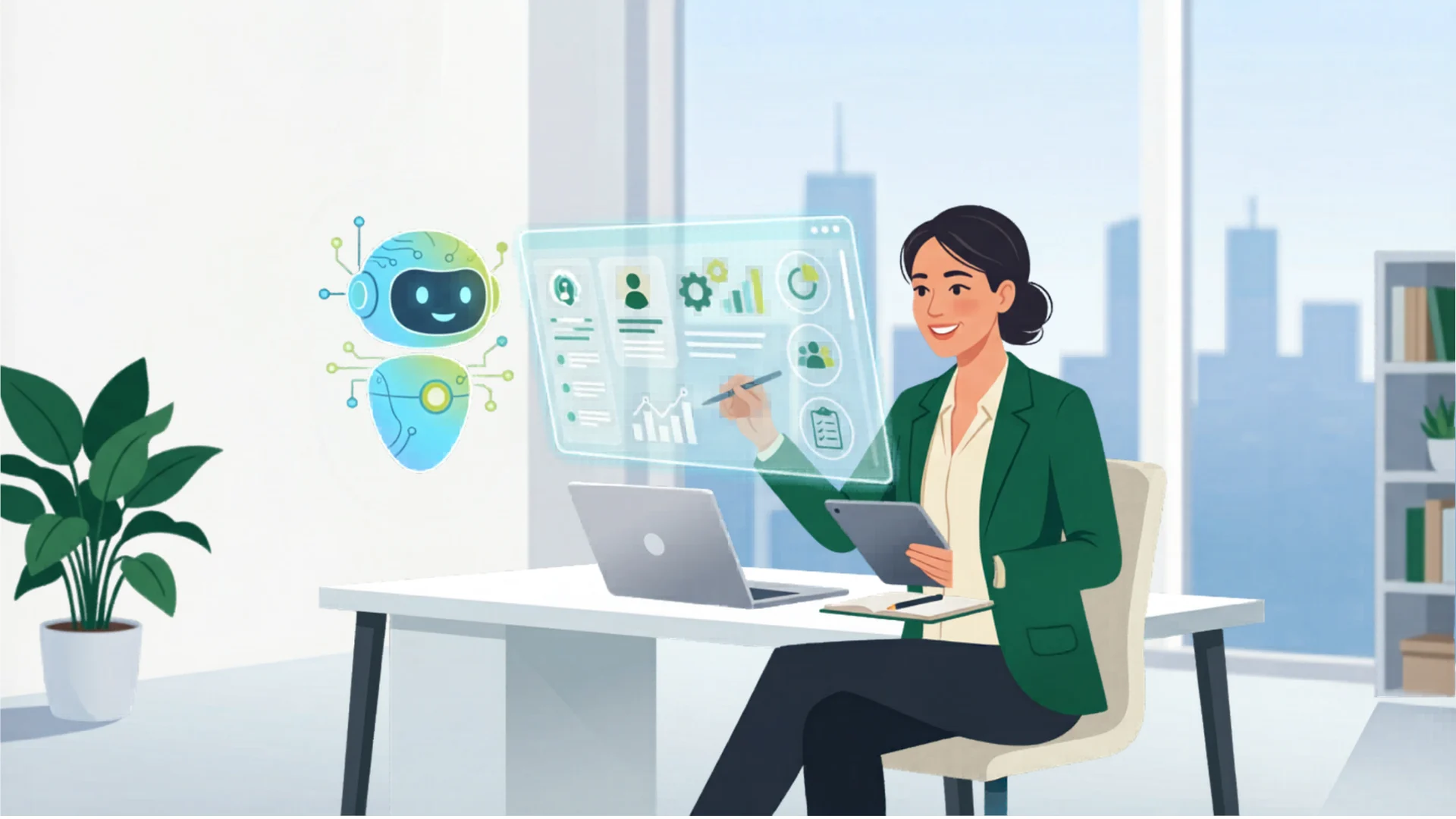
The debate over whether AI will replace HR jobs has moved from academic discussions to executive planning rooms. As organizations adopt AI in HR tools for recruitment, onboarding, payroll, employee support, and people analytics, HR leaders must separate hype from reality. AI is unlikely to replace human resources completely, but it will automate repetitive tasks and reshape many HR roles by 2030. This article explains which HR jobs are most at risk, which roles are safer, and how HR leaders can manage the AI impact on HR through reskilling, governance, and smarter HR automation strategies.
TL;DR
- AI will automate repetitive HR tasks but will not fully replace strategic HR roles by 2030.
- Transactional work like resume screening and benefits administration faces the highest risk.
- Roles that require judgment, coaching, change leadership, and complex ethics stay safe.
- HR leaders must invest in reskilling, redefine roles, and embed governance for AI and HR automation.
- Short-term gains come from applying AI to sourcing, analytics, and candidate experience.
- Long-term success requires a people-first approach that pairs AI with HR expertise.
Will AI Replace HR Jobs by 2030?
When leaders ask if AI Replace HR Jobs by 2030 they really ask which jobs will change and how fast. AI in HR amplifies productivity for repetitive processes. It speeds candidate screening, automates payroll reconciliation, and surfaces workforce risks through people analytics. Still, the core of HR work that involves empathy, negotiation, and strategic workforce planning remains human led. For clarity, this article uses a task-first lens to show where AI Replace HR Jobs is a real risk and where it is not.
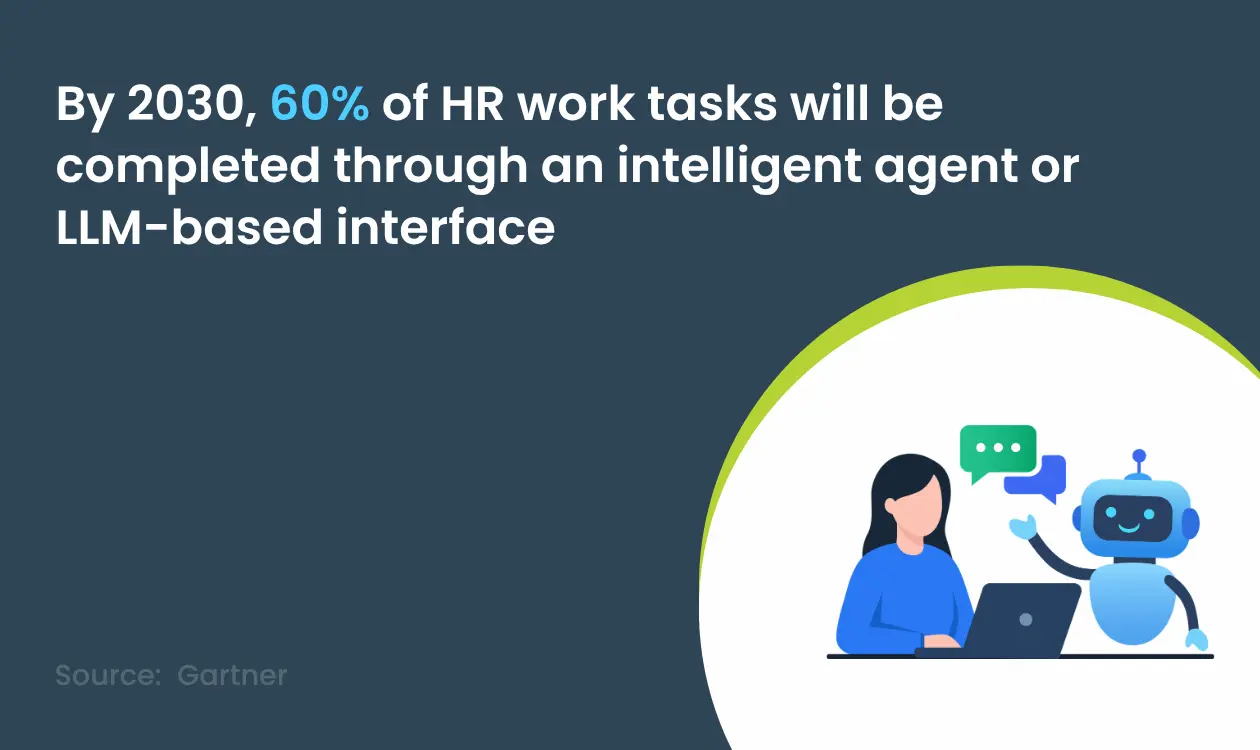
Research suggests that AI will reshape HR work more than replace HR professionals. Gartner predicts that by 2030, 60% of HR work tasks will be completed through an intelligent agent or LLM-based interface. This means repetitive HR activities such as scheduling, reporting, onboarding workflows, employee queries, and document handling may become more automated. However, strategic, relational, and ethical HR responsibilities will still need human judgment.
AI will change how HR operates, not erase the need for HR judgment and human connection. Human skills will shape how organizations use AI tools.
How AI Replace HR Jobs: Tasks Versus Roles
To evaluate if AI Replace HR Jobs you must separate tasks from roles. AI excels at pattern recognition, classification, and high volume decisioning. When a job consists mainly of those tasks, automation can reduce headcount pressure. When a job requires contextual judgment, interpersonal influence, or ethical evaluation, AI becomes a tool not a substitute. This distinction clarifies why conversations about AI Replace HR Jobs are more about which functions change than whether HR disappears.
Tasks AI automates well
- Resume parsing and candidate ranking based on predefined criteria
- Standardized interview scheduling and calendar coordination
- Payroll processing reconciliations and tax form generation
- Benefits eligibility checks and routine case routing
- Basic employee inquiries handled by conversational agents
Tasks that still need humans
- Culture design, leadership coaching, and change management
- Complex conflict resolution and sensitive employee relations
- Strategic workforce planning across ambiguous business scenarios
- Ethical decisions where context and values matter
AI in HR: Where Automation Helps and Where Humans Win
Deploying AI in HR gives HR teams capacity to focus on high value work. For example, recruitment automation improves time to hire and widens candidate reach. People analytics free HR teams from data wrangling and surface trends for retention. At the same time, managers and HR business partners still interpret insights, coach teams, and make tradeoffs that align with business and culture.
Use cases that combine AI and human expertise deliver the best outcomes. Pair algorithmic shortlists with structured human interviews. Use conversational agents to triage routine questions and escalate complex cases to human advisors. This hybrid approach minimizes risk and preserves employee trust.
Which HR Jobs Are Most at Risk?
When evaluating whether AI Replace HR Jobs in whole roles, think about task composition. Jobs heavy on repetitive administrative work face the most disruption. Typical at-risk roles include:
- Resume screeners and entry-level sourcers where algorithmic matching handles high volumes
- Payroll clerks and benefits administrators performing rule-based reconciliation and eligibility checks
- HR data entry and case routing roles that rely on predictable workflows
- Basic employee support agents replaced by chatbots for standard inquiries
Even in at-risk roles, organizations that reskill staff to operate and supervise AI systems keep institutional knowledge and reduce disruption. Employers that treat AI as a partner rather than a replacement get better retention and faster ROI. Thoughtful redeployment reduces the odds that AI Replace HR Jobs becomes a disruptive force in an organization.
HR Role-Risk Comparison: Which HR Jobs Are Most Affected by AI?
HR Role / Function | AI Risk Level | Why AI Can Affect This Role | What Humans Still Do |
Resume Screening | High | AI can scan resumes, match keywords, rank candidates, and filter applications quickly. | Review context, assess potential, reduce bias, and make final shortlist decisions. |
Interview Scheduling | High | HR automation tools can manage calendars, send reminders, and coordinate interview slots. | Handle exceptions, candidate concerns, and last-minute changes with empathy. |
Payroll Administration | High | AI can detect errors, process standard payroll data, and flag compliance issues. | Resolve complex payroll disputes, sensitive cases, and policy exceptions. |
HR Helpdesk / Basic Support | High | Chatbots can answer common questions about leave, benefits, policies, and onboarding. | Support emotional, sensitive, or complex employee concerns. |
Benefits Administration | Medium–High | AI can automate enrollment, reminders, eligibility checks, and basic employee queries. | Explain nuanced options and guide employees through personal benefit decisions. |
Talent Acquisition | Medium | Talent acquisition automation can support sourcing, screening, and candidate matching. | Build relationships, assess culture fit, negotiate offers, and improve candidate experience. |
People Analytics | Medium | AI can identify workforce trends, retention risks, skills gaps, and performance patterns. | Interpret insights, challenge assumptions, and turn data into people strategy. |
Learning and Development | Medium | AI can recommend courses, personalize learning paths, and track progress. | Design leadership programs, coach employees, and build learning culture. |
HR Business Partner | Low–Medium | AI can support reporting, documentation, and workforce insights. | Advise leaders, manage change, resolve conflicts, and shape workforce strategy. |
Employee Relations | Low | AI can organize case notes, flag trends, and support documentation. | Handle conflict, conduct sensitive conversations, apply judgment, and protect trust. |
Organizational Development | Low | AI can analyze survey data and suggest patterns. | Lead culture change, design organizations, influence leaders, and manage transformation. |
DEI and Culture Leadership | Low | AI can track diversity metrics and sentiment signals. | Build inclusion strategies, address bias, and lead human-centered culture work. |
Which HR Jobs Are Safe From AI and Why
Not all HR work is replaceable. Tasks that center on human judgment remain essential. Roles likely to persist include:
- HR business partners who translate strategy into people actions
- Organizational development and learning leads who design culture and leadership programs
- Employee relations and mediation specialists who handle nuanced disputes
- Talent strategists and workforce planners managing complex scenario planning
- Diversity, equity and inclusion leaders who navigate systemic change
These roles rely on relationships, negotiation, and ethics. AI can support them with insights but rarely replaces the human at the center of trust and influence. In short, where human connection matters most, AI Replace HR Jobs is unlikely.
How HR Leaders Should Respond
Assume the question shifts from whether AI Replace HR Jobs to how HR leaders will redesign work. Practical responses fall into four actions. Positioning teams to work with AI reduces risk and improves outcomes.
1. Map work and identify automation targets
Run a task audit to separate high volume repeatable tasks from judgment driven activities. Prioritize automating tasks that free time for impact work. Use pilot projects to validate assumptions and measure time saved.
2. Reskill and redeploy talent
Create fast-track reskilling programs focused on AI supervision, data literacy, and advisory skills. Redeploy staff from transactional roles into candidate experience, employer branding, and HR analytics. That approach preserves institutional knowledge and aligns with workforce planning.
3. Build governance and ethical guardrails
AI in HR raises bias and privacy concerns. Establish policies for model validation, human oversight, and explainability. Require bias testing in recruiting algorithms and guardrails for automated decisions that affect employment outcomes.
4. Measure outcomes and iterate
Track time to hire, candidate quality, employee satisfaction, and error rates. Use those KPIs to refine models and process design. Tie automation investments to measurable business outcomes so leaders can prioritize where to scale. Measuring impact helps leaders demonstrate whether AI Replace HR Jobs is delivering net value or unintended harm.
Focus on redesign, not replacement. Leaders who pair AI with human judgment retain competitive advantage while protecting their workforce.
Practical Use Cases and Real-World Examples
Successful HR teams implement AI in measurable ways. Examples include:
- Automated candidate screening that reduces resume review time and routes qualified candidates to human sourcers for final assessment
- Chatbots that handle benefits enrollment questions and escalate complex cases to benefits specialists
- People analytics dashboards that flag retention risk and prompt targeted manager action plans
These use cases show how AI in HR extends capacity and elevates human work. They also demonstrate that AI rarely removes the need for HR judgment when handling people matters. Organizations that carefully document outcomes make stronger business cases for scaling automation without harming careers.
How to Protect HR Careers: Skills That Matter
If you worry that AI Replace HR Jobs you can act by building skills that complement automation. Focus on:
- Coaching and facilitation to improve manager capability
- Data interpretation and storytelling to turn analytics into action
- Change management expertise to lead transformation
- Ethics, compliance, and privacy skills to govern AI use
HR professionals who blend people skills with technical literacy become indispensable as AI becomes standard in HR technology stacks. Investing in these skills reduces the likelihood that AI Replace HR Jobs will be disruptive to individual careers.
Will AI Replace HR Jobs? Final Assessment
Short answer: AI Replace HR Jobs in specific transactional tasks but not in strategic, relational, and ethical domains by 2030. HR automation will reshape roles and reduce time spent on routine work. It will also create new jobs that require AI oversight, analytics, and change leadership.
Leaders who act now will build more resilient HR teams. Start with task mapping, pilot automation for high volume work, and invest in reskilling programs that emphasize human strengths. Embed governance and measure impact to scale responsibly. Clear planning reduces fear and positions teams to benefit from AI in HR while protecting careers.
For HR professionals, the path forward is clear. Embrace AI in HR as an amplifier of human judgment. Focus on skills that machines cannot replicate and lead the redesign of work in your organization.
Conclusion: Will AI Replace HR Jobs by 2030 and What You Should Do Next
As you plan for the future, remember that the question will evolve from Will AI Replace HR Jobs to how HR can responsibly adopt AI to improve outcomes. Prioritize reskilling, governance, and human centered design as you scale automation. Stay informed on HR technology trends and lead the conversation in your organization. Stay ahead of the curve - explore more HR insights on NextInHR.