

 10 mins read
HR professionals can earn extra income through employee referrals, freelance recruiting, interview coaching, résumé reviews, HR consulting, training, and staffing partnerships. Among these options, referral jobs are often one of the most accessible because they allow HR professionals to use their existing networks and recruitment knowledge without building a separate consulting business.
This guide focuses specifically on how HR professionals earn extra income through ethical candidate referrals. It explains common referral channels, payment models, compliance requirements, tools, and practical steps for building a reliable referral pipeline.
TL;DR
- HR professionals earn extra income through formal referral programs, agency partnerships, and private referral networks.
- Use ATS, referral platforms, and CRM tools to scale referrals without harming employer trust.
- Clear disclosure, conflict of interest policies, and legal compliance protect your career and reputation.
- Build a referral pipeline with passive sourcing, alumni networks, and industry groups.
- Automate notifications and track referral ROI with simple metrics and integrations.
- Real examples show recruiters turning referrals into steady supplemental income while supporting hiring goals.
- Follow practical steps and ethical rules to monetize referrals without jeopardizing your HR role.
Ways HR Professionals Can Earn Extra Income
HR professionals have several ways to supplement their income, depending on their experience, available time, employer policies, and professional network.
Income method | Typical work involved | Income type |
Candidate referrals | Introducing qualified candidates | Referral bonus or fee |
Freelance recruiting | Sourcing and screening candidates | Project fee or commission |
HR consulting | Advising businesses on HR processes | Hourly or project fee |
Interview coaching | Preparing candidates for interviews | Session fee |
Résumé and LinkedIn reviews | Improving candidate profiles | Fixed service fee |
HR training | Delivering workshops or courses | Session or course income |
This article focuses on candidate referrals because they can be started using an existing professional network and usually require less setup than consulting or freelance recruitment.
Why HR professionals earn extra income: side income HR and referral value
Why Referral-Based Hiring Creates Income Opportunities
Referrals drive faster hires, higher retention, and better cultural fit. Employers and staffing firms frequently pay a premium for hires from trusted sources because those candidates reduce time to productivity and lower turnover risk. That premium creates opportunities for HR professionals earn extra income by connecting the right people to the right roles.
Companies value referrals because referred hires are often more committed and onboard faster. Staffing firms and hiring managers are willing to offer referral fees or commission splits when a trusted connector produces successful placements. When HR professionals earn extra income, they often act as trusted matchmakers, not transactional intermediaries. Many HR teams treat this as legitimate side income HR activity when they follow employer policies.
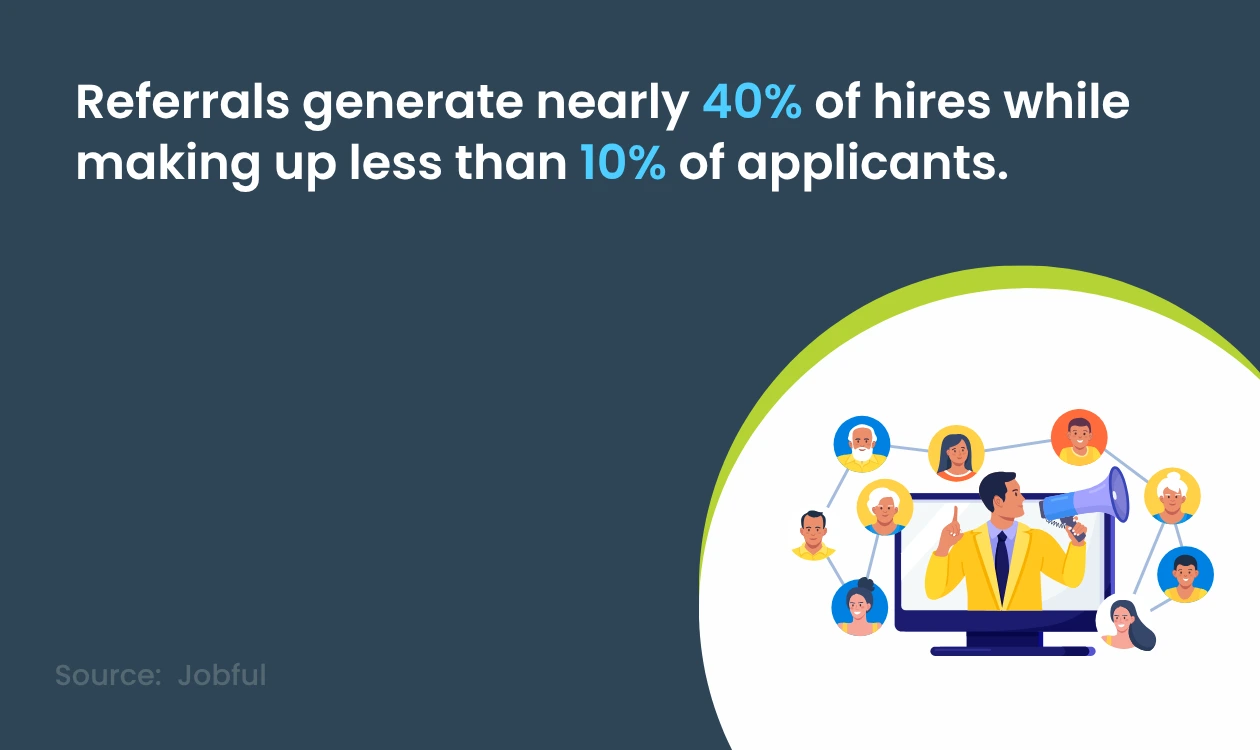
According to recruitment platform Jobful, referral candidates account for a relatively small share of total applications but contribute disproportionately to successful hires. Some recruitment studies show referrals generate nearly 40% of hires while representing less than 10% of applicants. This is one of the key reasons organizations continue investing in referral-based hiring programs and referral commission models.
Common Ways HR professionals earn extra income
Common Ways HR Professionals Earn Extra Income
There are several legitimate ways HR professionals earn extra income through referrals. Choose options that align with your employer policies and local regulations. HR professionals earn extra income by prioritizing transparency and compliant workflows rather than quick wins.
- Internal employee referral bonuses: The most straightforward route is participating in formal internal referral programs. If you are eligible, you can refer passive candidates from your network and receive structured bonuses once a hire completes required tenure.
- Agency partnership or finder fees: Some recruiters and independent HR consultants partner with staffing agencies or boutique search firms. When their referred candidate is placed, they receive a finder fee or percentage of the placement fee.
- Freelance or contract recruiting: HR professionals earn extra income by taking on recruiting projects outside normal hours, placing candidates for clients and retaining referral fees.
- Alumni and boomerang programs: Re-engaging former employees for new roles can trigger incentives. HR professionals who maintain alumni networks can identify boomerang candidates and capture referral bonuses. These efforts often create a form of HR passive income when smart automation keeps the network active.
- Platform referral programs: Job boards, hiring platforms, and niche communities often pay for introductions. Integrations with ATS and referral platforms let you scale introductions and receive automated rewards.
Platforms like NextInHR Referral Jobs allow HR professionals to participate in referral-based hiring through transparent workflows and fixed referral commissions. Instead of managing referral processes manually, HR professionals can refer candidates for active openings, track referral status, and earn rewards for successful placements through a structured platform. Using a structured platform makes it easier for HR professionals earn extra income consistently while keeping compliance front of mind.
Illustrative Examples of HR Referral Income
Example 1: A talent acquisition lead built a private roster of passive engineers sourced from meetup groups. By partnering with a boutique tech search firm, she referred three candidates and received finder fees for two successful placements. She disclosed the arrangement to her employer and avoided conflicts by not recruiting from her company.
Example 2: An HR generalist joined a referral platform that rewards introductions to vetted startups. She shared qualified product managers from her network and earned modest fees via the platform while helping founders hire faster. Her employer had an outside-work policy that she complied with. These case stories show how HR professionals earn extra income while maintaining employer trust.
Tip: Keep referrals transparent. Inform your employer and follow conflict of interest rules before engaging in paid referrals.
How to Build a Referral Pipeline
HR professionals earn extra income consistently when they treat referrals like a small business. Here are steps to build a repeatable system.
- Map your network: Categorize contacts by skill, seniority, industry, and availability. Use simple CRM tags to find fits quickly.
- Leverage ATS and integrations: Use your ATS or a lightweight CRM to track candidates, referral statuses, and outcomes. Many platforms support private tags for external referrals so you can manage pipeline without mixing company data.
- Automate outreach: Use templated messages and nurture sequences to convert passive contacts into referred candidates. Short, personalized outreach beats generic messages.
- Standardize qualifying criteria: Create a short checklist for role fit, location, compensation range, and notice period. That reduces time spent on unqualified referrals.
- Track ROI: Measure time to fill, placement success, and fees earned. That helps refine which networks produce the best returns.
Tools and Automation for Referral Hiring
Technology amplifies referral reach. The right tools let HR professionals earn extra income without adding manual overhead. With the right tools, HR professionals earn extra income with less manual work and clearer audit trails.
- Referral platforms: Platforms help manage introductions, contracts, and payments. They also vet candidates which increases placement success.
- ATS integrations: Use ATS features or integrations that let you track referred candidates through the hiring funnel without exporting private company data.
- AI sourcing tools: AI can recommend passive candidates based on skills and open source profiles. Pair AI suggestions with human qualification to improve conversion rates.
- CRM and email automation: A lightweight CRM with sequences keeps candidates warm and moves them toward interviews. For many HR pros, these systems convert referral jobs for HR into predictable pipelines.
Ethics, Compliance, and Employer Policies
Before you pursue paid referrals, check your employment agreement and company policies. HR professionals earn extra income more sustainably when they are upfront with their employer. Common rules to follow include:
- Disclose secondary income opportunities when required by company policy.
- Do not solicit candidates from your employer or recruit active employees unless you have explicit permission.
- Avoid conflicts of interest by not placing candidates into roles where you have hiring influence without disclosure.
- Comply with data privacy rules when sharing candidate information with third parties.
Transparency protects both your career and your brand. If you are unsure how to interpret a policy, consult legal or compliance before accepting a paid referral arrangement. When HR professionals earn extra income they must prioritize disclosure and compliance to avoid conflicts.
How to Protect Your Professional Reputation
Reputation matters in recruiting. HR professionals earn extra income more reliably when they are seen as honest, accurate, and helpful. Sustained trust helps HR professionals earn extra income over time.
- Be transparent with candidates: Tell candidates when a referral is paid and what the terms are.
- Set realistic expectations: Don’t overpromise roles or timelines. Keep hiring managers updated with factual statuses.
- Document arrangements: Use written agreements for finder fees and payment timing. Platforms often handle this for you.
Practical outreach scripts and templates
Here are short templates you can adapt for outreach.
- Passive candidate outreach: "I work with firms hiring experienced product managers. Based on your background, I can introduce you to an opportunity that fits compensation and scope. Are you open to a short call?"
- Employer or agency intro: "I have a senior designer with proven e commerce experience interested in new roles. I can arrange an intro and handle screening. What is the best email to share details?"
Taxes and Payment Considerations
Income from referrals is taxable income. HR professionals earn extra income that must be reported according to local tax rules. If you receive payments through platforms, they may issue tax forms. If you receive finder fees as a contractor, keep clear records and invoices. Consult a tax professional for specific advice based on your situation. Plan for taxes when HR professionals earn extra income so there are no surprises.
Measuring Success and Refining the Approach
Track a few key metrics to know if your referral activities are worth the time.
- Number of qualified introductions: A higher ratio of quality intros means better productivity.
- Placement rate: Measure how many introductions result in interviews and hires.
- Average fee per placement: Understand income per time invested to prioritize channels.
- Time to placement: Faster placements often mean higher conversion for referral fees.
Iterate on sources that deliver the best ratio of fee to effort. For many HR professionals earn extra income more predictably by focusing on one or two niche networks rather than broad, unfocused outreach. Tracking outcomes helps HR professionals earn extra income more predictably.
Illustrative Referral Pipeline Example
Note: The following scenarios are illustrative examples created to explain how HR referral arrangements may work. They are not presented as verified customer results. Referral earnings, timelines, and placement outcomes vary by role, programme, candidate quality, and payment terms.
A recruiter in a niche healthcare market built relationships with former colleagues and university alumni. By focusing on three high demand roles, she created a repeatable referral pipeline. With ATS tags and an automation sequence, she reduced screening time and increased her placement success. Over several months she earned stable supplemental income while maintaining full time HR responsibilities. Her transparent approach included disclosure to her employer and a written agreement with the placement firm. The case shows how HR professionals earn extra income by focusing on niche roles and disclosure.
Common Referral Mistakes to Avoid
Avoid these mistakes when pursuing referral income.
- Working in secret. Disclosure prevents career risk.
- Referring low quality or unvetted candidates. It damages your reputation.
- Mixing company data with personal projects. Keep candidate and company information separate.
- Ignoring tax and legal obligations. Keep records and consult professionals.
Conclusion: HR professionals earn extra income
HR professionals can earn extra income through several routes, including consulting, coaching, freelance recruitment, training, and candidate referrals. The best option depends on available time, professional experience, employer policies, and the level of involvement required.
Referral jobs can be a practical starting point for HR professionals who already maintain strong candidate and employer networks. By confirming eligibility, obtaining candidate consent, documenting payment terms, and tracking referral performance, HR professionals can build an ethical and repeatable source of additional income.