
 8 mins read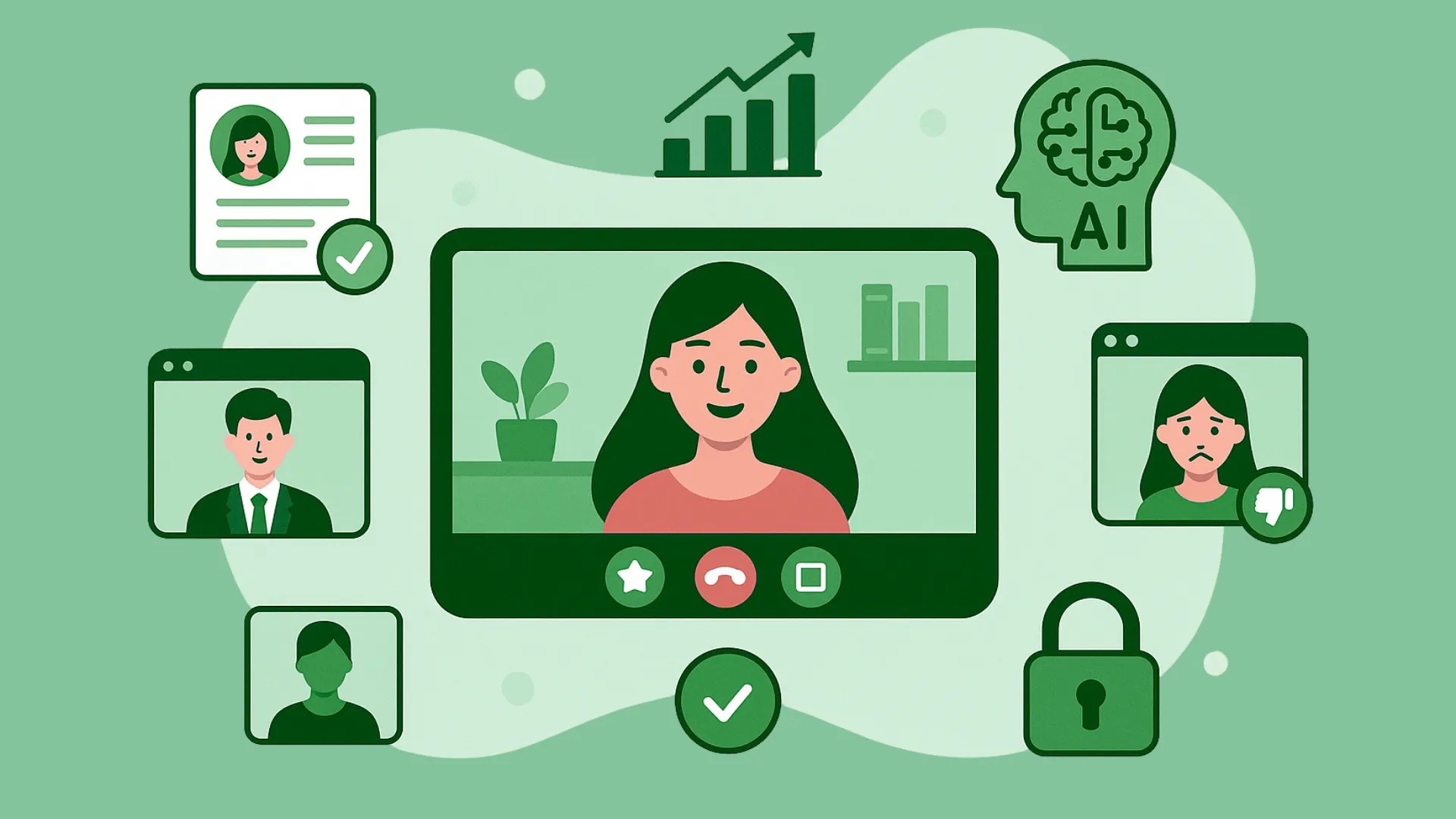
AI Video Interviews are reshaping screening workflows across staffing and HR teams. This guide explains how AI video interviews work, where they speed hiring, and the practical controls recruiters must use to prevent AI hiring bias and protect candidate privacy.
TL;DR
- Speed: AI video interviews can screen large candidate pools far faster than manual methods.
- Automation: Systems combine NLP, computer vision, and voice analytics for automated video assessment.
- Adoption: Early market data shows significant uptake in initial screening workflows.
- Risks: Algorithmic bias, privacy, cultural misinterpretation, and deepfake threats require active mitigation.
- Best practice: Use AI for screening with human review, regular audits, and clear candidate transparency.
- Candidate prep: Practice concise answers, test tech, and optimize lighting and sound for asynchronous interviews.
Understanding AI Video Interviews
Definition of AI Video Interviews
AI video interviews use artificial intelligence to evaluate candidates through recorded or live video responses. These systems analyze verbal answers, facial expressions, tone of voice, and word choice to assess qualifications and cultural fit. Unlike traditional video calls with human recruiters, AI video interviews rely on machine learning algorithms to score and rank applicants automatically.
How AI Video Interviews Work
The process typically starts when candidates receive a link to complete their interview at their convenience. They respond to pre-recorded questions while their webcam captures video and audio. Behind the scenes, natural language processing evaluates their answers for relevant keywords and communication skills.
Computer vision technology analyzes facial movements and micro-expressions, while voice analysis assesses confidence and enthusiasm. The AI hiring interviews system then generates scores that help recruiters identify top candidates for human review.
Importance in Modern Hiring Practices
Today's talent acquisition landscape demands speed and scale. With hundreds or thousands of applications for single positions, companies need efficient screening methods. AI video interviews address this challenge by handling initial evaluations automatically, freeing recruiters to focus on relationship-building with qualified finalists.
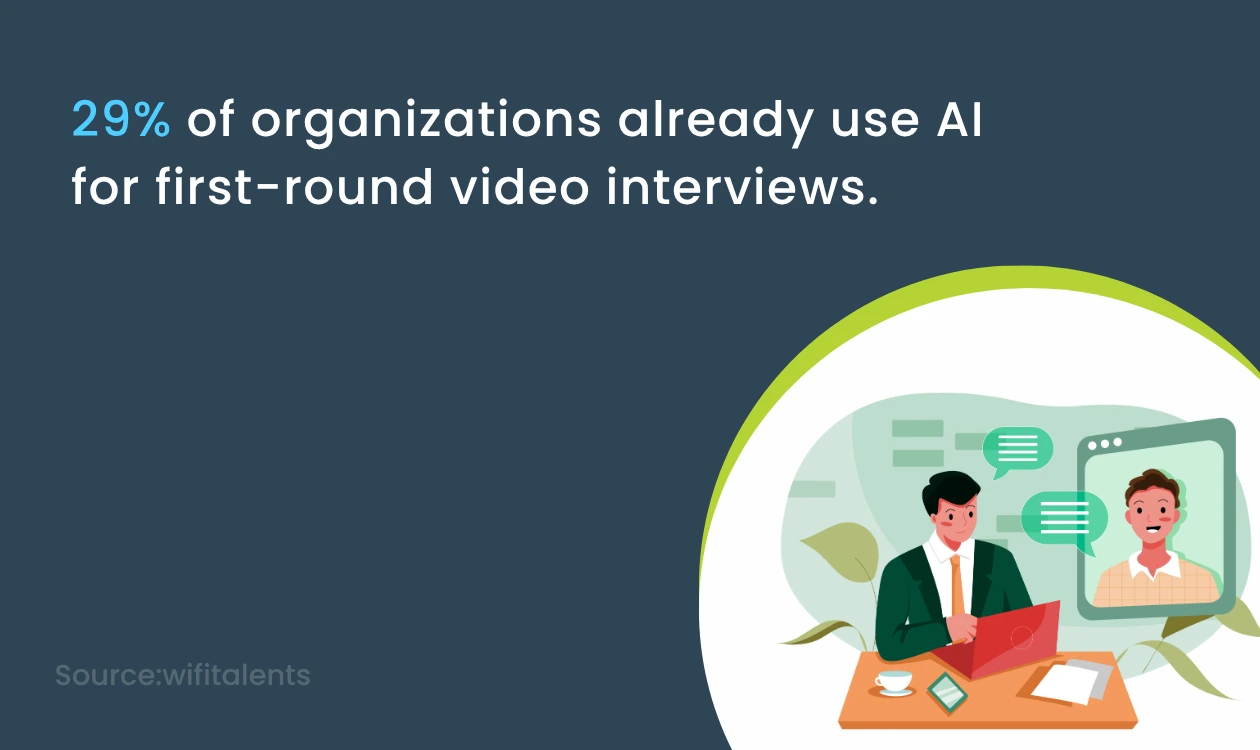
In fact, recent hiring data shows that nearly one in three organizations, around 29%, now use AI for their initial video interviews, highlighting how quickly this technology is becoming a standard part of modern recruitment. This technology has become especially valuable for remote work environments where geographic boundaries no longer limit talent pools.
Key Benefits of AI Video Interviews in Hiring
Efficiency and Speed in Candidate Screening
The most compelling benefit of AI video interviews in hiring is time savings. Traditional phone screenings require 30-45 minutes per candidate, plus scheduling coordination. AI systems evaluate responses instantly, processing hundreds of applications in the time it takes a recruiter to screen five candidates manually. This efficiency proves invaluable during seasonal hiring surges or competitive talent markets where speed determines success.
Scalability for High-Volume Hiring
Organizations hiring for multiple similar roles simultaneously benefit enormously from AI's scalability. Retail chains staffing for holiday seasons, call centers expanding operations, or tech companies running graduate recruitment programs can maintain consistent evaluation standards across thousands of candidates. The technology never gets fatigued, ensuring the 1,000th applicant receives the same thorough assessment as the first.
Reduced Human Bias through Consistent Evaluation
When implemented correctly, AI video interviews apply identical criteria to every candidate. The system does not favor certain accents, alma maters, or personal backgrounds that might unconsciously influence human recruiters. This standardization creates fairer opportunities for diverse talent pools, though it requires careful design to truly minimize bias rather than simply digitizing existing prejudices.
To address AI hiring bias, recruiters must validate models against representative data sets and monitor outcomes continuously. Bias mitigation is an active process, not a one-time configuration.
Enhanced Candidate Accessibility via Remote Formats
Video interview AI tools eliminate geographic barriers that once limited opportunities. Candidates in remote locations, those with mobility challenges, or professionals balancing current jobs can complete interviews on their own schedules. This flexibility expands talent pools while demonstrating employer commitment to inclusive HR career paths and modern recruitment practices.
Beyond AI-powered interviews, many organizations also use AI video creation tools to produce recruitment campaigns, employee onboarding videos, and employer branding content. An AI Video Generator can help HR and talent acquisition teams create engaging video content that supports candidate attraction and communication throughout the hiring journey.
Major Risks of Using AI for Video Interviews
Algorithmic and Training Data Bias
The biggest concern surrounding AI video interviews involves algorithmic bias. Machine learning models learn from historical data, which often reflects past discrimination. If training data predominantly features successful candidates from specific demographics, the AI may unfairly penalize candidates from underrepresented groups. This common HR mistake can perpetuate inequality rather than eliminate it, making oversight essential.
Privacy and Ethical Concerns in Facial Analysis
AI systems analyzing facial expressions and micro-movements raise serious privacy questions. What happens to recorded videos? How long is biometric data stored? Can candidates opt out of facial analysis while remaining in consideration? The future of HR skills must include expertise in data protection regulations like GDPR and CCPA to ensure compliance and build candidate trust.
Cultural Misinterpretations of Non-Verbal Cues
Body language and facial expressions carry different meanings across cultures. A direct gaze signals confidence in some cultures but disrespect in others. Animated hand gestures may indicate enthusiasm to some and unprofessionalism to others. AI video interview bias concerns intensify when algorithms trained primarily on Western communication styles evaluate global candidates, potentially disadvantaging qualified applicants based solely on cultural differences.
Risks of Deepfake Fraud and Candidate Authenticity
As deepfake technology advances, so does the potential for interview fraud. Candidates could theoretically use AI-generated videos or have others complete interviews on their behalf. While verification measures exist, this cat-and-mouse game requires constant vigilance and updated security protocols from best AI tools for talent acquisition.
Loss of Human Connection and Candidate Discomfort
Many candidates report feeling uncomfortable speaking to a camera without human interaction. The absence of conversational flow, inability to ask clarifying questions, and lack of rapport-building can disadvantage strong candidates who excel in interpersonal settings but struggle with one-way communication. This limitation raises questions about whether AI will replace HR jobs or simply augment human judgment.
Best Practices for AI Video Interviews
Combining AI with Human Oversight
The most effective approach treats AI as a screening tool, not a decision-maker. Use algorithms to identify promising candidates, then involve human recruiters for substantive evaluation. This hybrid model leverages technology's efficiency while preserving the relationship-building that attracts top talent. Smart organizations developing HR skills in demand understand that technology enhances rather than replaces human judgment.
Addressing and Mitigating Bias
Regular audits of AI systems help identify and correct biases. Analyze outcomes by demographic groups to spot disparities in impact. Diversify training data to reflect your actual candidate population. Consider partnering with ethics experts and using AI for employee engagement strategies that prioritize fairness alongside efficiency.
Select vendors who publish validation studies, support bias testing, and provide configurable models so your team can tailor assessments to role needs. Clear procurement criteria reduce the chance of embedding biased assumptions into screening logic.
Clear Candidate Communication and Transparency
Inform candidates upfront about AI use in your hiring process. Explain what the system evaluates, how decisions get made, and who reviews results. Transparency builds trust and helps candidates prepare appropriately. This openness aligns with advice ChatGPT AI provides to HR freshers about ethical technology implementation.
Ensuring Privacy and Data Security
Implement robust data protection measures including encryption, limited access, clear retention policies, and compliance with relevant regulations. Allow candidates to request data deletion after hiring processes conclude. These protections demonstrate respect for candidate privacy while building your employer brand.
How Candidates Can Prepare for Asynchronous Video Interview
Understanding the Asynchronous Video Interview Process
Research the specific platform your prospective employer uses. Familiarize yourself with the interface, question format, and time limits. Understanding what automated video assessment evaluates helps you prepare effectively without gaming the system.
Tips to Optimize Performance in AI-driven Interviews
Speak clearly and maintain eye contact with the camera lens, not the screen. Use concrete examples with relevant keywords that demonstrate your qualifications. Practice answering common questions within time constraints. Ensure good lighting that clearly shows your face without harsh shadows.
Dealing with Technology and Connectivity Issues
Test your equipment beforehand: camera, microphone, internet connection, and browser compatibility. Do an internet speed test to check your internet connection. Do a video call with a friend or family member to test your camera and microphone. Choose a quiet location with minimal background distractions. Have a backup plan if technical difficulties arise, including contact information for the recruiting team.
Conclusion: Navigating AI Video Interviews Successfully
AI Video Interviews offer powerful advantages in speed, scalability, and consistent initial screening, but they also introduce real risks related to algorithmic fairness, privacy, and candidate experience. Organizations that treat AI as an augmenting tool rather than a final arbiter will get the best results.
Adopt a hybrid model that combines automated video assessment with human review, perform regular bias audits, adopt strong data protections, and communicate transparently with candidates. These steps reduce AI hiring bias and build trust in your recruitment brand.
Future outlook: Hybrid AI-human approaches will dominate ethical recruitment, with video interview technology handling repetitive tasks while human judgment guides strategic decisions and relationship-building that define exceptional hiring outcomes.